Circle of Competence
Buffett and Munger's model for knowing exactly where your understanding ends — size doesn't matter, honesty about the edge does.
 Find this on the mind-map
Introduction
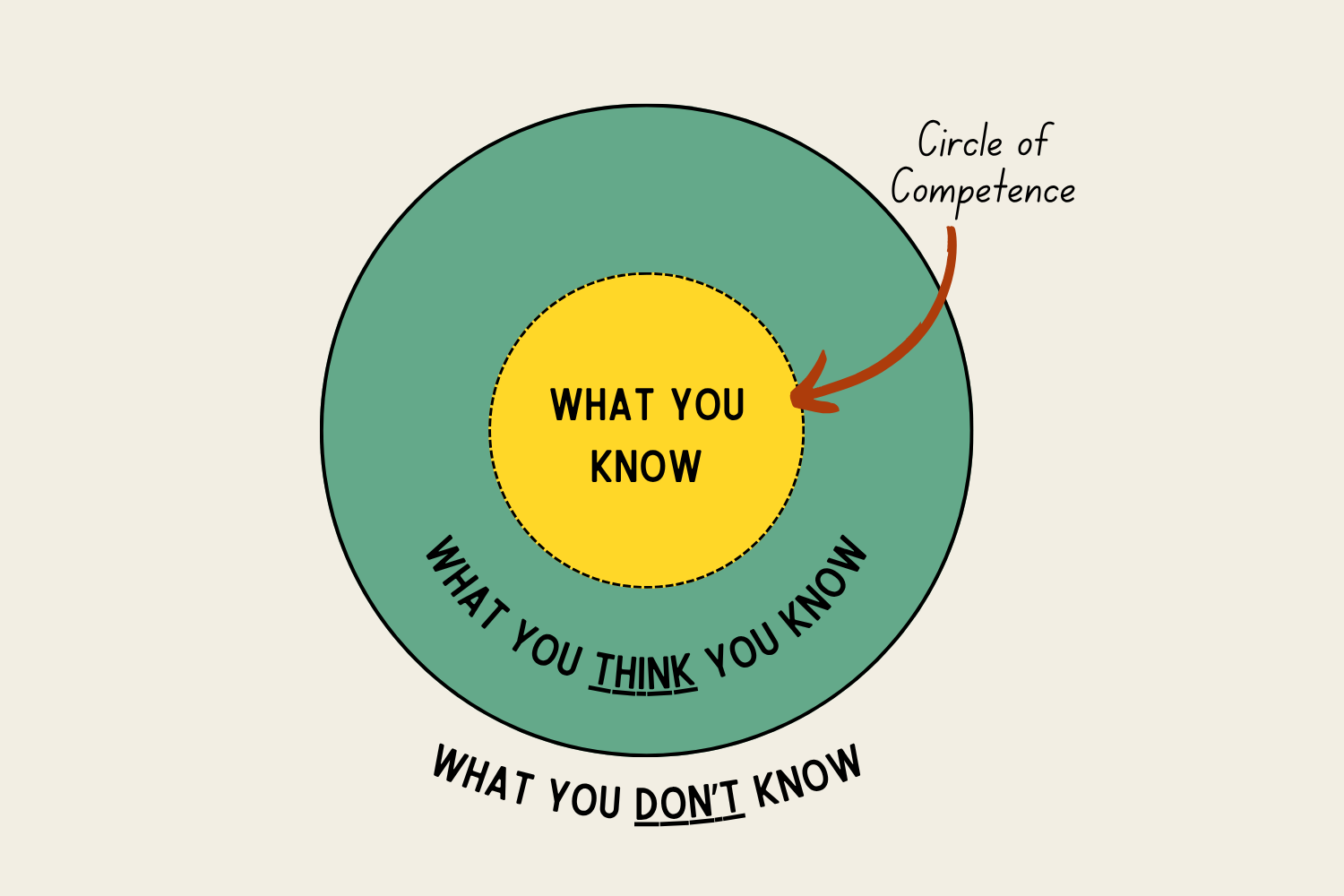
Charlie Munger and Warren Buffett made this famous as an investing discipline, and it's since spread widely into leadership. Your circle of competence is the set of things you actually understand — where your knowledge and experience run deep enough that your judgment holds up. It has nothing to do with how many years you've put in or how confidently you talk.
How It Works
The model works like a target with three zones:
| Zone | What it contains | How you lead there |
|---|---|---|
| Center | Deep expertise. Places where you've made real decisions, seen the outcomes, and sharpened your judgment over years. | Trust your instincts. Move with clarity and speed. |
| Edge | Topics you're exposed to and interested in, but haven't gone deep on and don't have a track record in. | Slow down. Ask questions, explore, bring others in. |
| Outside | Territory you don't know at all. Decide here and you're mostly guessing. | Say so out loud. Defer, delegate, or deliberately learn your way in. |
Your circle isn't fixed. It grows through real effort — learning, hands-on experience, feedback, doing it again and again — and it can't be faked or made bigger just by saying so. Most leaders overestimate the size of their own circle. The point of mapping it isn't to make it look big. It's to make it real.
Why It Matters for Leaders
You're expected to have answers on strategy, people, metrics, markets — the list never ends. The honest response isn't to be good at everything. It's knowing exactly where you actually stand. When you bluff, the bad decision doesn't stay contained — it grows as it moves through your team and out into the business.
Overconfidence outside your circle has a name: the Dunning-Kruger effect, where people with limited knowledge in an area overestimate how competent they are. It applies to you as readily as to anyone else. Assume you know enough about an unfamiliar technology, wave off your own experts' input, and make the call anyway, and you usually end up with an expensive, inefficient mess. The fix is explicit: know what you don't know, check your knowledge gaps on a regular basis, and pair this with the Johari Window to surface your blind spots.
There's a newer version of the same trap. AI has pulled confidence and competence apart. When you produce great output with AI's help, the pride you feel is hard to tell apart from the pride of having actually done the thinking yourself — so the gap between how competent you feel and how competent you are widens without you noticing. Self-assessment has gotten less reliable at exactly the moment it matters most, both for you and for anyone reading your output.
The upside is trust. Be straight about your limits and you earn credibility with your team and your stakeholders, get better information feeding into your decisions, and open up room for other people to lead where their circle runs deeper than yours.
A concrete example helps. Say you're a first-time engineering manager. Inside your circle: writing and reviewing production code, debugging, system design, effort estimation, tech debt trade-offs. At the edge: running one-on-ones, setting team OKRs, running cross-team planning, speaking up in leadership reviews. Outside: handling team dysfunction, hiring across unfamiliar stacks, org-level politics, coaching underperformers, comp planning, engineering strategy. You can have opinions in all three zones. You only get real outcomes in the first one.
What to do next
Test your knowledge of Circle of Competence
Practice Circle of Competence
Apply Circle of Competence to a real situation
Skills related to Circle of Competence

Frameworks related to Circle of Competence

EQ Framework
A 2x2 of emotional intelligence — self or social, noticing or acting — giving four skills: self-awareness, self-management, social awareness, relationship management.

Johari Window
A 2x2 mapping what you know about yourself against what others know — exposing blind spots, building trust through disclosure.
Ladder of Inference
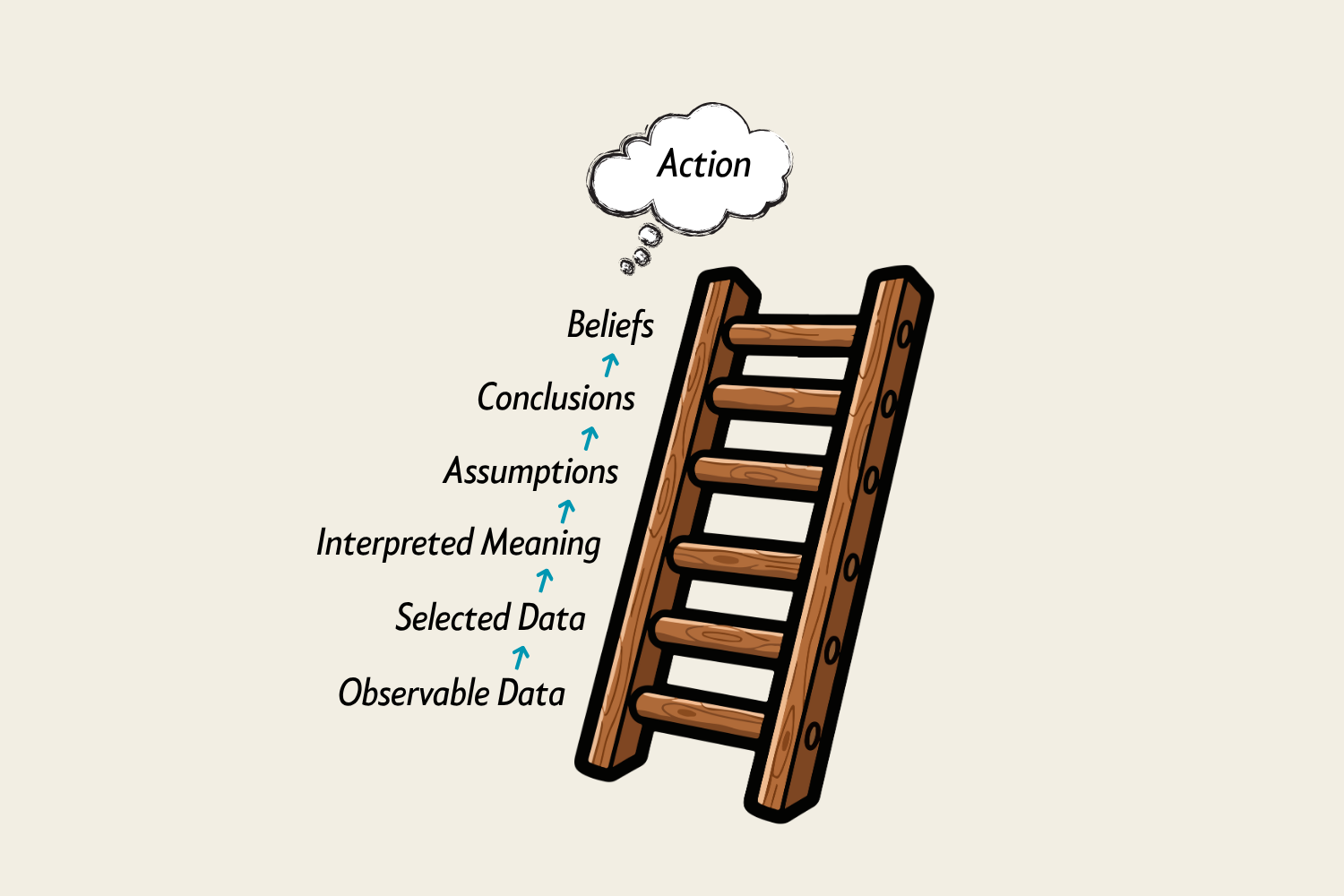
Your mind turns a fact into belief through selection and assumption — you end up arguing with a story, not reality.

The Four Temperaments
An ancient personality model — Sanguine, Choleric, Melancholic, Phlegmatic — a fast vocabulary for reading your style, your team, and your boss.
Books related to Circle of Competence

Emotional Intelligence
Daniel Goleman's case that how you handle emotion, your own and everyone else's, predicts success better than raw intellect. The book that put "EQ" into every manager's vocabulary, for good reason.

Emotional Intelligence 2.0
The practical, test-and-strategies follow-up to the emotional intelligence conversation: less theory, more "here's exactly what to do on Tuesday," built around four skills you can actually practice and measure.

Primal Leadership
The case that a leader's mood isn't a private matter. It's contagious through the whole team, which makes emotional intelligence the real infrastructure underneath every other leadership skill.

Stillness Is the Key
Ryan Holiday's case that the people who handle pressure, power, and chaos best aren't the busiest or the most driven, they're the ones who've built real stillness into their mind, body, and sense of purpose, usually against the current of everything around them.

The Daily Stoic
A year of short, daily meditations drawn from Marcus Aurelius, Seneca, and Epictetus, organized into one practical claim: the ancient Stoics weren't writing philosophy for philosophers. They were writing a manual for getting through hard days without losing yourself.

Think Again
Adam Grant's case that rethinking, actually changing your mind when the facts say you should, is a skill most smart people are terrible at, and a direct challenge to any manager who treats changing position as a sign of weakness.