EQ Framework
A 2x2 of emotional intelligence — self or social, noticing or acting — giving four skills: self-awareness, self-management, social awareness, relationship management.
 Find this on the mind-map
Introduction
Psychologists Peter Salovey and John Mayer coined the term "emotional intelligence" in a 1990 paper, but it was Daniel Goleman who turned it into a leadership staple, with his 1995 book Emotional Intelligence. Goleman's argument was blunt: at senior levels, EQ predicts how effective you'll be as a leader better than IQ or technical depth does.
How It Works
The version that actually works for managers is a 2x2 grid built on two questions:
- Who — are you working on yourself, or on another person? Self or Social.
- What — are you noticing something, or acting on it? Recognition or Regulation.
| Recognition (noticing) | Regulation (acting) | |
|---|---|---|
| Self | Self-awareness: catching your own emotions as they happen, not on the drive home. Emotional self-awareness, honest self-assessment, self-confidence. | Self-management: doing something useful with what you just noticed. Self-control, adapting to the moment instead of running on default. |
| Social | Social awareness: reading the room and the person in front of you, not just hearing their words. Empathy and organizational awareness. | Relationship management: acting on what you read in others. Influence, developing people, handling conflict. |
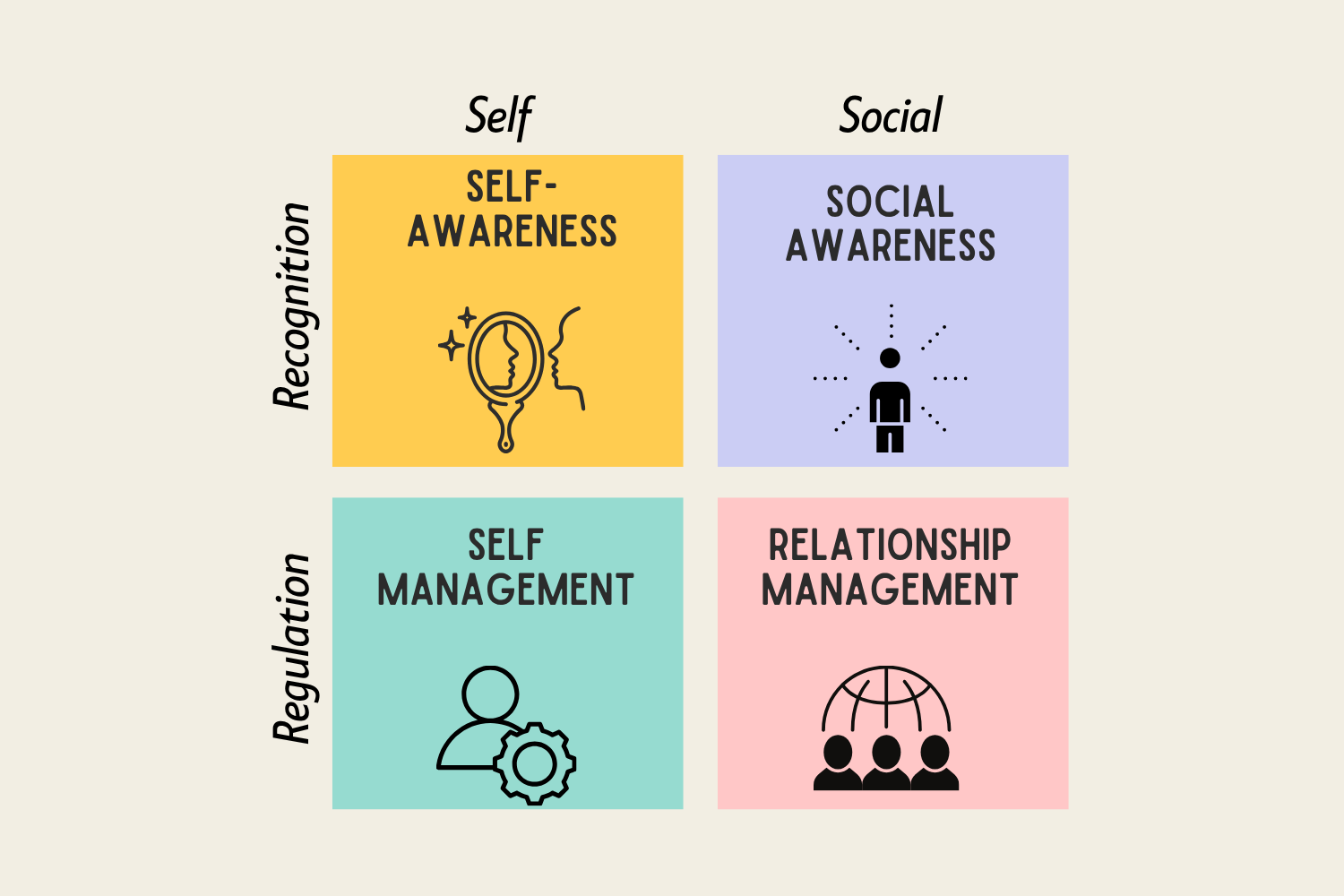
The four quadrants run in sequence. Recognition feeds regulation, and self feeds social. If you can't name your own state in the moment, you have nothing accurate to regulate. And if you misread the other person, you'll manage the relationship toward the wrong outcome. Problems upstream create symptoms downstream, so fixing the downstream quadrant on its own is usually wasted effort.
People often mistake this framework for "being nicer." It's closer to being accurate — accurate about what you're feeling, and accurate about what the other person is feeling.
Why It Matters for Leaders
Your mood carries more weight than you think it does. If you're mildly annoyed — a 3 out of 10 — you're also the person who writes the performance review and decides the next project, so that 3 lands on your team as an 8. The sigh after a comment, the one-word reply to a long message, the camera left off while everyone else has theirs on. You know none of it was really about that person. Your team only has what they saw.
Your team also copies your regulation, not your words. How you handle pressure and conflict becomes how the team handles pressure and conflict with each other. Stay steady when a launch fails, and the team stays steady. Get short-tempered, and that spreads sideways fast.
Your read on people turns directly into decisions: who's ready for more, who's struggling, who gets the hard project. A wrong read isn't a soft failure — it costs someone a promotion, a paycheck, or their confidence.
The biggest cost is silence. Every reaction you have teaches your team what's safe to bring up. Sharp replies and ignored messages train people to wait until they've got a solution rather than a problem, and you stop hearing about real issues while they're still cheap to fix. That's why EQ isn't a soft skill — it determines what information actually reaches the person making the decisions.
Say you're a director and a normally talkative tech lead has gone suddenly quiet. Your first instinct is that he's checked out, and you start drafting a performance conversation in your head. Before you do, ask yourself what he's actually feeling — and if your honest answer is "I don't know," open the next meeting by naming what you noticed instead of acting on your assumption. You might find out he's been quietly covering for two people who left, afraid that raising it would make him look like he can't handle the scope. Skip the check, and you'd have issued a warning to your most overloaded high performer.
What to do next
Test your knowledge of EQ Framework
Practice EQ Framework
Apply EQ Framework to a real situation
Skills related to EQ Framework

Frameworks related to EQ Framework
Circle of Competence
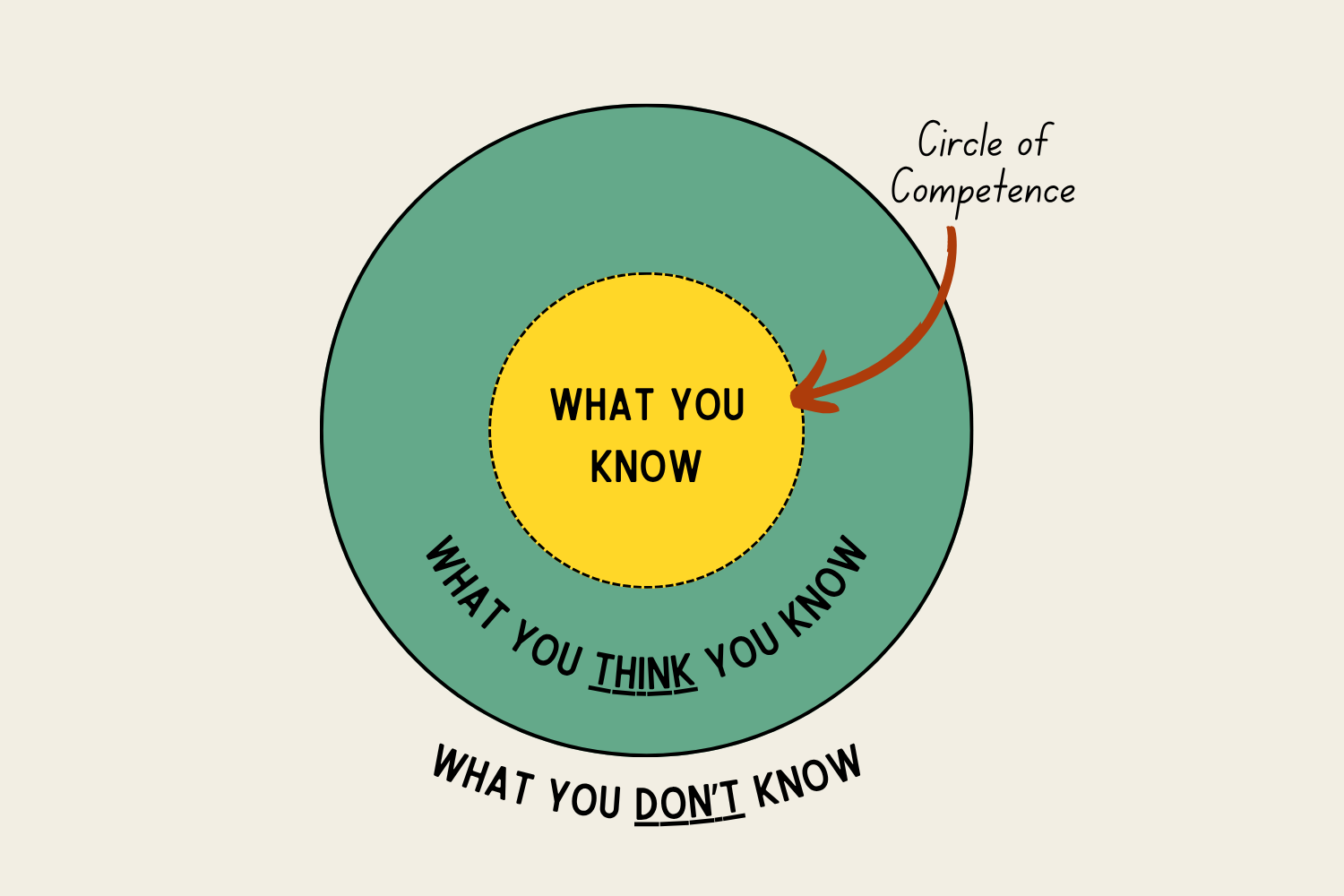
Buffett and Munger's model for knowing exactly where your understanding ends — size doesn't matter, honesty about the edge does.

Johari Window
A 2x2 mapping what you know about yourself against what others know — exposing blind spots, building trust through disclosure.
Ladder of Inference
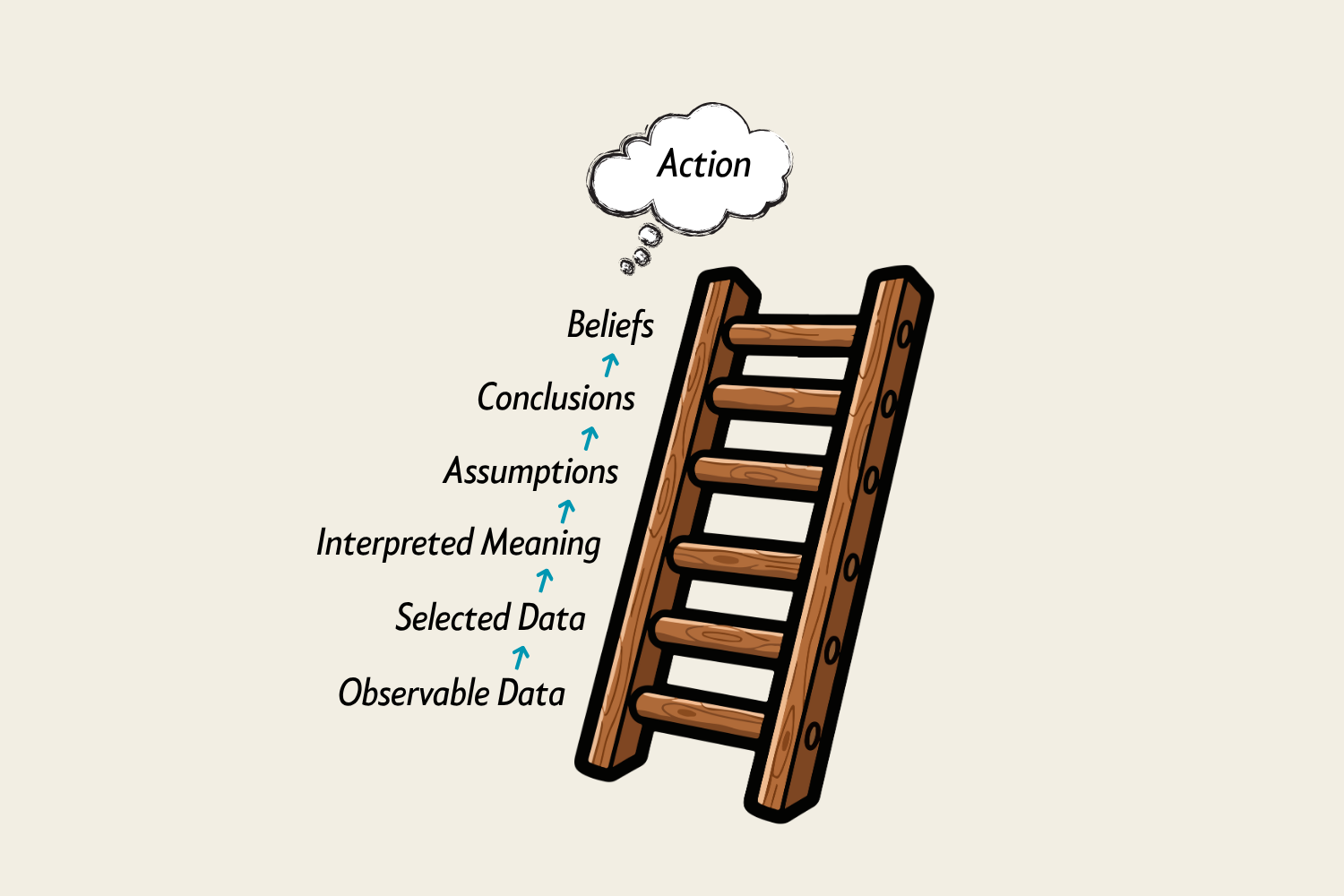
Your mind turns a fact into belief through selection and assumption — you end up arguing with a story, not reality.

The Four Temperaments
An ancient personality model — Sanguine, Choleric, Melancholic, Phlegmatic — a fast vocabulary for reading your style, your team, and your boss.
Books that reference this framework
Books related to EQ Framework

Emotional Intelligence
Daniel Goleman's case that how you handle emotion, your own and everyone else's, predicts success better than raw intellect. The book that put "EQ" into every manager's vocabulary, for good reason.

Emotional Intelligence 2.0
The practical, test-and-strategies follow-up to the emotional intelligence conversation: less theory, more "here's exactly what to do on Tuesday," built around four skills you can actually practice and measure.

Primal Leadership
The case that a leader's mood isn't a private matter. It's contagious through the whole team, which makes emotional intelligence the real infrastructure underneath every other leadership skill.

Stillness Is the Key
Ryan Holiday's case that the people who handle pressure, power, and chaos best aren't the busiest or the most driven, they're the ones who've built real stillness into their mind, body, and sense of purpose, usually against the current of everything around them.

The Daily Stoic
A year of short, daily meditations drawn from Marcus Aurelius, Seneca, and Epictetus, organized into one practical claim: the ancient Stoics weren't writing philosophy for philosophers. They were writing a manual for getting through hard days without losing yourself.

Think Again
Adam Grant's case that rethinking, actually changing your mind when the facts say you should, is a skill most smart people are terrible at, and a direct challenge to any manager who treats changing position as a sign of weakness.