The Daily Stoic
Ryan Holiday & Stephen Hanselman
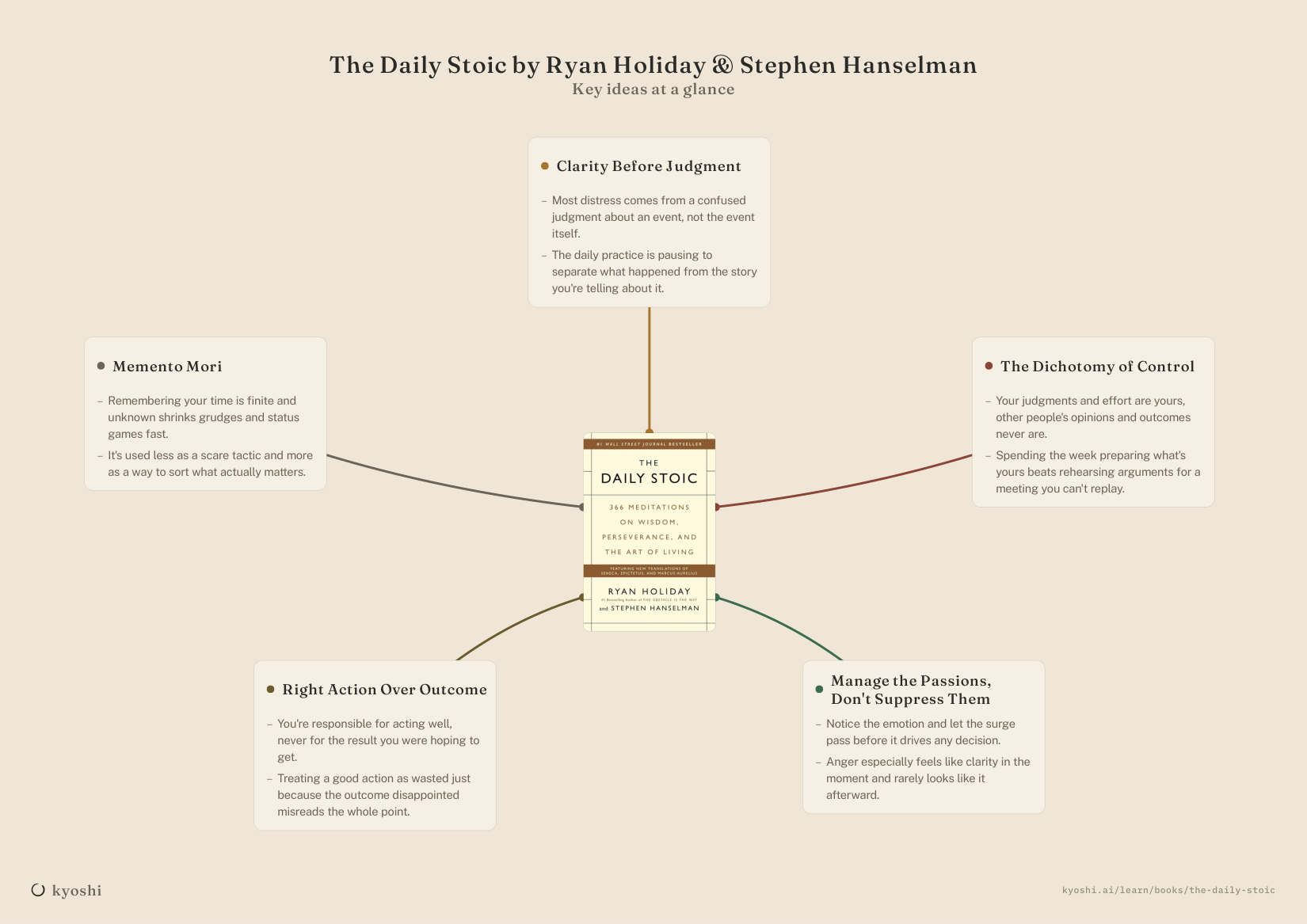
A year of short, daily meditations drawn from Marcus Aurelius, Seneca, and Epictetus, organized into one practical claim: the ancient Stoics weren't writing philosophy for philosophers. They were writing a manual for getting through hard days without losing yourself.
 Find this on the mind-map
Introduction
The Daily Stoic isn't a single argument so much as a curated, daily-dose structure: 366 short entries, each built around a passage from a Stoic philosopher, mainly Marcus Aurelius, Seneca, and Epictetus, paired with a short modern commentary. The organizing idea behind the structure is that Stoicism was never meant as abstract philosophy; it was practical advice for people with real responsibility and real problems, written by a Roman emperor, a statesman, and a former slave, none of whom had the luxury of philosophizing from a comfortable distance.
Clarity Before Anything Else
The book opens its year with clarity: the Stoic insistence that you have to see your situation accurately before you can respond to it well. Most of what distresses people, in the Stoic framing, isn't the event itself but a confused, exaggerated, or simply wrong judgment about it. A manager who gets a terse email from their boss and immediately assumes the worst has skipped straight past clarity into judgment. The daily practice the book repeatedly returns to is a kind of pause: what actually happened, separated from what you're telling yourself it means.
The Dichotomy of Control
Perhaps the single most load-bearing idea across the whole year is Epictetus's dichotomy of control: some things are within your power (your judgments, your effort, your responses) and some things categorically are not (other people's opinions, outcomes, the past). The book returns to this constantly because it's easy to understand and hard to actually live by. Consider two leaders waiting on a board decision that will shape their team's budget. One spends the week rehearsing arguments for a meeting that's already happened and can't be replayed. The other spends the week preparing the best version of what's still theirs to prepare, and treats the board's actual decision as outside their jurisdiction the moment the meeting ends.
Managing the Passions, Not Suppressing Them
A recurring theme pushes back on a common misreading of Stoicism as emotional suppression. The actual claim is closer to: notice the emotion, don't let it drive the decision immediately, and respond from a steadier place once the initial surge has passed. Anger, in particular, gets repeated attention. The Stoics treat it as a kind of temporary insanity that feels like clarity while you're in it and rarely looks like clarity afterward.
Right Action, Regardless of Outcome
The book draws a sharp Stoic line between doing the right thing and getting the outcome you wanted. The two are related but not the same, and conflating them is a source of a lot of unnecessary suffering. You're responsible for acting well; you are not owed a particular result for having done so. This shows up again and again in entries about duty: do the next right action because it's right, and hold the outcome loosely, because the outcome was never fully yours to control in the first place.
Memento Mori: Let Mortality Clarify, Not Terrify
A recurring late-year theme is the Stoic practice of memento mori: remembering you will die, not as morbid dwelling but as a clarifying tool. If time is finite and the exact amount is unknown, trivial grievances, long-held grudges, and status games lose a lot of their weight fast. The entries use this less as a scare tactic and more as a way to sort what's actually worth your limited attention.
Putting It Together
Read across a full year rather than a single sitting, the entries build a working rhythm: see things clearly before judging them, sort what's actually yours to control from what isn't, let emotion register without letting it drive, act rightly and hold the outcome loosely, and let an honest sense of your own mortality keep trivial things trivial. None of it is new philosophy. The point of the daily format is that none of it sticks from reading it once, either.
Why It Matters for Leaders
Most leaders treat a hard day as something to survive with willpower: push through, don't show it, get to the other side. The Stoics built a different approach, and it's one you can actually use between meetings, not just in a crisis. See the thing clearly first. Decide what's actually yours to control. Act well regardless of whether the result cooperates. It's a sequence, and skipping the first step is why the other two usually fail.
The dichotomy of control is the one habit here that pays off fastest for a manager. A huge amount of leadership stress comes from treating something as yours to control when it isn't: a board's decision, a report's mood that morning, whether a reorg lands well company-wide. Sorting what's actually yours (your prep, your judgment, your next move) from what isn't (their verdict, their reaction, the past) doesn't make the hard thing go away. It just stops you from spending your limited energy on the part you can't move.
The anger chapters matter for a different reason: a leader's bad reaction in the moment usually costs more than whatever triggered it. Waiting one cycle before responding to a frustrating email or a missed deadline isn't weakness. It's the only reliable way to respond to what actually happened instead of to the story you told yourself about it in the first ten seconds.
And the outcome-versus-action distinction is the antidote to a specific kind of leader resentment: doing the right thing and still getting a bad result, then concluding the right thing wasn't worth doing. It was. You just weren't owed the outcome in the first place.
Picture a manager, Theo, whose reorg proposal gets rejected by leadership after weeks of careful work. His first instinct is to decide the effort was wasted and stop bringing forward hard ideas. Applying the dichotomy of control, he separates what he actually owned (a well-reasoned proposal, honestly argued) from what he never owned (whether leadership said yes), judges his own effort on its own terms, and brings the next hard idea forward anyway.
What to do next
Reinforce your understanding of The Daily Stoic
Books related to The Daily Stoic

Burnout
The Nagoski sisters' sharp distinction between a stressor and the stress itself, and why removing the stressor from your life doesn't automatically get the stress out of your body. A rethink for any manager who treats "just manage your workload better" as the fix.

Crucial Conversations
A manager's guide to the book about the story you make up before you open your mouth. It's not really a book about talking, but about the half-second before you talk that decides whether the conversation goes well or badly.

Emotional Intelligence
Daniel Goleman's case that how you handle emotion, your own and everyone else's, predicts success better than raw intellect. The book that put "EQ" into every manager's vocabulary, for good reason.

Emotional Intelligence 2.0
The practical, test-and-strategies follow-up to the emotional intelligence conversation: less theory, more "here's exactly what to do on Tuesday," built around four skills you can actually practice and measure.

Four Thousand Weeks
Oliver Burkeman's blunt reminder that the average human life is about four thousand weeks long, and that every productivity system built to escape that limit is making the anxiety worse, not better.

Grit
Angela Duckworth's research-backed case that sustained passion and perseverance beat raw talent, a useful gut-check for any manager who keeps betting on the "naturally gifted" hire over the stubborn one.

Hidden Potential
Adam Grant's argument that where you start matters far less than how far you're willing to grow, and that the character skills enabling that growth are learnable, not innate, no matter how your scorecard looks on day one.

Mindset
Carol Dweck's research on why some people treat ability as fixed and others treat it as something built, and why the belief you hold about yourself shapes how your whole team learns, fails, and improves, often without anyone noticing it happening.

Primal Leadership
The case that a leader's mood isn't a private matter. It's contagious through the whole team, which makes emotional intelligence the real infrastructure underneath every other leadership skill.

Rest
Alex Soojung-Kim Pang's argument that rest isn't the opposite of great work. It's part of how great work gets made. A useful corrective for any manager who treats recovery as what's left over after hustle.

Slow Productivity
Cal Newport's challenge to "busy equals productive": a case that most knowledge work rewards visible activity over actual output, and a different model built on doing less, at a sustainable pace, to a genuinely higher standard.

Stillness Is the Key
Ryan Holiday's case that the people who handle pressure, power, and chaos best aren't the busiest or the most driven, they're the ones who've built real stillness into their mind, body, and sense of purpose, usually against the current of everything around them.

Stolen Focus
Johann Hari's argument that your attention problem probably isn't a personal willpower failure, it's a predictable outcome of systems deliberately engineered to fragment it. Uncomfortable reading for any manager who's told a struggling employee to "just focus better."

The 5AM Club
Robin Sharma's parable-driven case for owning the first hour of your day before the world gets a vote. Less about waking up early for its own sake, and more about who's actually running your mornings.

The 7 Habits of Highly Effective People
Stephen Covey's classic, read through a modern-manager lens. Many of the ideas taught today as "new" leadership frameworks were already captured here decades ago.

The Obstacle Is the Way
Ryan Holiday's modern take on Stoic philosophy, built around a single claim: the obstacle in front of you isn't blocking the path, it is the path. A sharp antidote to managers who treat setbacks as proof the plan was wrong.

Think Again
Adam Grant's case that rethinking, actually changing your mind when the facts say you should, is a skill most smart people are terrible at, and a direct challenge to any manager who treats changing position as a sign of weakness.

Triggers
Executive coach Marshall Goldsmith's case that you don't fail to become the leader you intend to be because of weak character. You fail because your environment is triggering the wrong behavior all day without much notice, and nobody built a structure to catch it.

When the Body Says No
Gabor Maté's case, drawn from decades of clinical practice, that chronically suppressing your own needs and emotions to keep the peace has a real physical cost. A hard look at the leader who's never once said no and wears it as a point of pride.

Wintering
Katherine May's case that the fallow, difficult stretches of life, a loss, a burnout, an illness, a plain bad year, aren't failures to snap out of, but seasons with their own logic. An uncommon lens for leaders who treat every low point as a problem to solve away fast.
Skills related to The Daily Stoic

Self-Awareness
Knowing your own strengths, blind spots, and emotional patterns — and knowing how they actually land on the people around you.

Self-Management
Managing your own emotional reactions — especially fear and insecurity — so they stop quietly driving your behavior under pressure.
Frameworks related to The Daily Stoic
Circle of Competence
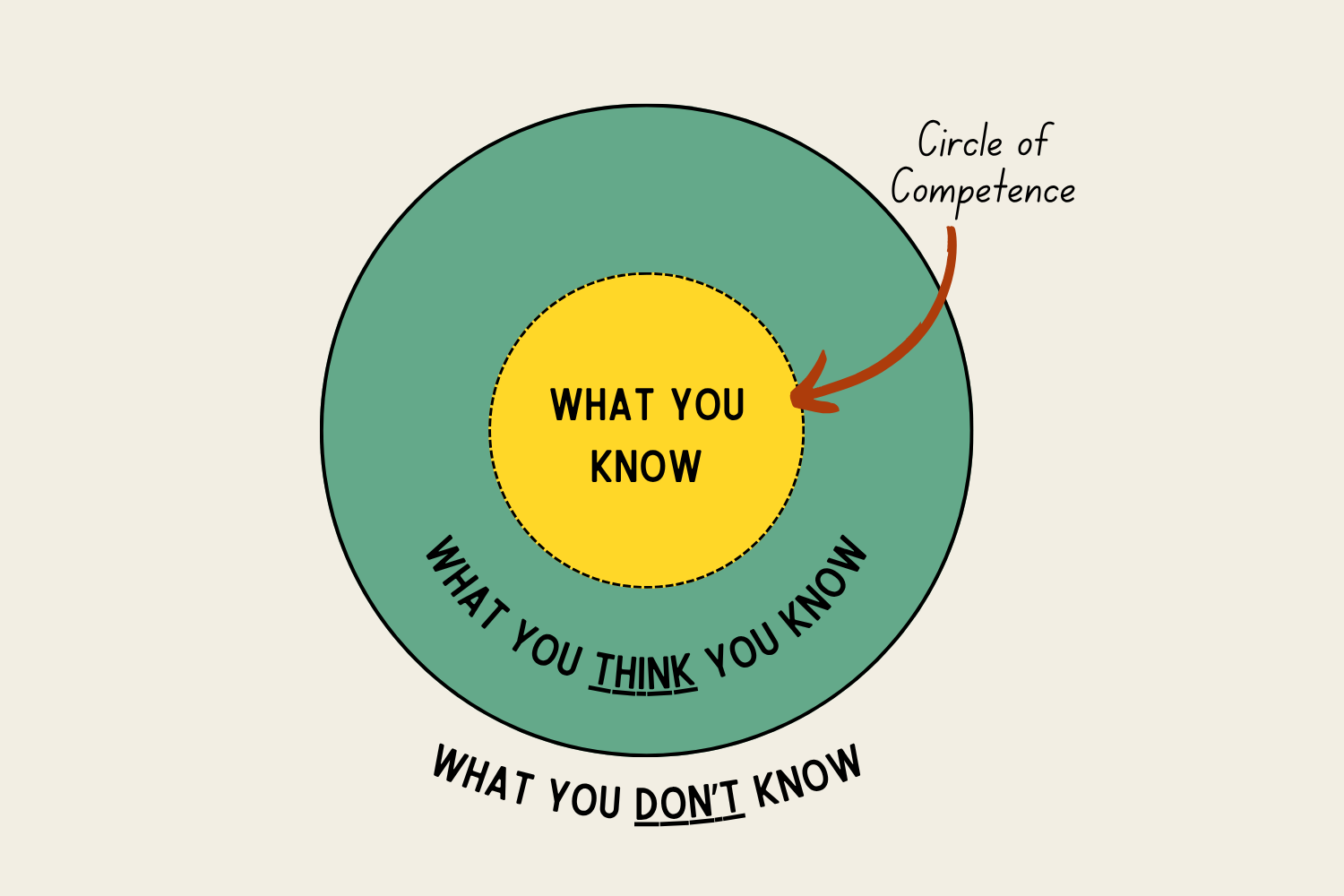
Buffett and Munger's model for knowing exactly where your understanding ends — size doesn't matter, honesty about the edge does.
Dunning-Kruger Effect
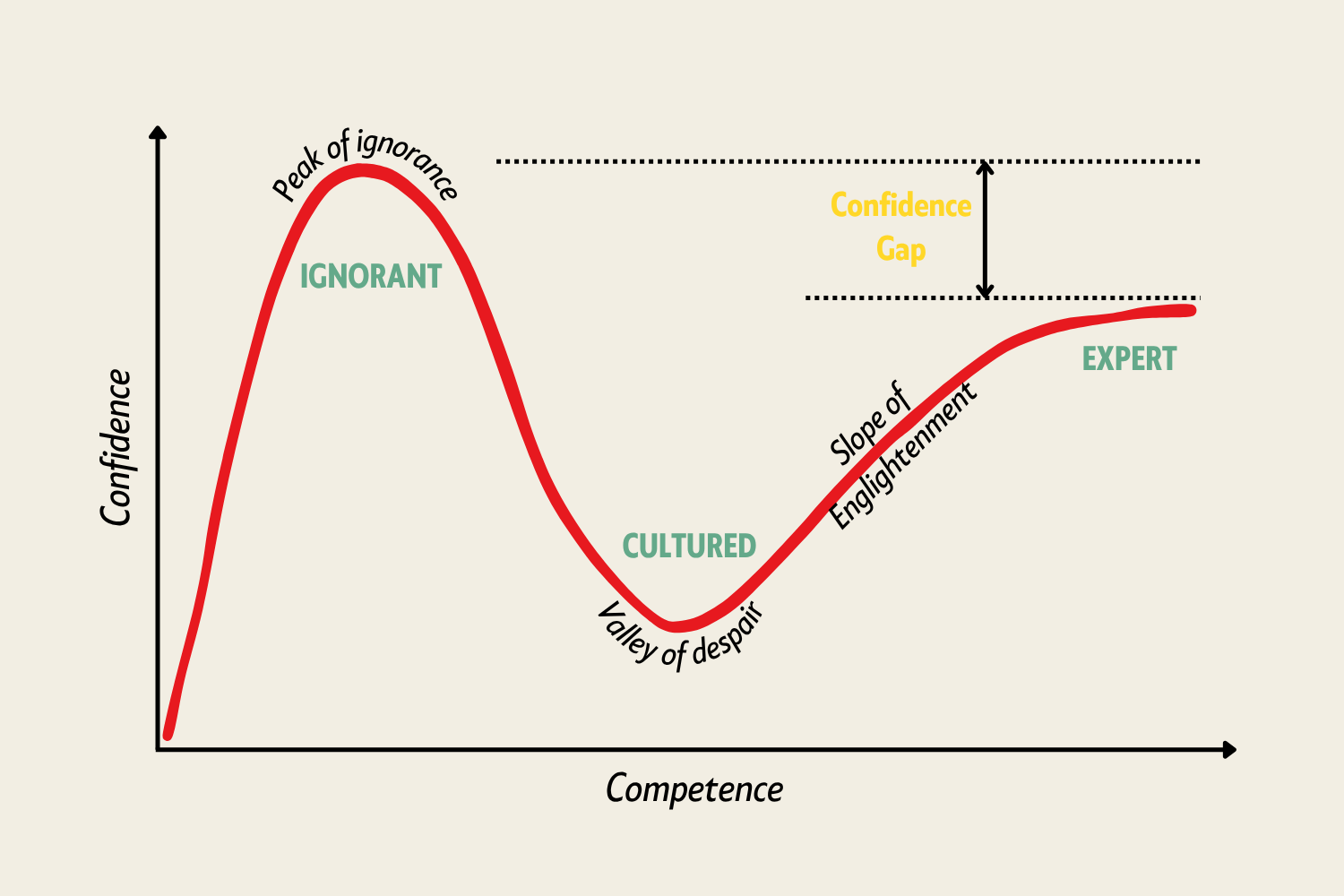
Knowing little makes you feel unstoppable; knowing more makes you hesitate — the loudest voice is rarely the most reliable one.

EQ Framework
A 2x2 of emotional intelligence — self or social, noticing or acting — giving four skills: self-awareness, self-management, social awareness, relationship management.

Johari Window
A 2x2 mapping what you know about yourself against what others know — exposing blind spots, building trust through disclosure.
Ladder of Inference
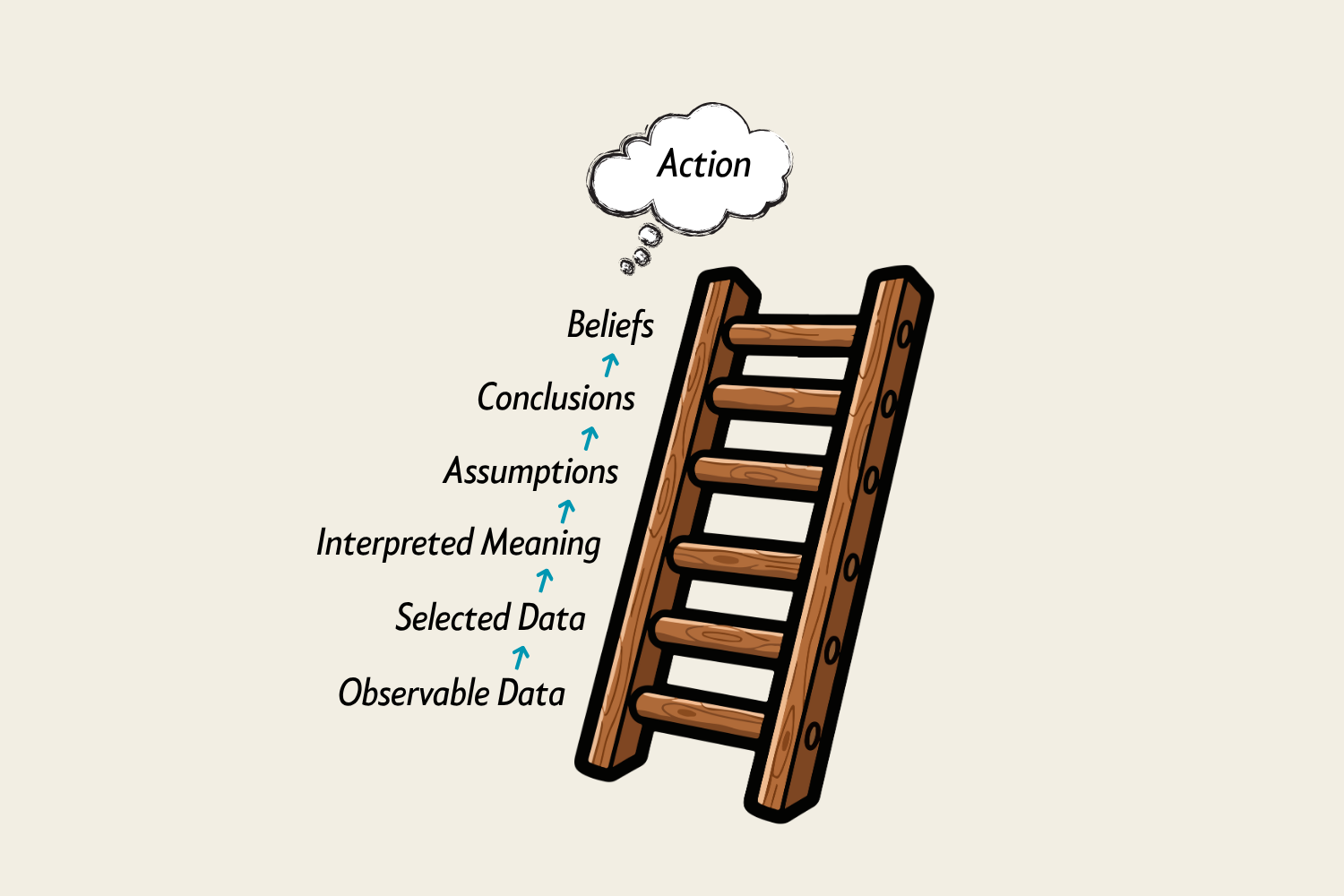
Your mind turns a fact into belief through selection and assumption — you end up arguing with a story, not reality.

The Four Temperaments
An ancient personality model — Sanguine, Choleric, Melancholic, Phlegmatic — a fast vocabulary for reading your style, your team, and your boss.

The Insecurity Loop
A model of how insecurity, disguised as ego, shame, or control, drives a self-feeding cycle that pushes your team away.

The Leadership Code
Leadership runs on three traits — head, gut, heart — each toxic alone: competence without character is arrogance, courage without it reckless.

The Pygmalion Effect
What you expect from someone leaks into how you treat them, which shapes what they become — for better or worse.

The Three Brains Framework
Three systems compete to drive your response — reactive, emotional, thinking. Pause, align, choose — that's how you decide which one leads.