Rest
Alex Soojung-Kim Pang's argument that rest isn't the opposite of great work. It's part of how great work gets made. A useful corrective for any manager who treats recovery as what's left over after hustle.
 Find this on the mind-map
Introduction
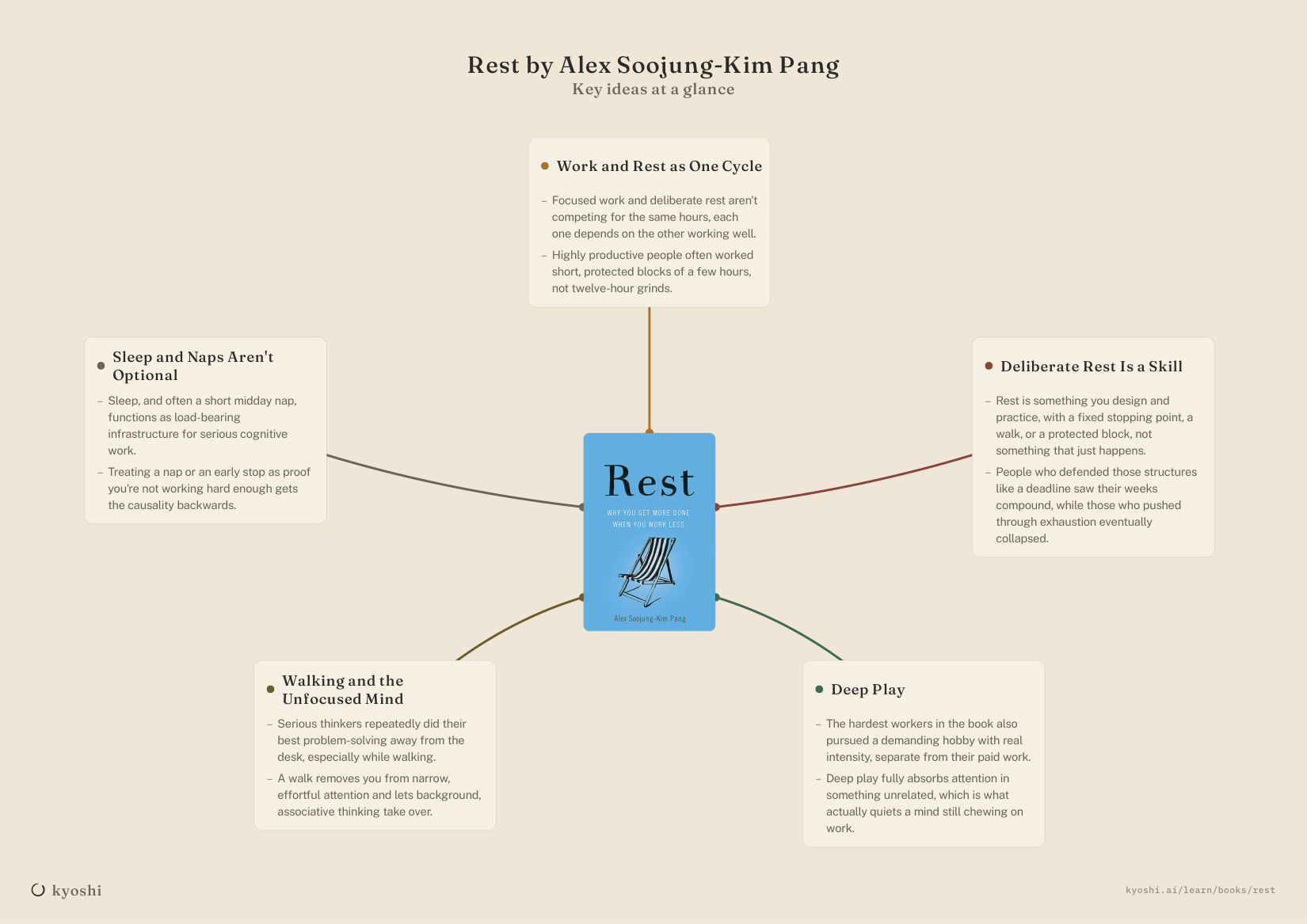
Alex Soojung-Kim Pang's core claim is a direct challenge to hustle culture: rest is not the passive absence of work, and it isn't a reward you earn after the real work is done. Looking at the daily routines of highly productive scientists, writers, and thinkers across history, Pang argues that deliberate rest is an active practice that makes sustained, high-level output possible in the first place. Most people who treat rest as wasted time are capping how good their work can ever get, without realizing it.
Work and Rest Are a Cycle, Not a Trade-off
The book's central structural idea is that intense focused work and deliberate rest aren't competing for the same hours. They're two halves of one cycle, and each one depends on the other working well. People who produced an enormous amount of serious, original work over long careers often worked in short, protected blocks of a few focused hours a day, not twelve-hour grinds. The output came from the quality of the focused hours, not the quantity of hours logged, and the focused hours stayed sharp because they were bounded by real rest. A manager who measures effort by hours at the desk is optimizing the wrong variable entirely.
Deliberate Rest Is a Skill, Not an Accident
Pang treats rest as something you design and practice, not something that happens to you when you collapse. The people in the book who used rest well had specific daily structures: a fixed stopping point, a walk, a nap, a protected block with no inputs. They defended those structures the way they'd defend a deadline. Picture two founders at the same stage of a demanding launch. Priya schedules a hard stop at 6pm and an actual nap most afternoons, and treats both as non-negotiable commitments. Omar works until he's exhausted every night and calls the exhaustion dedication. Priya's weeks compound; Omar's eventually collapse, usually right when the stakes are highest.
Deep Play
One of the book's more counterintuitive ideas: the hardest-working people in the book also took their leisure seriously, often pursuing a demanding hobby (mountaineering, serious amateur science, difficult physical pursuits) with real intensity. Pang calls this deep play: activity hard enough to fully absorb attention, but structurally separate from the work that pays the bills. It isn't "scrolling to switch off." It's a second domain of real effort that happens to restore the first one, because full absorption in something unrelated is what actually quiets the part of your mind still chewing on work.
Walking and the Unfocused Mind
Pang draws on the long history of serious thinkers who did their best problem-solving away from the desk. Walking, specifically, shows up again and again as a trigger for insight that focused effort alone doesn't produce. The mechanism is simple: a walk removes you from the inputs that keep you in narrow, effortful attention and lets background, associative thinking run. A manager stuck on a hard structural problem in a meeting room is often just in the wrong mode for that kind of thinking. Not lacking the answer, but trying to find it with the wrong tool.
Sleep and Naps Are Not Optional Extras
The book treats sleep, and in many cases a short afternoon nap, as load-bearing infrastructure for serious cognitive work rather than a personal indulgence. Pang points to how many highly productive people across history protected an early start paired with genuinely sufficient sleep, often with a short nap mid-day rather than pushing through an afternoon slump on willpower and caffeine. Treating a nap or an early stop as a performance signal you're not working hard enough gets the causality backwards.
Putting It Together
Pang's argument stacks cleanly: treat the work-rest cycle as one unit rather than two competing claims on your time, protect focused hours instead of maximizing total hours, take your recovery (deep play, walking, sleep) as seriously as you take your deadlines, and judge your own output, and your team's, by what the focused blocks produced, not by how exhausted anyone looked getting there.
Why It Matters for Leaders
The managers who struggle with this book's argument the most are usually the ones who feel busiest. If sitting at your desk for ten straight hours is the only thing that currently feels like proof you're doing the job, Pang's claim, that a protected few-hour block beats an unprotected twelve-hour one, reads like an excuse. It isn't. It's a different, more exact way to measure where your output actually comes from.
The shift starts with what you ask in a check-in. "What did you get done in your best two hours this week" surfaces something completely different than "how many hours did you log," and it tends to expose the person who's been busy without producing much faster than any lecture about priorities would.
The harder move is modeling it yourself, because your team reads your calendar before they read your words. A manager who answers emails at 11pm and mentions it, even casually, teaches everyone underneath them that the real expectation is always-on, whatever the official policy says. Protecting your own stopping point isn't a personal indulgence when you manage people. It's the clearest signal you can send about what's actually required.
Picture a team lead, Derrick, running a group that's been sprinting for two straight months on a product launch. He notices one of his best engineers, Hana, taking a walk most afternoons around 3pm, and privately worries it looks like she's checked out during a critical stretch. He almost says something. Instead he checks her output: she's shipped more, with fewer bugs, than anyone else on the team during those same eight weeks. The walk wasn't time stolen from the work. It was where some of the work actually got done.
What to do next
Reinforce your understanding of Rest
Books related to Rest

Burnout
The Nagoski sisters' sharp distinction between a stressor and the stress itself, and why removing the stressor from your life doesn't automatically get the stress out of your body. A rethink for any manager who treats "just manage your workload better" as the fix.

Crucial Conversations
A manager's guide to the book about the story you make up before you open your mouth. It's not really a book about talking, but about the half-second before you talk that decides whether the conversation goes well or badly.

Four Thousand Weeks
Oliver Burkeman's blunt reminder that the average human life is about four thousand weeks long, and that every productivity system built to escape that limit is making the anxiety worse, not better.

Grit
Angela Duckworth's research-backed case that sustained passion and perseverance beat raw talent, a useful gut-check for any manager who keeps betting on the "naturally gifted" hire over the stubborn one.

Hidden Potential
Adam Grant's argument that where you start matters far less than how far you're willing to grow, and that the character skills enabling that growth are learnable, not innate, no matter how your scorecard looks on day one.

Mindset
Carol Dweck's research on why some people treat ability as fixed and others treat it as something built, and why the belief you hold about yourself shapes how your whole team learns, fails, and improves, often without anyone noticing it happening.

Slow Productivity
Cal Newport's challenge to "busy equals productive": a case that most knowledge work rewards visible activity over actual output, and a different model built on doing less, at a sustainable pace, to a genuinely higher standard.

Stillness Is the Key
Ryan Holiday's case that the people who handle pressure, power, and chaos best aren't the busiest or the most driven, they're the ones who've built real stillness into their mind, body, and sense of purpose, usually against the current of everything around them.

Stolen Focus
Johann Hari's argument that your attention problem probably isn't a personal willpower failure, it's a predictable outcome of systems deliberately engineered to fragment it. Uncomfortable reading for any manager who's told a struggling employee to "just focus better."

The 5AM Club
Robin Sharma's parable-driven case for owning the first hour of your day before the world gets a vote. Less about waking up early for its own sake, and more about who's actually running your mornings.

The 7 Habits of Highly Effective People
Stephen Covey's classic, read through a modern-manager lens. Many of the ideas taught today as "new" leadership frameworks were already captured here decades ago.

The Daily Stoic
A year of short, daily meditations drawn from Marcus Aurelius, Seneca, and Epictetus, organized into one practical claim: the ancient Stoics weren't writing philosophy for philosophers. They were writing a manual for getting through hard days without losing yourself.

The Obstacle Is the Way
Ryan Holiday's modern take on Stoic philosophy, built around a single claim: the obstacle in front of you isn't blocking the path, it is the path. A sharp antidote to managers who treat setbacks as proof the plan was wrong.

Triggers
Executive coach Marshall Goldsmith's case that you don't fail to become the leader you intend to be because of weak character. You fail because your environment is triggering the wrong behavior all day without much notice, and nobody built a structure to catch it.

When the Body Says No
Gabor Maté's case, drawn from decades of clinical practice, that chronically suppressing your own needs and emotions to keep the peace has a real physical cost. A hard look at the leader who's never once said no and wears it as a point of pride.

Wintering
Katherine May's case that the fallow, difficult stretches of life, a loss, a burnout, an illness, a plain bad year, aren't failures to snap out of, but seasons with their own logic. An uncommon lens for leaders who treat every low point as a problem to solve away fast.
Skills related to Rest

Frameworks related to Rest
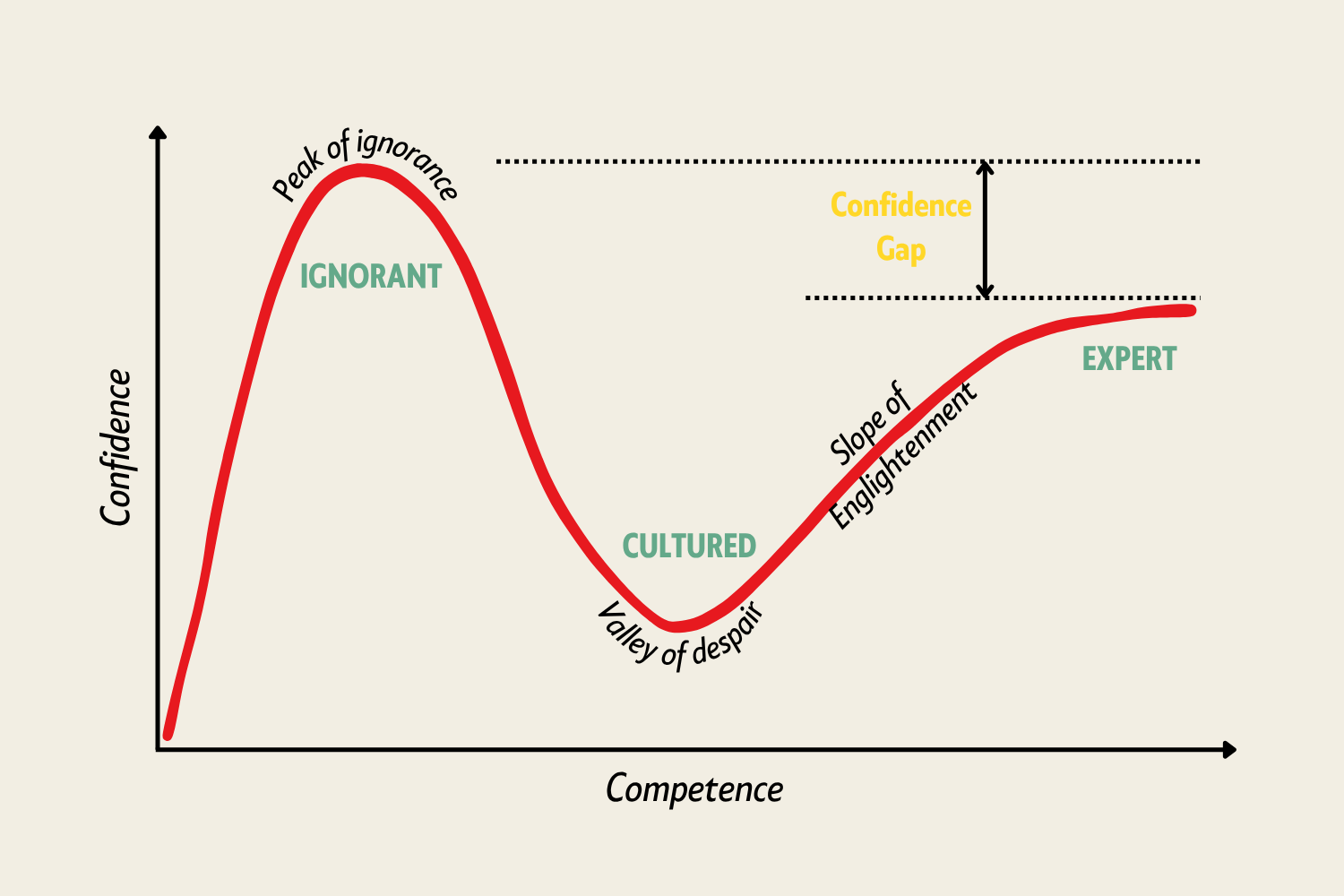
Dunning-Kruger Effect
Knowing little makes you feel unstoppable; knowing more makes you hesitate — the loudest voice is rarely the most reliable one.
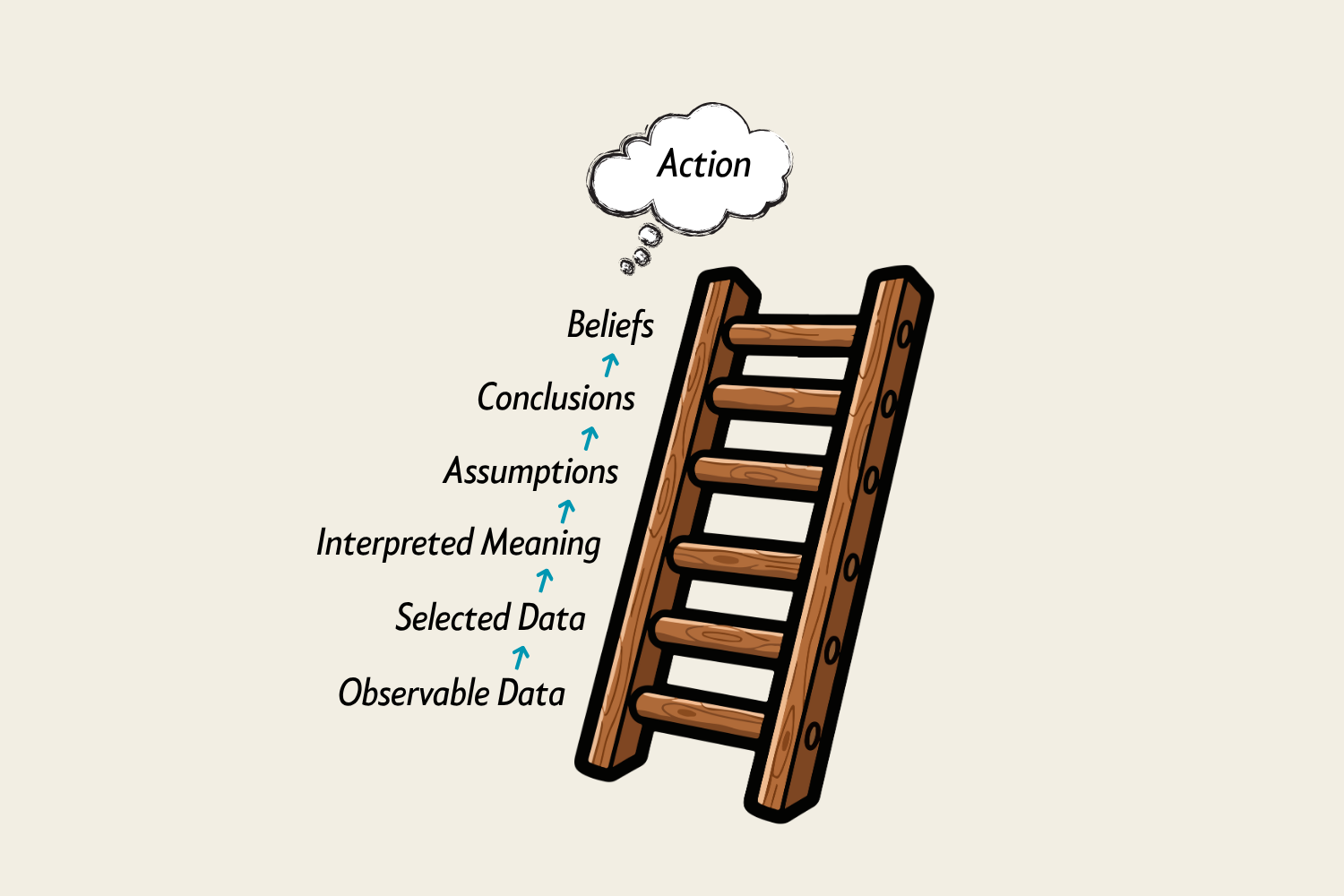
Ladder of Inference
Your mind turns a fact into belief through selection and assumption — you end up arguing with a story, not reality.

The Insecurity Loop
A model of how insecurity, disguised as ego, shame, or control, drives a self-feeding cycle that pushes your team away.

The Leadership Code
Leadership runs on three traits — head, gut, heart — each toxic alone: competence without character is arrogance, courage without it reckless.

The Pygmalion Effect
What you expect from someone leaks into how you treat them, which shapes what they become — for better or worse.

The Three Brains Framework
Three systems compete to drive your response — reactive, emotional, thinking. Pause, align, choose — that's how you decide which one leads.