The Three Brains Framework
Three systems compete to drive your response — reactive, emotional, thinking. Pause, align, choose — that's how you decide which one leads.
 Find this on the mind-map
Introduction
Think about the last time you reacted, overthought, or froze in a moment that mattered. What was actually happening in you wasn't one thing — it was three different systems fighting to drive how you think, feel, and act, and most of the time you have no idea which one just won.
How It Works
The Reactive Brain (survival mode). The fastest system you've got, built purely to protect you. It scans for threats, physical and social, and treats a challenge in a meeting, a missed deadline, or a tone that felt off as a sign something's wrong. When it's in charge, you interrupt people mid-sentence, shut down risky ideas, push back harder than the moment calls for, or go silent instead of thinking. It feels decisive in the moment. It's protecting you, not leading anyone.
The Emotional Brain (social mode). Your relationship system. It reads tone, body language, intent — it's where trust, fear, and belonging actually live. Leadership is a human job, so you need this brain. But it interprets more than it reads, and that's where the bias sneaks in: favoring the people who feel comfortable, avoiding tough feedback because it's uncomfortable to give, taking things personally, stalling a decision because it doesn't feel right even when the logic is clear.
The Thinking Brain (rational mode). The system that actually looks at data, weighs trade-offs, and stays focused on outcomes. When it's running the show, you ask better questions, listen all the way through before responding, separate the idea from the person who said it, and focus on what needs doing instead of how the moment feels.
Here's the catch. You don't get to consciously flip a switch between these. They switch on their own, and they compete instead of cooperating. The reactive brain is built for speed — it doesn't wait for context or check for accuracy. The emotional brain is a beat slower and quick to assign meaning, deciding how something feels before you've actually understood the situation. The thinking brain is the slowest of the three, and needs time and space to engage — by the time it shows up, the other two have usually already acted. Under pressure, control slips away from exactly the system best equipped to handle the decision.
That's what's behind four patterns you've probably caught yourself in: reacting before thinking, taking things personally, overanalyzing simple decisions, and avoiding conversations that need to happen.
Why It Matters for Leaders
The difference between a good call and a bad one usually isn't experience or intelligence. It's which brain was driving in that moment.
Picture this: someone on your team pushes back on a decision in a meeting, and the tone lands badly. Your reaction is immediate — you cut them off, defend your position, move on. The meeting keeps going, but the energy in the room shifts. Everyone goes quiet. No more questions, no more pushback, from anyone. The pushback itself wasn't wrong — it was valid. Your response was aimed at how it felt, not at what was actually said.
That's the real cost of an unnoticed reactive brain: it silences the room and removes exactly the input you needed most. Your emotional brain has its own version of this — carrying a sense of disrespect through the rest of the meeting and letting it color every exchange with that person afterward.
Now picture a missed deadline. Your reactive brain wants accountability right now, and a sharp message shifts the whole team from solving the problem to defending themselves. Your emotional brain adds frustration and an assumption that nobody cares. Neither response actually moves the deadline.
What changes once you know this framework isn't your personality. It's that you can name which system has the wheel right now — and that turns an automatic reaction into a decision you're actually making.
What to do next
Test your knowledge of The Three Brains Framework
Practice The Three Brains Framework
Apply The Three Brains Framework to a real situation
Skills related to The Three Brains Framework

Frameworks related to The Three Brains Framework
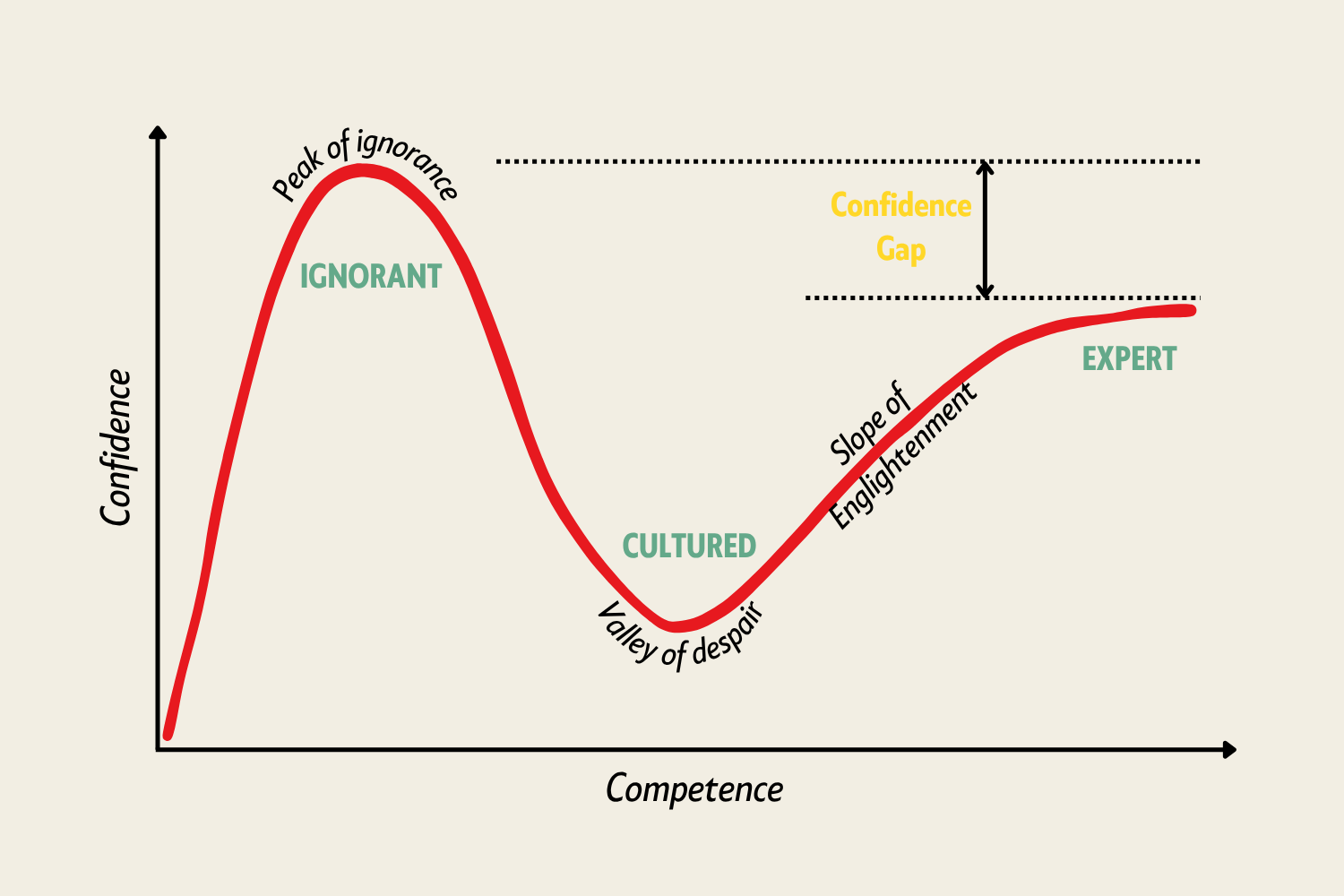
Dunning-Kruger Effect
Knowing little makes you feel unstoppable; knowing more makes you hesitate — the loudest voice is rarely the most reliable one.
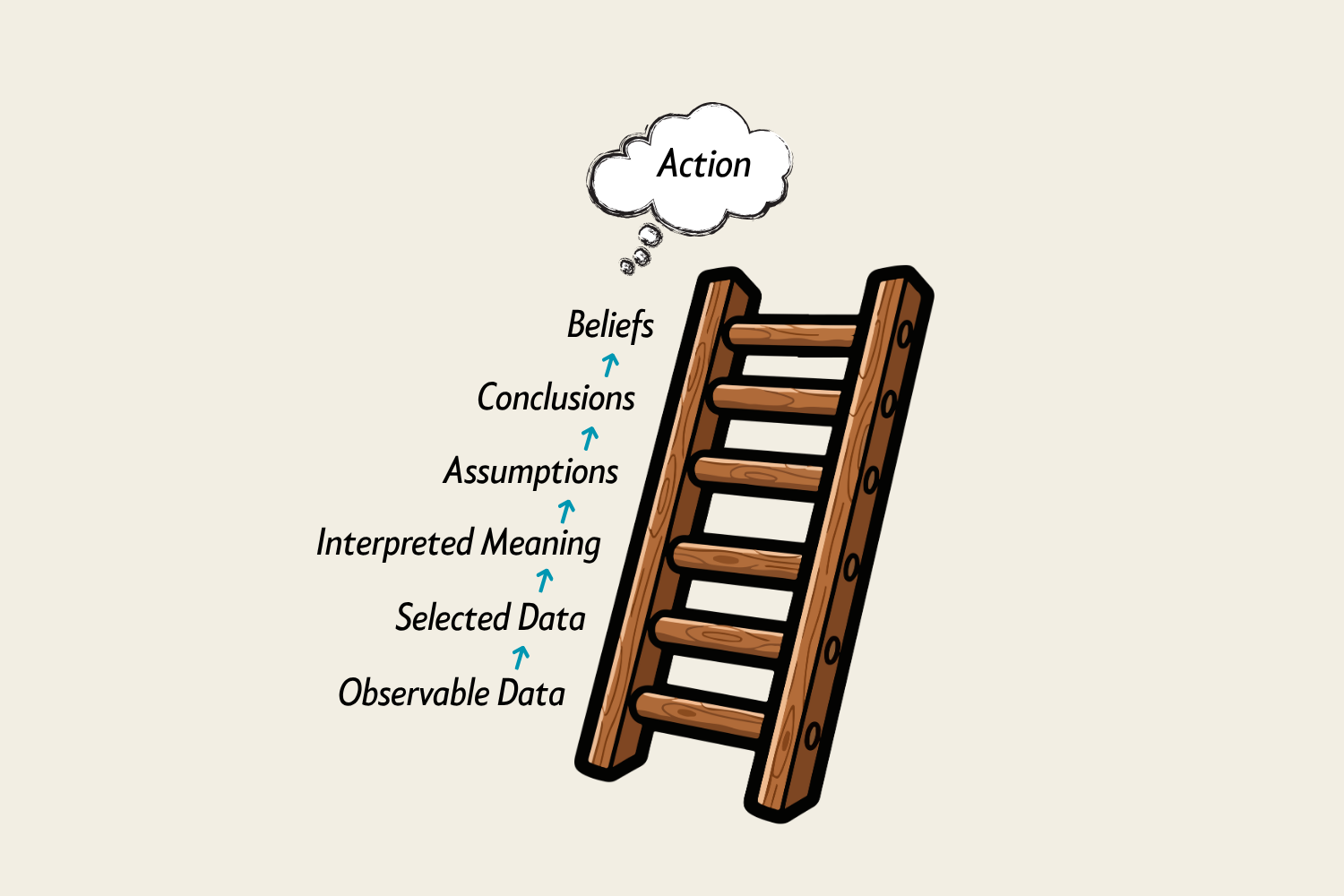
Ladder of Inference
Your mind turns a fact into belief through selection and assumption — you end up arguing with a story, not reality.

The Insecurity Loop
A model of how insecurity, disguised as ego, shame, or control, drives a self-feeding cycle that pushes your team away.

The Leadership Code
Leadership runs on three traits — head, gut, heart — each toxic alone: competence without character is arrogance, courage without it reckless.

The Pygmalion Effect
What you expect from someone leaks into how you treat them, which shapes what they become — for better or worse.
Books related to The Three Brains Framework

Burnout
The Nagoski sisters' sharp distinction between a stressor and the stress itself, and why removing the stressor from your life doesn't automatically get the stress out of your body. A rethink for any manager who treats "just manage your workload better" as the fix.

Crucial Conversations
A manager's guide to the book about the story you make up before you open your mouth. It's not really a book about talking, but about the half-second before you talk that decides whether the conversation goes well or badly.

Four Thousand Weeks
Oliver Burkeman's blunt reminder that the average human life is about four thousand weeks long, and that every productivity system built to escape that limit is making the anxiety worse, not better.

Grit
Angela Duckworth's research-backed case that sustained passion and perseverance beat raw talent, a useful gut-check for any manager who keeps betting on the "naturally gifted" hire over the stubborn one.

Hidden Potential
Adam Grant's argument that where you start matters far less than how far you're willing to grow, and that the character skills enabling that growth are learnable, not innate, no matter how your scorecard looks on day one.

Mindset
Carol Dweck's research on why some people treat ability as fixed and others treat it as something built, and why the belief you hold about yourself shapes how your whole team learns, fails, and improves, often without anyone noticing it happening.

Rest
Alex Soojung-Kim Pang's argument that rest isn't the opposite of great work. It's part of how great work gets made. A useful corrective for any manager who treats recovery as what's left over after hustle.

Slow Productivity
Cal Newport's challenge to "busy equals productive": a case that most knowledge work rewards visible activity over actual output, and a different model built on doing less, at a sustainable pace, to a genuinely higher standard.

Stillness Is the Key
Ryan Holiday's case that the people who handle pressure, power, and chaos best aren't the busiest or the most driven, they're the ones who've built real stillness into their mind, body, and sense of purpose, usually against the current of everything around them.

Stolen Focus
Johann Hari's argument that your attention problem probably isn't a personal willpower failure, it's a predictable outcome of systems deliberately engineered to fragment it. Uncomfortable reading for any manager who's told a struggling employee to "just focus better."

The 5AM Club
Robin Sharma's parable-driven case for owning the first hour of your day before the world gets a vote. Less about waking up early for its own sake, and more about who's actually running your mornings.

The 7 Habits of Highly Effective People
Stephen Covey's classic, read through a modern-manager lens. Many of the ideas taught today as "new" leadership frameworks were already captured here decades ago.

The Daily Stoic
A year of short, daily meditations drawn from Marcus Aurelius, Seneca, and Epictetus, organized into one practical claim: the ancient Stoics weren't writing philosophy for philosophers. They were writing a manual for getting through hard days without losing yourself.

The Obstacle Is the Way
Ryan Holiday's modern take on Stoic philosophy, built around a single claim: the obstacle in front of you isn't blocking the path, it is the path. A sharp antidote to managers who treat setbacks as proof the plan was wrong.

Triggers
Executive coach Marshall Goldsmith's case that you don't fail to become the leader you intend to be because of weak character. You fail because your environment is triggering the wrong behavior all day without much notice, and nobody built a structure to catch it.

When the Body Says No
Gabor Maté's case, drawn from decades of clinical practice, that chronically suppressing your own needs and emotions to keep the peace has a real physical cost. A hard look at the leader who's never once said no and wears it as a point of pride.

Wintering
Katherine May's case that the fallow, difficult stretches of life, a loss, a burnout, an illness, a plain bad year, aren't failures to snap out of, but seasons with their own logic. An uncommon lens for leaders who treat every low point as a problem to solve away fast.