The Insecurity Loop
A model of how insecurity, disguised as ego, shame, or control, drives a self-feeding cycle that pushes your team away.
 Find this on the mind-map
Introduction
Gaurav Jain built the Insecurity Loop on a simple, uncomfortable claim: most of what gets called "bad leadership" is actually unprocessed insecurity, not a missing skill. A Harvard Business Review study found that 69% of executives struggle with impostor syndrome even after years of visible success, and most of them keep it hidden. What shows up on the surface instead are the symptoms — micromanagement, ego, defensiveness, burnout.
How It Works
Insecurity doesn't announce itself. It hides behind three disguises that look, from the outside, like the opposite of what they actually are.
| Disguise | How it shows up | Looks like | What it actually does |
|---|---|---|---|
| Ego, the loud cover-up | Talking more than listening, working hard to sound like the smartest person in the room, dismissing disagreement fast | Strength | Breaks trust. Your team stops offering ideas, feedback, and the truth, because they can feel the insecurity underneath it. |
| Shame, the quiet withdrawal | Hiding mistakes, doubting your right to lead, running on "I'm not good enough" and "I don't belong here" | Humility | Your team loses confidence in you. |
| Control, the gripping reflex | Micromanaging, not trusting others to step up, taking on too much and then resenting it | Competence | Exposes your own lack of trust, blocks your team's growth, and turns you into the bottleneck. |
From there, the loop runs in four steps:
- You feel exposed, uncertain, or not enough. A peer outperforms you. A milestone slips. Someone challenges your thinking. A bigger role stretches you past your limits. Your confidence wobbles, and instead of naming the feeling, you suppress it — because somewhere along the way you learned that vulnerability reads as weakness. The fear goes underground.
- You fake confidence and react with ego, shame, or control. Ego doubles down on authority. Shame withdraws or overcompensates. Control tries to grab everything. Each reaction feels safe in the moment and leaves the actual fear untouched. Every time you react instead of reflect, the fear gets a little stronger.
- Others react to you reacting. Your team hesitates to speak up. You burn yourself out holding everything together alone. Distance opens between you and the people around you, and the collaboration and trust that would help most starts to wear away.
- The insecurity deepens and the loop tightens. More isolation, more reacting, less reflecting. The next spin starts from a worse position than the last one.
The cycle feeds itself. Every turn reinforces the belief that you have to protect yourself and that nobody else can be trusted to help — which makes the next turn even harder to stop.
Why It Matters for Leaders
The loop is invisible from the outside, which is exactly what makes it expensive. You can be running a high-visibility program with polished decks, a detailed plan, and a confident posture in every meeting — while taking every disagreement personally and reading every small delay as a verdict on your leadership. Nobody around you notices, because all your effort is going into making sure nobody notices.
Because it looks like personality, it gets misdiagnosed as a skills gap. Sending a micromanager on a delegation course does nothing if the micromanagement is actually fear of being seen as dispensable. Coaching someone who over-apologizes on their executive presence does nothing if the apologizing is shame about deserving the seat in the first place.
Picture three versions of this. A senior product lead opens every sentence with an apology, gets steamrolled in cross-functional meetings, and each dismissal quietly confirms her belief that she doesn't belong there. An engineering manager rewrites his team's code line by line and never takes a weekend off — and the more he absorbs, the less his team delivers, which only proves to him that nobody else can do it. A director who prides herself on being low-drama avoids every hard conversation until the team is in outright chaos, feels terrible about it, and restarts the whole cycle.
The cost lands on your team too. A team that can sense a leader's insecurity stops bringing problems forward early — which cuts off exactly the information you need, and raises the odds that the next blow-up catches you off guard. The same loop plays out across your whole team, not just inside your own head.
What to do next
Test your knowledge of The Insecurity Loop
Practice The Insecurity Loop
Apply The Insecurity Loop to a real situation
Skills related to The Insecurity Loop

Frameworks related to The Insecurity Loop
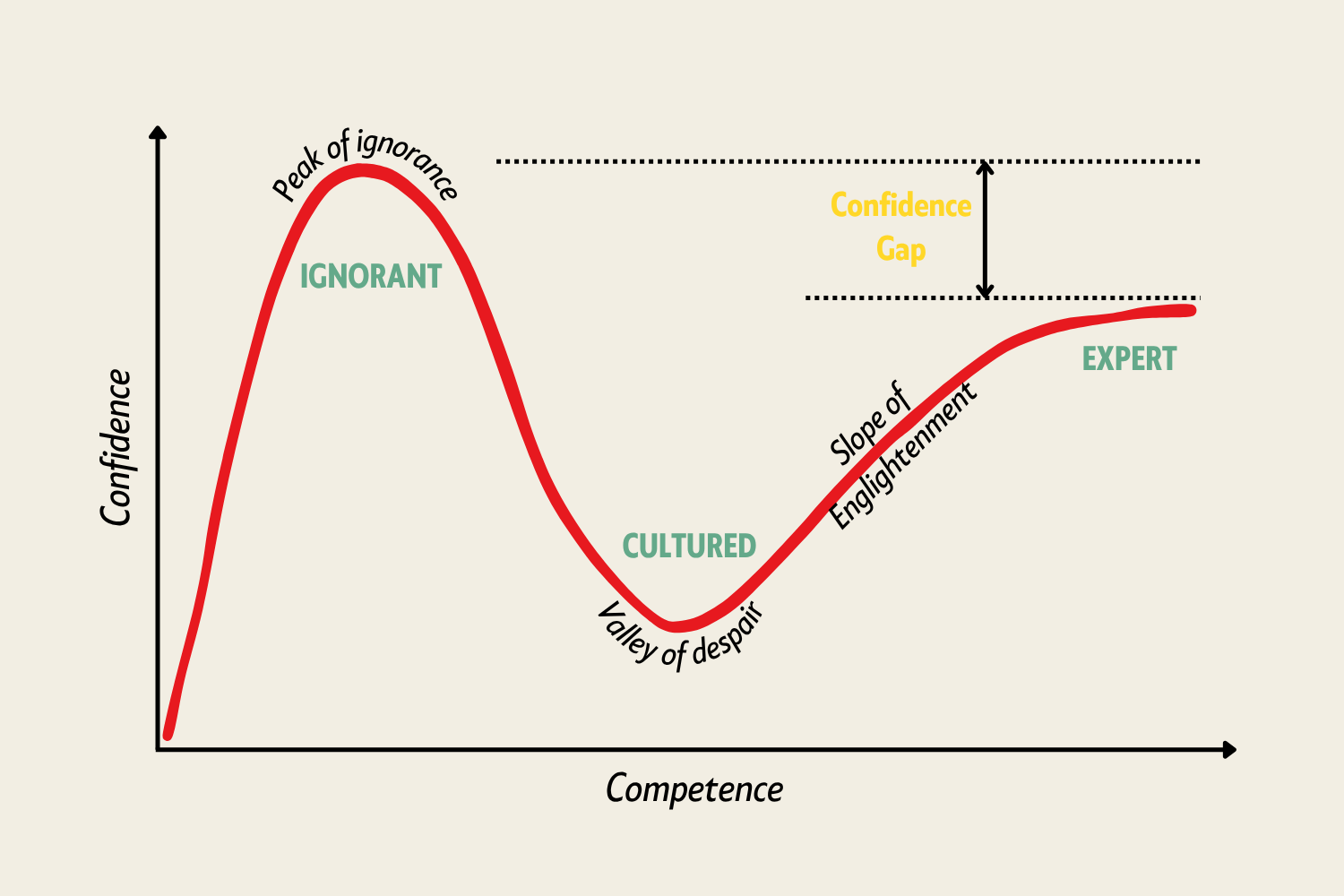
Dunning-Kruger Effect
Knowing little makes you feel unstoppable; knowing more makes you hesitate — the loudest voice is rarely the most reliable one.
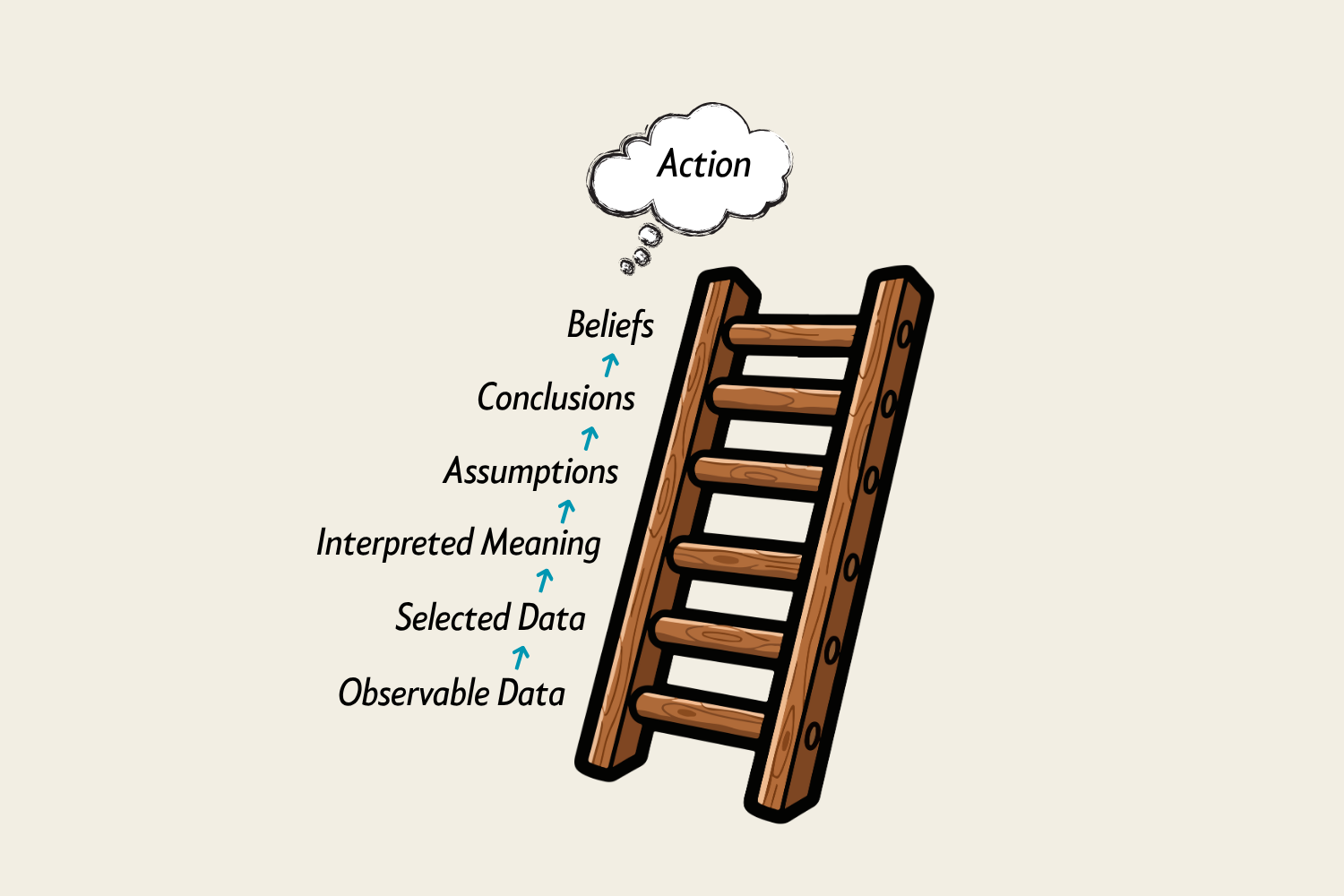
Ladder of Inference
Your mind turns a fact into belief through selection and assumption — you end up arguing with a story, not reality.

The Leadership Code
Leadership runs on three traits — head, gut, heart — each toxic alone: competence without character is arrogance, courage without it reckless.

The Pygmalion Effect
What you expect from someone leaks into how you treat them, which shapes what they become — for better or worse.

The Three Brains Framework
Three systems compete to drive your response — reactive, emotional, thinking. Pause, align, choose — that's how you decide which one leads.
Books related to The Insecurity Loop

Burnout
The Nagoski sisters' sharp distinction between a stressor and the stress itself, and why removing the stressor from your life doesn't automatically get the stress out of your body. A rethink for any manager who treats "just manage your workload better" as the fix.

Crucial Conversations
A manager's guide to the book about the story you make up before you open your mouth. It's not really a book about talking, but about the half-second before you talk that decides whether the conversation goes well or badly.

Four Thousand Weeks
Oliver Burkeman's blunt reminder that the average human life is about four thousand weeks long, and that every productivity system built to escape that limit is making the anxiety worse, not better.

Grit
Angela Duckworth's research-backed case that sustained passion and perseverance beat raw talent, a useful gut-check for any manager who keeps betting on the "naturally gifted" hire over the stubborn one.

Hidden Potential
Adam Grant's argument that where you start matters far less than how far you're willing to grow, and that the character skills enabling that growth are learnable, not innate, no matter how your scorecard looks on day one.

Mindset
Carol Dweck's research on why some people treat ability as fixed and others treat it as something built, and why the belief you hold about yourself shapes how your whole team learns, fails, and improves, often without anyone noticing it happening.

Rest
Alex Soojung-Kim Pang's argument that rest isn't the opposite of great work. It's part of how great work gets made. A useful corrective for any manager who treats recovery as what's left over after hustle.

Slow Productivity
Cal Newport's challenge to "busy equals productive": a case that most knowledge work rewards visible activity over actual output, and a different model built on doing less, at a sustainable pace, to a genuinely higher standard.

Stillness Is the Key
Ryan Holiday's case that the people who handle pressure, power, and chaos best aren't the busiest or the most driven, they're the ones who've built real stillness into their mind, body, and sense of purpose, usually against the current of everything around them.

Stolen Focus
Johann Hari's argument that your attention problem probably isn't a personal willpower failure, it's a predictable outcome of systems deliberately engineered to fragment it. Uncomfortable reading for any manager who's told a struggling employee to "just focus better."

The 5AM Club
Robin Sharma's parable-driven case for owning the first hour of your day before the world gets a vote. Less about waking up early for its own sake, and more about who's actually running your mornings.

The 7 Habits of Highly Effective People
Stephen Covey's classic, read through a modern-manager lens. Many of the ideas taught today as "new" leadership frameworks were already captured here decades ago.

The Daily Stoic
A year of short, daily meditations drawn from Marcus Aurelius, Seneca, and Epictetus, organized into one practical claim: the ancient Stoics weren't writing philosophy for philosophers. They were writing a manual for getting through hard days without losing yourself.

The Obstacle Is the Way
Ryan Holiday's modern take on Stoic philosophy, built around a single claim: the obstacle in front of you isn't blocking the path, it is the path. A sharp antidote to managers who treat setbacks as proof the plan was wrong.

Triggers
Executive coach Marshall Goldsmith's case that you don't fail to become the leader you intend to be because of weak character. You fail because your environment is triggering the wrong behavior all day without much notice, and nobody built a structure to catch it.

When the Body Says No
Gabor Maté's case, drawn from decades of clinical practice, that chronically suppressing your own needs and emotions to keep the peace has a real physical cost. A hard look at the leader who's never once said no and wears it as a point of pride.

Wintering
Katherine May's case that the fallow, difficult stretches of life, a loss, a burnout, an illness, a plain bad year, aren't failures to snap out of, but seasons with their own logic. An uncommon lens for leaders who treat every low point as a problem to solve away fast.