Hidden Potential
Adam Grant's argument that where you start matters far less than how far you're willing to grow, and that the character skills enabling that growth are learnable, not innate, no matter how your scorecard looks on day one.
 Find this on the mind-map
Introduction
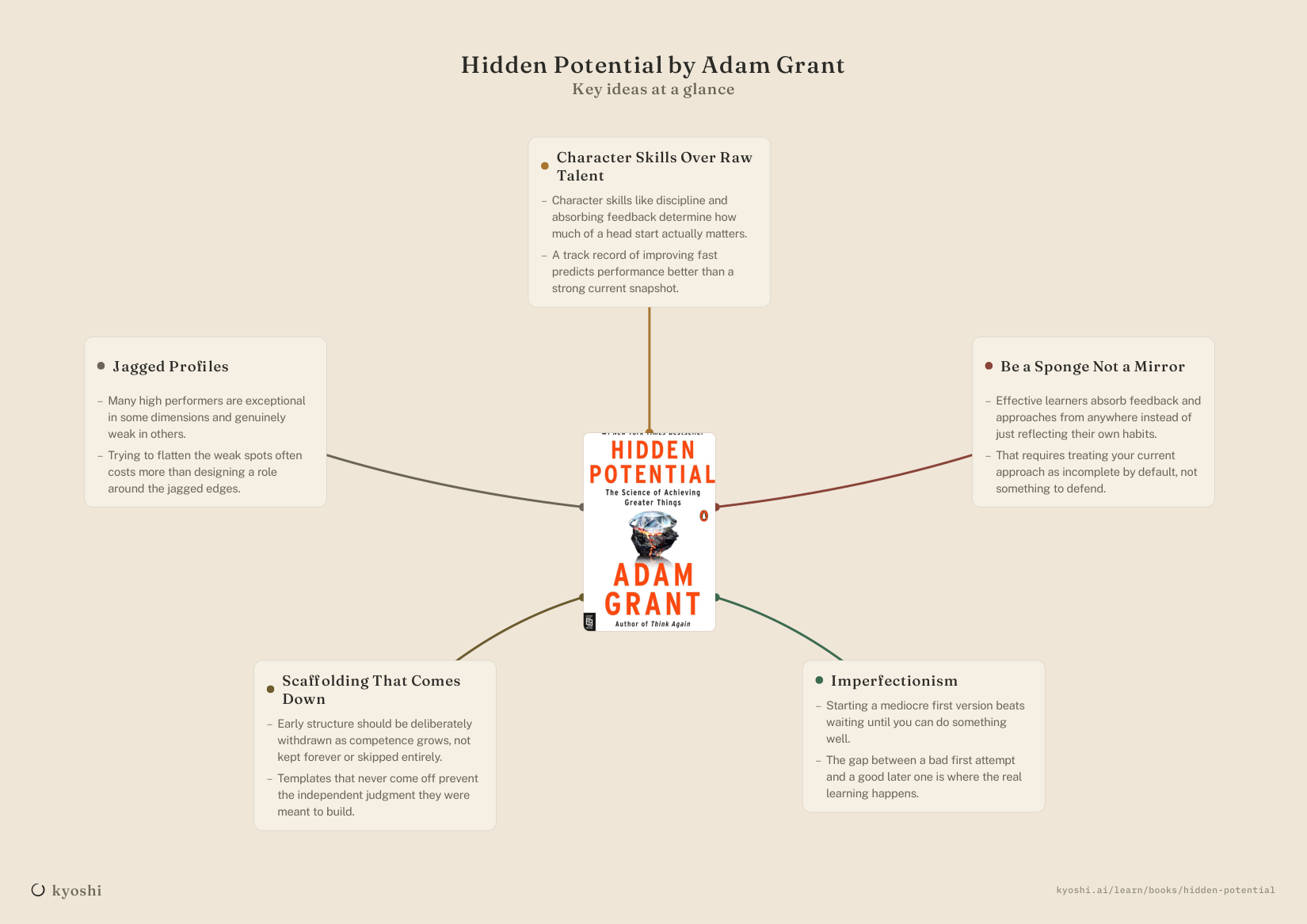
Adam Grant opens from a simple but uncomfortable observation: we're much better at measuring where someone starts than at predicting how far they'll go, and most selection systems, hiring processes, school admissions, talent scouting, reward polish and prior advantage over actual growth capacity without much scrutiny. The book's real argument is that a set of learnable character skills, not raw starting talent, determines how much of someone's potential actually gets realized, and that most organizations are built to filter for the wrong thing.
Character Skills, Not Raw Talent
Grant distinguishes between talent, a head start, and character skills like discipline, proactivity, and the ability to absorb and apply feedback, which determine how much of that head start, or lack of one, actually matters over time. Someone starting behind with strong character skills routinely overtakes someone starting ahead without them. The practical implication for hiring and promotion: a track record of improving rapidly is a better predictor of future performance than a strong current snapshot, and most evaluation processes are built almost entirely around the snapshot.
Becoming a Sponge, Not a Mirror
Grant describes effective learners as acting like a sponge, absorbing useful information, feedback, and approaches from wherever they can get them, rather than like a mirror, which just reflects back what it already contains. The sponge mode requires a specific kind of humility: treating your current approach as incomplete by default, not as something to defend. Picture two new managers watching a peer run a difficult layoff conversation well. One dismisses it ("that's just her style, it wouldn't work for me"). The other pulls apart exactly what she did and tries a version of it the next time they're in that position themselves. Only one of them actually got better from watching.
Imperfectionism: Starting Before You're Ready
A central idea is what Grant calls imperfectionism: deliberately starting and doing a mediocre first version of something rather than waiting until you can do it well, because the gap between a bad first attempt and a good later one is where the actual learning happens. Waiting for competence before starting guarantees you never get the reps that would have built it. This cuts directly against the instinct many high-achieving people have to only show work once it's polished.
Scaffolding: Structure That Gets Removed on Purpose
Grant emphasizes scaffolding: structure, support, or constraint deliberately provided early in a skill's development and deliberately withdrawn as competence grows, rather than either abandoning someone to sink or swim, or over-supporting them indefinitely. A manager who gives a junior hire detailed templates for every task and never removes them is preventing exactly the independent judgment they're trying to build. The scaffolding was supposed to come down.
Jagged Profiles: Uneven Isn't a Problem to Fix
Grant pushes against the instinct to smooth out a person's uneven skill profile into a well-rounded one, pointing out that many high performers have a genuinely jagged profile, exceptional in some dimensions, weak in others, and that trying to flatten the weak spots often costs more than just building around them. The better move is frequently finding a role or a team configuration where the jagged edges fit, rather than sanding everyone down to the same average shape.
Putting It Together
Grant's chain runs: character skills determine how much of someone's starting point actually matters, becoming a sponge is how those skills accumulate, imperfectionism is how you get the reps that build them, scaffolding is the structure that should shrink as competence grows, and a jagged skill profile is something to design around rather than something to fix. The unifying challenge to a manager: stop scoring people by where they started, and start paying attention to how fast the line is moving.
Why It Matters for Leaders
This book is really an argument against the way most managers do hiring and promotion: scanning for the strongest current snapshot and treating it as the whole answer. The better question, and the harder one to answer in a thirty-minute interview, is how fast someone's gotten better at the things that were hard for them a year ago. A candidate who started behind and closed the gap fast is often the stronger long-term bet than the one who started ahead and has been coasting on it since.
It also changes what you should be modeling in front of your own team. If you only ever show up with polished decks and finished plans, you're telling people, without saying it out loud, that showing early, rough work is a risk. The managers who build teams that actually improve are the ones who share a half-formed idea on purpose, let it get picked apart, and treat that as normal, not as a failure.
Scaffolding is the piece that's easiest to get wrong in both directions. New hires get buried in checklists that never come off, and stay dependent on them two years in. Or they get thrown in with no structure at all and spend months rediscovering things a template would have handed them in week one. The skill isn't choosing one of those, it's setting a removal date for the support at the same time you put it in place.
Picture David, a manager who's just promoted his strongest individual contributor into her first lead role. His instinct is to give her a clean, finished playbook for every situation she might hit. Instead, he gives her a short template for her first few 1:1s, tells her explicitly that he's pulling it back after the third one, and has her run the fourth with no notes at all. She fumbles part of it. That fumble, and what she does differently the next week, is the part of the job David actually needed her to learn, and she couldn't have learned it with the scaffolding still up.
What to do next
Reinforce your understanding of Hidden Potential
Books related to Hidden Potential

Burnout
The Nagoski sisters' sharp distinction between a stressor and the stress itself, and why removing the stressor from your life doesn't automatically get the stress out of your body. A rethink for any manager who treats "just manage your workload better" as the fix.

Crucial Conversations
A manager's guide to the book about the story you make up before you open your mouth. It's not really a book about talking, but about the half-second before you talk that decides whether the conversation goes well or badly.

Four Thousand Weeks
Oliver Burkeman's blunt reminder that the average human life is about four thousand weeks long, and that every productivity system built to escape that limit is making the anxiety worse, not better.

Grit
Angela Duckworth's research-backed case that sustained passion and perseverance beat raw talent, a useful gut-check for any manager who keeps betting on the "naturally gifted" hire over the stubborn one.

Mindset
Carol Dweck's research on why some people treat ability as fixed and others treat it as something built, and why the belief you hold about yourself shapes how your whole team learns, fails, and improves, often without anyone noticing it happening.

Rest
Alex Soojung-Kim Pang's argument that rest isn't the opposite of great work. It's part of how great work gets made. A useful corrective for any manager who treats recovery as what's left over after hustle.

Slow Productivity
Cal Newport's challenge to "busy equals productive": a case that most knowledge work rewards visible activity over actual output, and a different model built on doing less, at a sustainable pace, to a genuinely higher standard.

Stillness Is the Key
Ryan Holiday's case that the people who handle pressure, power, and chaos best aren't the busiest or the most driven, they're the ones who've built real stillness into their mind, body, and sense of purpose, usually against the current of everything around them.

Stolen Focus
Johann Hari's argument that your attention problem probably isn't a personal willpower failure, it's a predictable outcome of systems deliberately engineered to fragment it. Uncomfortable reading for any manager who's told a struggling employee to "just focus better."

The 5AM Club
Robin Sharma's parable-driven case for owning the first hour of your day before the world gets a vote. Less about waking up early for its own sake, and more about who's actually running your mornings.

The 7 Habits of Highly Effective People
Stephen Covey's classic, read through a modern-manager lens. Many of the ideas taught today as "new" leadership frameworks were already captured here decades ago.

The Daily Stoic
A year of short, daily meditations drawn from Marcus Aurelius, Seneca, and Epictetus, organized into one practical claim: the ancient Stoics weren't writing philosophy for philosophers. They were writing a manual for getting through hard days without losing yourself.

The Obstacle Is the Way
Ryan Holiday's modern take on Stoic philosophy, built around a single claim: the obstacle in front of you isn't blocking the path, it is the path. A sharp antidote to managers who treat setbacks as proof the plan was wrong.

Triggers
Executive coach Marshall Goldsmith's case that you don't fail to become the leader you intend to be because of weak character. You fail because your environment is triggering the wrong behavior all day without much notice, and nobody built a structure to catch it.

When the Body Says No
Gabor Maté's case, drawn from decades of clinical practice, that chronically suppressing your own needs and emotions to keep the peace has a real physical cost. A hard look at the leader who's never once said no and wears it as a point of pride.

Wintering
Katherine May's case that the fallow, difficult stretches of life, a loss, a burnout, an illness, a plain bad year, aren't failures to snap out of, but seasons with their own logic. An uncommon lens for leaders who treat every low point as a problem to solve away fast.
Skills related to Hidden Potential

Frameworks related to Hidden Potential
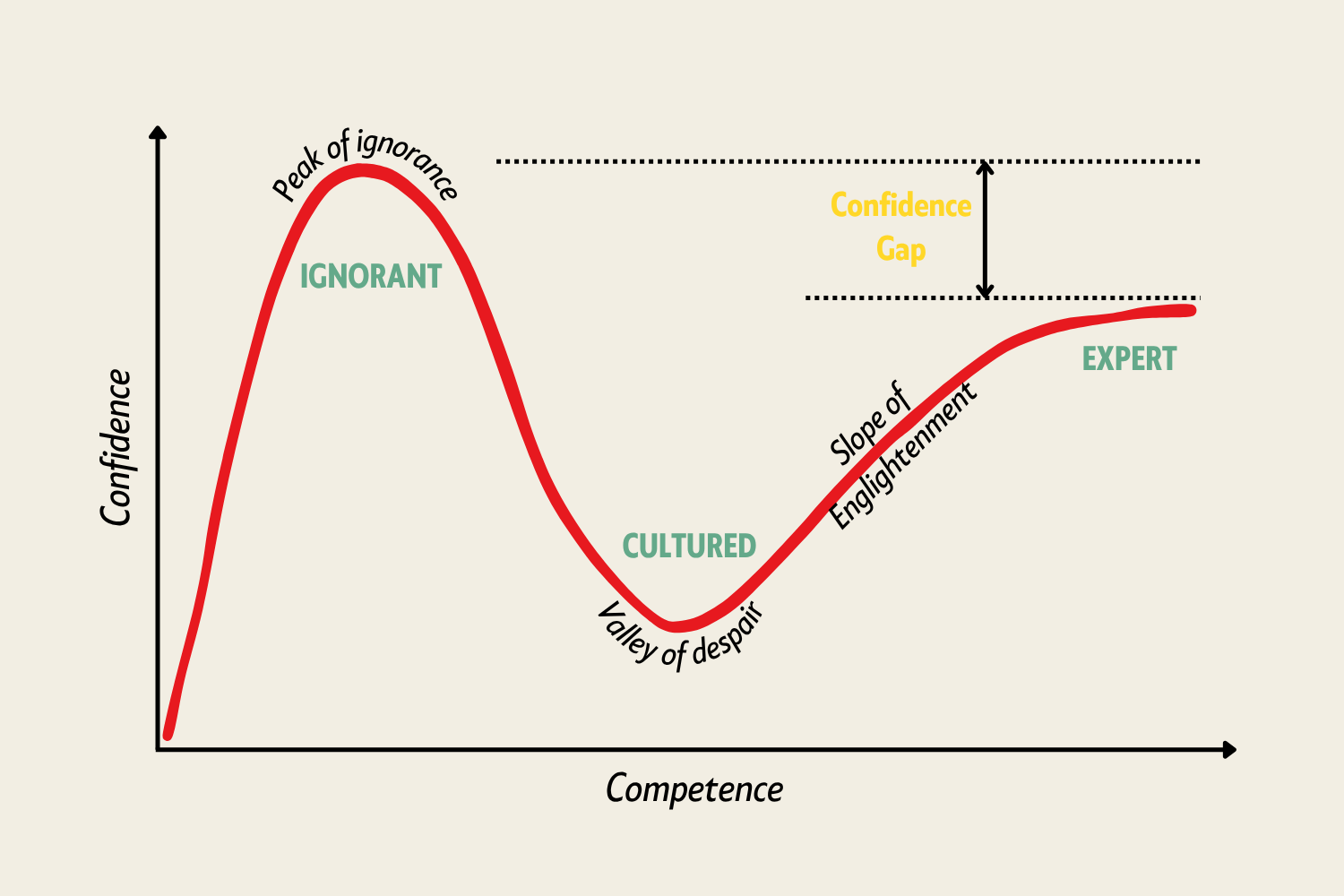
Dunning-Kruger Effect
Knowing little makes you feel unstoppable; knowing more makes you hesitate — the loudest voice is rarely the most reliable one.
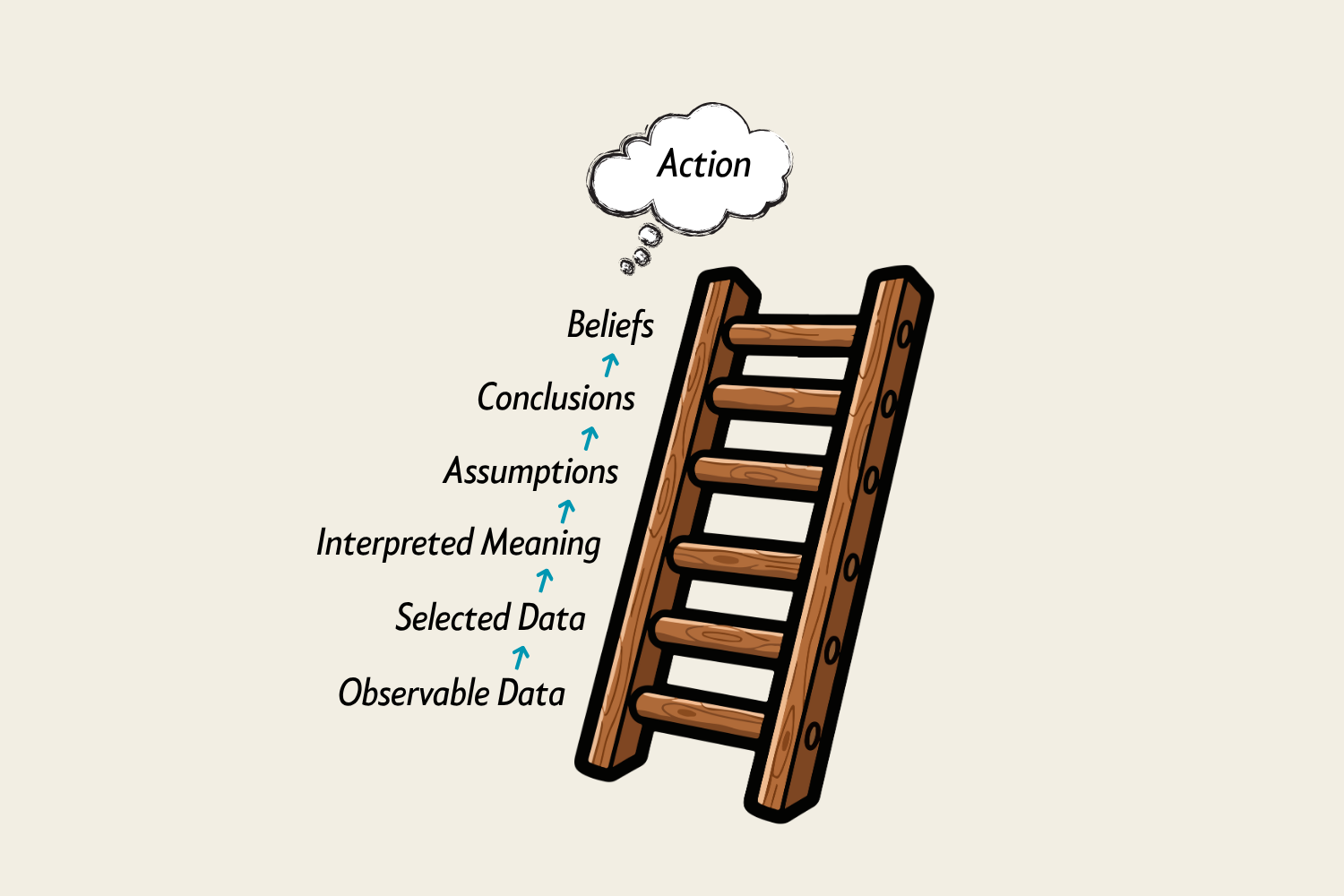
Ladder of Inference
Your mind turns a fact into belief through selection and assumption — you end up arguing with a story, not reality.

The Insecurity Loop
A model of how insecurity, disguised as ego, shame, or control, drives a self-feeding cycle that pushes your team away.

The Leadership Code
Leadership runs on three traits — head, gut, heart — each toxic alone: competence without character is arrogance, courage without it reckless.

The Pygmalion Effect
What you expect from someone leaks into how you treat them, which shapes what they become — for better or worse.

The Three Brains Framework
Three systems compete to drive your response — reactive, emotional, thinking. Pause, align, choose — that's how you decide which one leads.