Self-Awareness
Knowing your own strengths, blind spots, and emotional patterns — and knowing how they actually land on the people around you.
 Find this on the mind-map
Introduction
A Harvard Business Review study found that 95% of people think they're self-aware, while only 10 to 15% actually are. So the odds are decent that you're carrying blind spots about yourself right now, and you have no way of knowing what they are.
Self-awareness really comes down to three things:
- How you think
- How you behave under different conditions
- How that behavior actually lands on the people around you
That third one is the part most leaders skip, because it's the only one you can't check by yourself. You can be honest with yourself all day and still be working off a perception of yourself that is completely out of sync with how your team actually experiences you.
When you're self-aware, your own read on yourself and your team's read on you start to line up. Feedback stops landing as a "surprise", and you can point to exactly which assumption or which emotional trigger produced a specific reaction, instead of being blindsided by it.
Why It Matters for Leaders
Here's what it looks like when this skill is missing:
- You think you're inspiring, and your team experiences you as demanding and stressful.
- You think you're being decisive, and your team reads the exact same behavior as impulsive and reckless.
That gap doesn't close on its own, of course. And the irony is this: the people who are best positioned to close that gap are the ones who actually see the real effect of your behavior - typically your team members - and they are usually the very people with the most to lose for being honest with you.
When you have developed self-awareness, you can see the payoff almost everywhere around you:
- You give better feedback, because you're not projecting your own blind spots onto someone else's.
- You make better decisions, because you know which of your own biases to watch out for.
- Your team trusts you faster, because what you say about yourself matches what they see.
Building self-awareness isn't complicated, but it does take real effort: ask for feedback you didn't have to ask for, notice your own reactions in the moment instead of only afterward, and treat every gap between how you meant something and how it landed as information, not an attack on you.
The most successful leaders are, unsuprisingly, extremely self-aware.
What to do next
Master Self-Awareness by taking the mini-course
Frameworks related to Self-Awareness
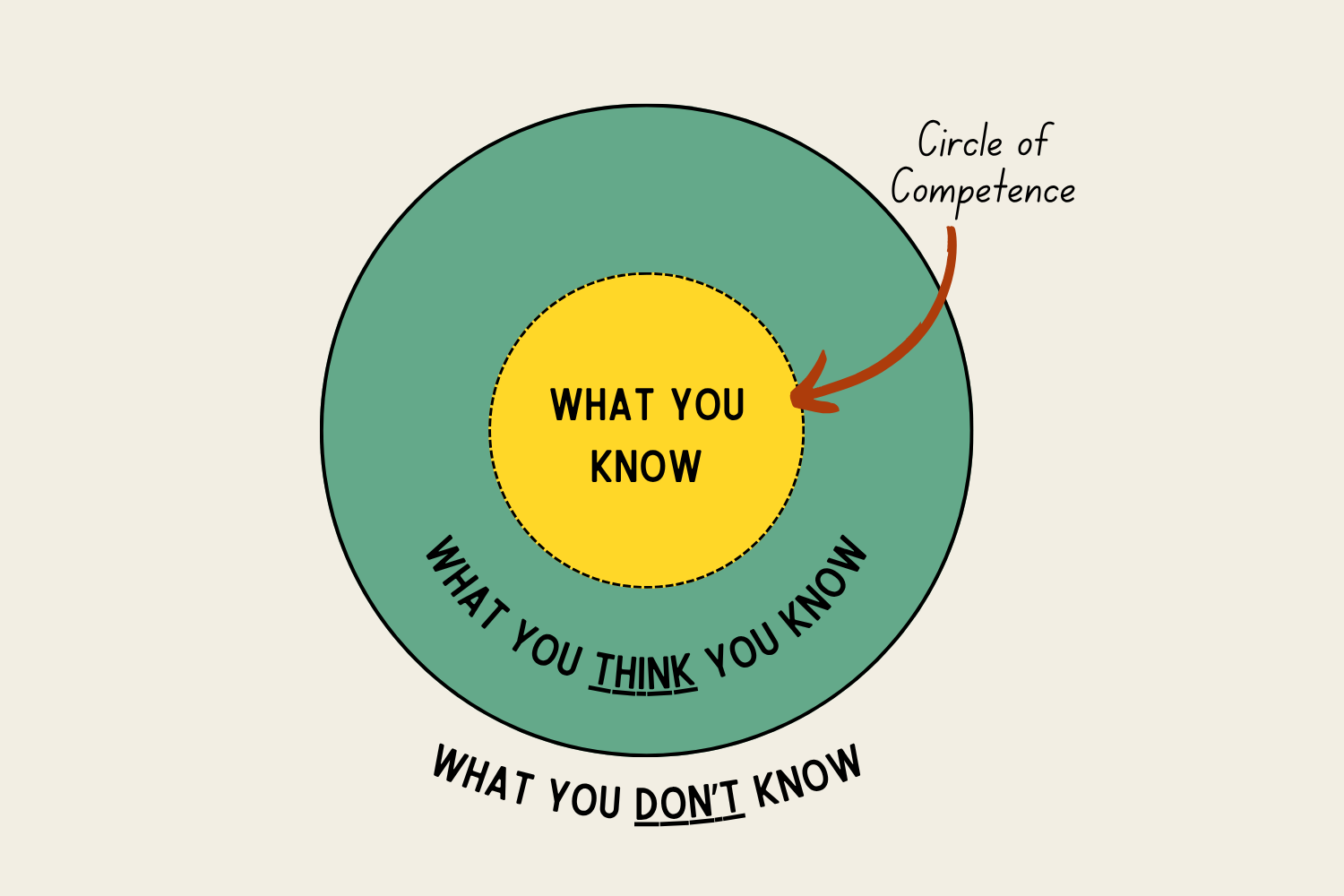
Circle of Competence
Buffett and Munger's model for knowing exactly where your understanding ends — size doesn't matter, honesty about the edge does.

EQ Framework
A 2x2 of emotional intelligence — self or social, noticing or acting — giving four skills: self-awareness, self-management, social awareness, relationship management.

Johari Window
A 2x2 mapping what you know about yourself against what others know — exposing blind spots, building trust through disclosure.
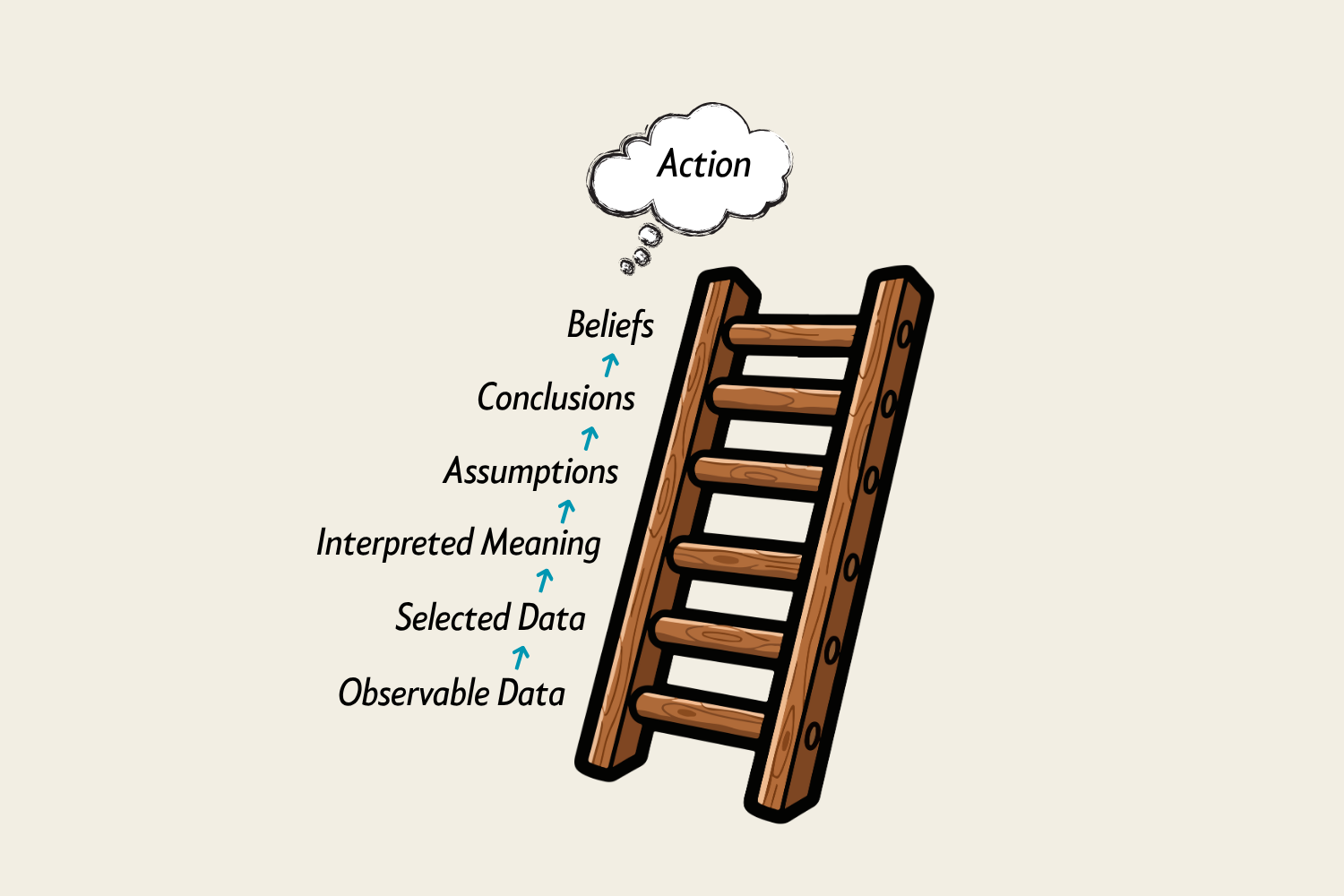
Ladder of Inference
Your mind turns a fact into belief through selection and assumption — you end up arguing with a story, not reality.

The Four Temperaments
An ancient personality model — Sanguine, Choleric, Melancholic, Phlegmatic — a fast vocabulary for reading your style, your team, and your boss.
Books related to Self-Awareness

Emotional Intelligence
Daniel Goleman's case that how you handle emotion, your own and everyone else's, predicts success better than raw intellect. The book that put "EQ" into every manager's vocabulary, for good reason.

Emotional Intelligence 2.0
The practical, test-and-strategies follow-up to the emotional intelligence conversation: less theory, more "here's exactly what to do on Tuesday," built around four skills you can actually practice and measure.

Primal Leadership
The case that a leader's mood isn't a private matter. It's contagious through the whole team, which makes emotional intelligence the real infrastructure underneath every other leadership skill.

Stillness Is the Key
Ryan Holiday's case that the people who handle pressure, power, and chaos best aren't the busiest or the most driven, they're the ones who've built real stillness into their mind, body, and sense of purpose, usually against the current of everything around them.

The Daily Stoic
A year of short, daily meditations drawn from Marcus Aurelius, Seneca, and Epictetus, organized into one practical claim: the ancient Stoics weren't writing philosophy for philosophers. They were writing a manual for getting through hard days without losing yourself.

Think Again
Adam Grant's case that rethinking, actually changing your mind when the facts say you should, is a skill most smart people are terrible at, and a direct challenge to any manager who treats changing position as a sign of weakness.
