Johari Window
A 2x2 mapping what you know about yourself against what others know — exposing blind spots, building trust through disclosure.
 Find this on the mind-map
Introduction
Two American psychologists, Joseph Luft and Harrington Ingham, created the Johari Window in 1955 — the name is just their first names, Jo and Hari, mashed together. They built it while researching group dynamics, trying to understand how people relate to themselves and to each other, and it eventually moved out of group therapy and into leadership and team development, which is where it's proven most useful.
How It Works
The model is a grid on two axes: what you know about yourself versus what you don't, and what others know about you versus what they don't. That gives you four boxes.
| Known to self | Unknown to self | |
|---|---|---|
| Known to others | Open Area: the values, habits, quirks, and communication style both sides already agree on. Trust and alignment live here. | Blind Spot: what others see that you don't — your tone, your body language, the gap between what you intend and what actually lands. |
| Unknown to others | Hidden Area: insecurities, motivations, past experiences, and unspoken values you're choosing not to share. | Unknown Area: untapped potential, latent triggers, and strengths that only show up under stress or in new situations. |
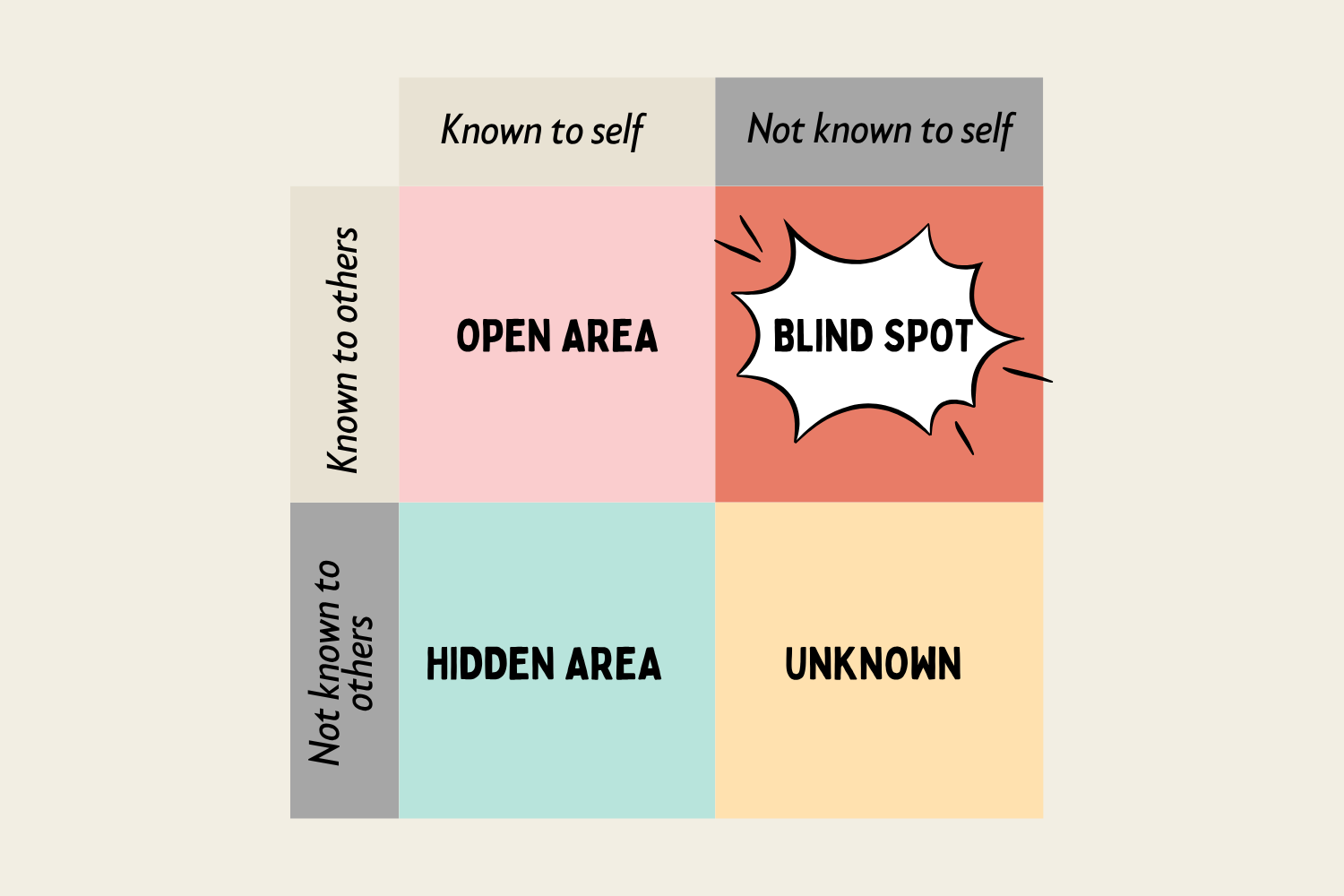
None of these boxes are fixed — the window is a living thing, and as one area grows, the others shrink:
- Share more, and the Hidden Area shrinks while the Open Area grows.
- Ask for feedback, and the Blind Spot shrinks.
- Reflect, explore, and take on stretch work, and the Unknown Area shrinks.
The goal is a large Open Area. Leaders who operate there lead with more clarity and consistency, simply because their team isn't spending energy guessing at what they actually mean.
Why It Matters for Leaders
The gap between how you see yourself and how you actually come across is bigger than you'd guess. Research by Tasha Eurich found that 95% of people believe they're self-aware, while only 10 to 15% actually are. A 2022 Harvard Business Review study found self-aware leaders are three times more likely to be rated effective by their own teams.
That gap costs you. You can walk into a meeting believing you're being supportive while your team experiences it as micromanagement. You can roll out a strategy you think is crystal clear and watch the room leave confused. You can't build trust with someone if you don't even know it's missing.
The Blind Spot deserves the most worry, precisely because it's invisible by definition. Take an engineering manager who was warm, approachable, and genuinely well-liked — and whose team kept missing deadlines and shipping buggy code anyway. When she finally sat down and asked each person what she could do differently, the answers all pointed the same way: nobody knew what actually mattered most, and nobody wanted to push back on someone that nice. Her kindness had been quietly masking a lack of clarity and accountability the whole time.
The Hidden Area costs you differently. A newly promoted director kept every interaction strictly transactional, and his team would deliver work but never debate it with him. What he'd never told anyone was that an earlier rushed launch had shaped his whole belief in measured pacing. One five-minute story in a team meeting changed how the whole team engaged with him afterward — because what people don't know about you, they fill in with assumptions.
There's another payoff worth chasing too. When your team watches you ask for hard feedback and take it without getting defensive, it becomes safer for everyone else to speak up as well. Google's Project Aristotle found psychological safety was the one trait shared by its most effective teams, and growing your Open Area is one of the most direct ways you build it. See Psychological Safety.
What to do next
Test your knowledge of Johari Window
Practice Johari Window
Apply Johari Window to a real situation
Skills related to Johari Window

Frameworks related to Johari Window
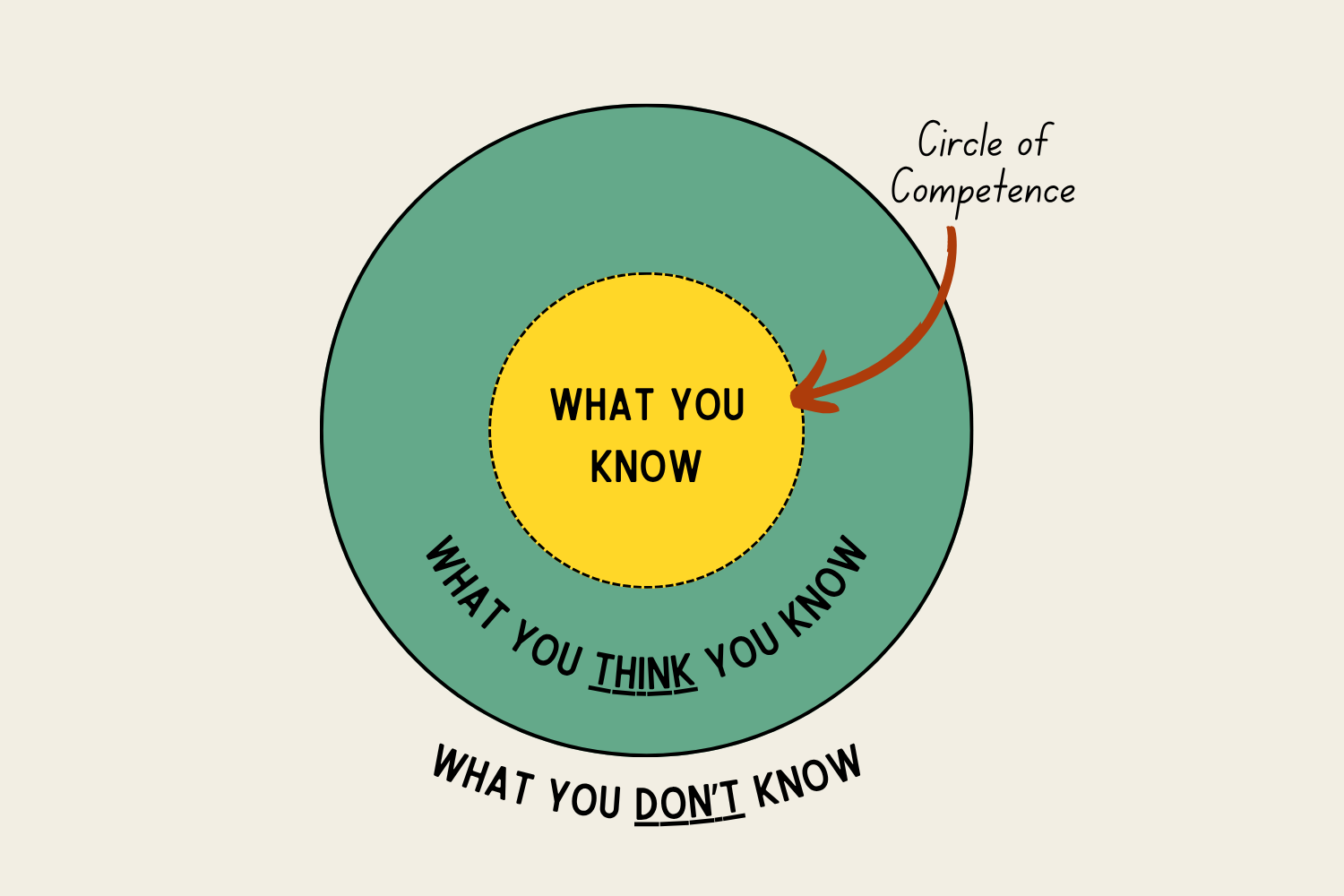
Circle of Competence
Buffett and Munger's model for knowing exactly where your understanding ends — size doesn't matter, honesty about the edge does.

EQ Framework
A 2x2 of emotional intelligence — self or social, noticing or acting — giving four skills: self-awareness, self-management, social awareness, relationship management.
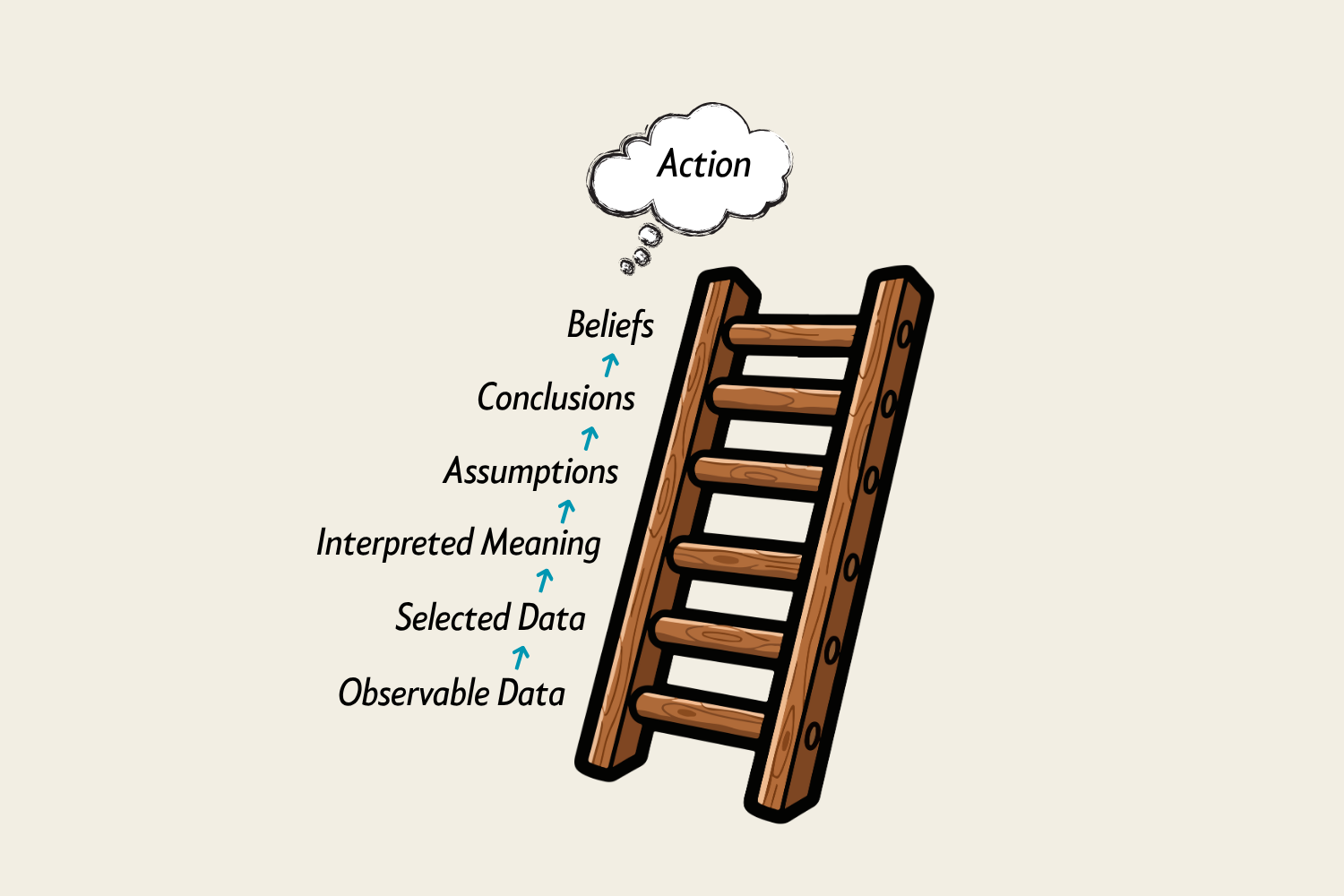
Ladder of Inference
Your mind turns a fact into belief through selection and assumption — you end up arguing with a story, not reality.

The Four Temperaments
An ancient personality model — Sanguine, Choleric, Melancholic, Phlegmatic — a fast vocabulary for reading your style, your team, and your boss.
Books related to Johari Window

Emotional Intelligence
Daniel Goleman's case that how you handle emotion, your own and everyone else's, predicts success better than raw intellect. The book that put "EQ" into every manager's vocabulary, for good reason.

Emotional Intelligence 2.0
The practical, test-and-strategies follow-up to the emotional intelligence conversation: less theory, more "here's exactly what to do on Tuesday," built around four skills you can actually practice and measure.

Primal Leadership
The case that a leader's mood isn't a private matter. It's contagious through the whole team, which makes emotional intelligence the real infrastructure underneath every other leadership skill.

Stillness Is the Key
Ryan Holiday's case that the people who handle pressure, power, and chaos best aren't the busiest or the most driven, they're the ones who've built real stillness into their mind, body, and sense of purpose, usually against the current of everything around them.

The Daily Stoic
A year of short, daily meditations drawn from Marcus Aurelius, Seneca, and Epictetus, organized into one practical claim: the ancient Stoics weren't writing philosophy for philosophers. They were writing a manual for getting through hard days without losing yourself.

Think Again
Adam Grant's case that rethinking, actually changing your mind when the facts say you should, is a skill most smart people are terrible at, and a direct challenge to any manager who treats changing position as a sign of weakness.