Leading with AI
Knowing when to trust AI-generated work, when to dig into the reasoning behind it, and how to use it without letting your own judgment go soft.
 Find this on the mind-map
Introduction
AI can produce work that looks finished in seconds — a clean plan, a polished doc, a confident-sounding answer. That's genuinely useful. It's also a new kind of trap: polish has stopped being a reliable signal of real thinking behind it, and you have to relearn how to tell the difference.
This skill is about using AI to move faster without quietly letting your own judgment atrophy, and about setting the tone for how your team uses it too. That means knowing which decisions you can hand off to a fast, AI-assisted first draft, and which ones need you to actually sit with the reasoning yourself before you trust the output. It also means noticing when a well-formatted answer is substituting for real thought — yours or someone else's.
Why It Matters for Leaders
Without this skill, you end up fooled by your own tools. You approve a plan because it reads well, not because you checked whether the logic underneath it holds up. Your team learns that a polished AI-assisted deliverable gets waved through, so producing the appearance of good work becomes the actual incentive — and the muscle for doing the real thinking underneath it quietly weakens, on your team and in you.
Picture a team member who hands you a sharp-looking strategy doc, three weeks ahead of schedule. It reads confidently, the structure is clean, and you're tempted to just sign off. One direct question — "walk me through why option two beats option one" — is often all it takes to find out whether there's a real argument in there or just fluent phrasing.
When you've built this skill, you get the actual speed benefit AI offers without paying for it in judgment. You know which of your own decisions are cheap to get wrong and fine to fast-track, and which ones are expensive enough that you slow down and check the reasoning yourself. You ask your team the same kind of question you'd ask before this technology existed — "why," not just "what" — and you make it normal to ask it, so producing real thinking stays the thing that actually gets rewarded.
What to do next
Master Leading with AI by taking the mini-course
Frameworks related to Leading with AI
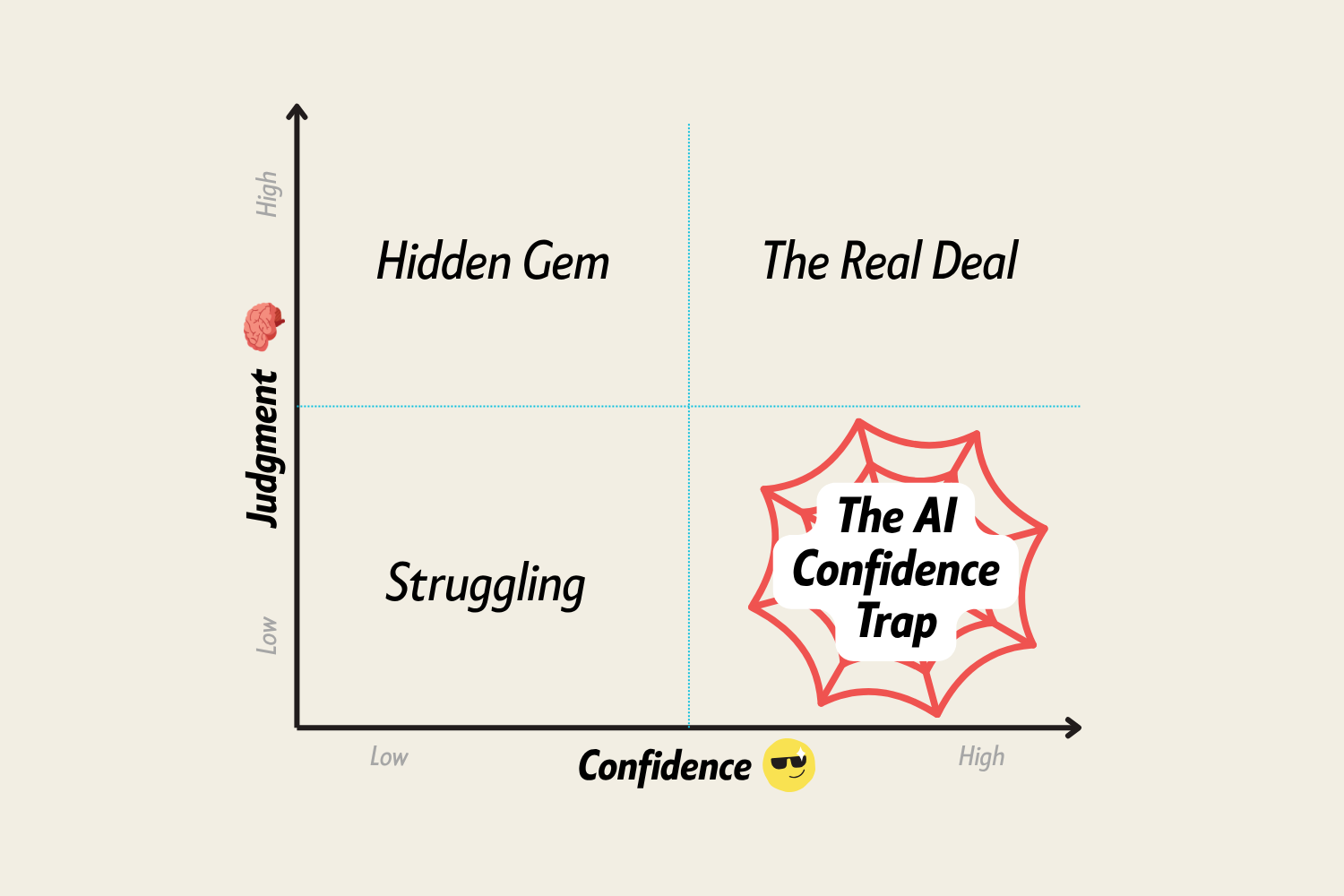
The AI Confidence Trap
AI-polished output can look like real competence when the thinking behind it isn't there — judge the reasoning, not the polish.

The AI Culture Stack
Same AI tools and budget, wildly different results — the gap isn't the technology, it's three layers underneath: permission, fluency, judgment.

The AI Fluency Framework
AI fluency isn't a prompting skill — it's the same four competencies that make someone a good manager: delegating, briefing, reviewing, and owning.
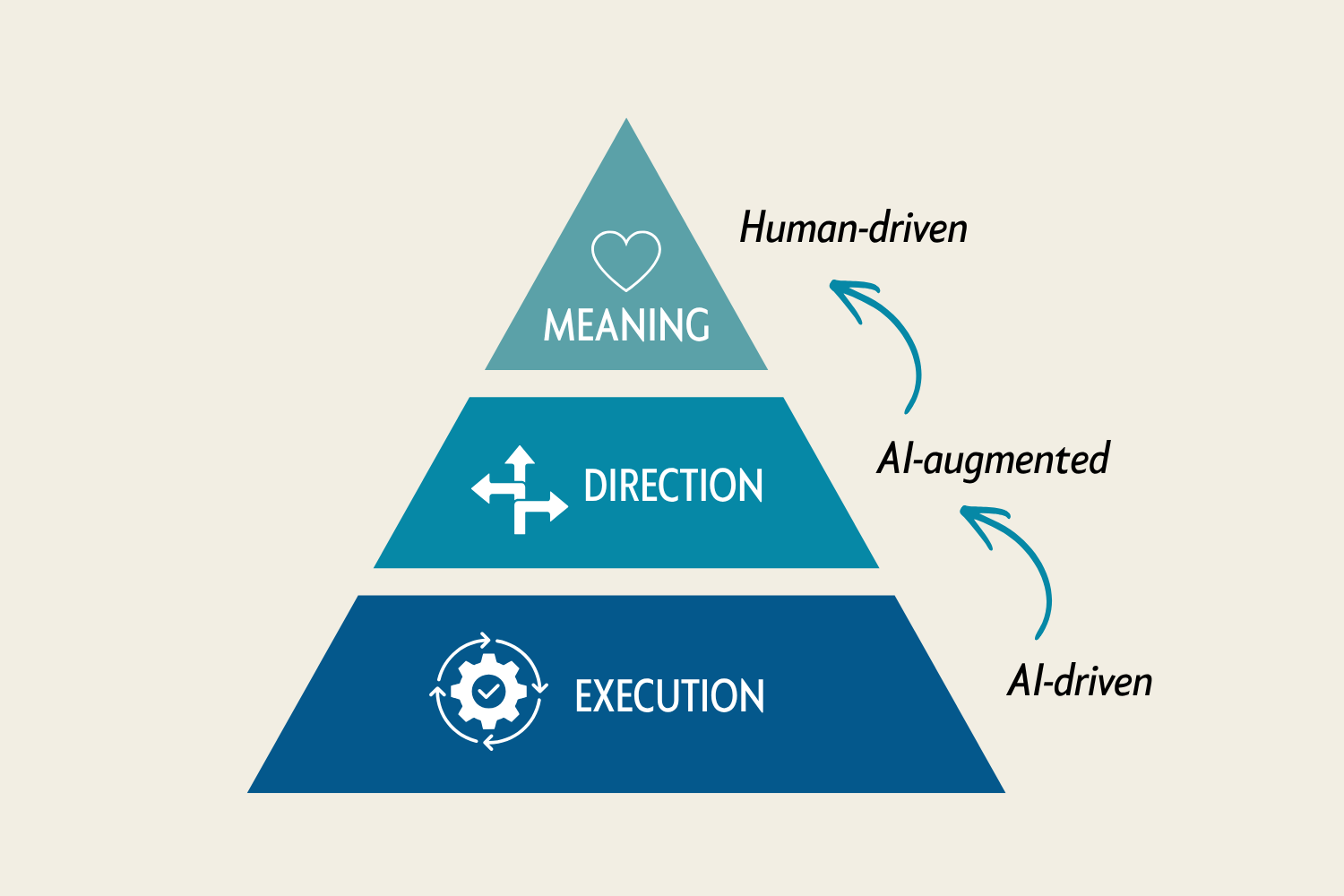
The Three Layers of Leadership
A pyramid — Execution, Direction, Meaning — where your value has to move up as AI automates execution.
Books related to Leading with AI

AI 2041
Ten speculative-fiction stories set in the year 2041, each in a different country and paired with Kai-Fu Lee's nonfiction breakdown of the real technology underneath. A way of making abstract AI trends concrete by showing, not just telling, how they might actually land in ordinary lives.

AI Superpowers
Kai-Fu Lee's argument, from inside both Silicon Valley and the Chinese tech industry, that the AI race has shifted from who has the best research to who can actually ship and scale it. On that axis, the competitive map looks very different than Western coverage usually suggests.

Co-Intelligence
Wharton professor Ethan Mollick's field guide to actually working with generative AI day to day, treating it less like software and more like a fast, occasionally brilliant, occasionally confidently wrong new colleague.

Competing in the Age of AI
Two Harvard Business School professors' argument that AI-native firms aren't running a better version of your business. They're running a fundamentally different machine, one built to scale decisions at almost zero marginal cost.

Empire of AI
Investigative journalist Karen Hao's case, built from years covering OpenAI and hundreds of interviews, that the leading AI labs should be understood not as idealistic research nonprofits but as empires in the old sense: extracting data, labor, and natural resources to concentrate power, dressed in the language of a mission to benefit humanity.

Prediction Machines
Three economists' reframing of AI, stripped of the hype: what modern machine learning actually does is make prediction cheap, and once prediction is cheap, the scarce, valuable thing left is judgment.
Skills related to Leading with AI

Creative Thinking
Finding the approach everyone else misses, by challenging assumptions, widening your options, and testing unfamiliar ideas cheaply before you commit to them.

Decision-Making
Making a measured call fast, on information that's never complete, and correcting course as evidence comes in instead of defending your first answer.

Mental Agility
Matching how you lead to the situation in front of you and the person you're leading, because the approach that worked yesterday might be exactly wrong today.

Pattern Recognition
Noticing that a handful of small, separate signals are actually one thing, and naming the trend before it's obvious to everyone else.

Political Savvy
Reading the relationships, incentives, and unwritten rules that actually decide whether your idea gets adopted, not just whether it's the right one.

Prioritization
Picking the handful of things that actually matter and putting the team's energy there, which means saying no to almost everything else.

Problem-Solving
Solving problems systematically, diagnosing what's actually wrong before jumping in with a fix.

Productivity
Directing your time and energy at the work that actually matters, instead of letting whatever lands first run your day.

Strategic Thinking
Stepping back to see where things are heading, and actually letting that change what you do today.

Systems Analysis
Tracing how a decision in one part of the organization moves through the rest of it, instead of treating your team as its own island.