Pattern Recognition
Noticing that a handful of small, separate signals are actually one thing, and naming the trend before it's obvious to everyone else.
 Find this on the mind-map
Introduction
A team's problems almost never show up as one clean event.
- Two of your strongest performers start missing deadlines in the same week.
- A competitor ships a feature nobody thought customers wanted.
- A vendor tightens its terms right when a rival drops its prices.
Looked at individually, each of these looks small enough to handle on its own, and most of the time, it is. The skill of pattern recognition is catching the moment when two or three small, unrelated-looking things turn out to be the same thing showing up in different forms.
It's a habit:
- Ask what separate events might have in common before you respond to either one on its own.
- Treat a "coincidence" as something worth checking instead of brushing it off.
- When something goes wrong, keep tracing it back past the first explanation you're handed, asking why again until the answer stops just repeating the symptom back to you.
Why It Matters for Leaders
Without this skill, every incident gets handled on its own, and the same real problem keeps coming back looking like something new each time. A shift that's been building for two years gets treated as sudden the week it finally becomes undeniable, because every weak signal along the way got waved off as a one-off. Your team spends its energy putting out fires that all trace back to one cause nobody's named yet.
The leaders who see change coming usually aren't the best-informed people in the room. They're the ones who keep asking what today's small, disconnected observations have in common.
When you've built this skill, connections like that surface early enough that you can actually act on them, and you can name the real pattern instead of just describing its latest instance. Small signals become useful long before they're obvious to anyone else.
What to do next
Master Pattern Recognition by taking the mini-course
Frameworks related to Pattern Recognition
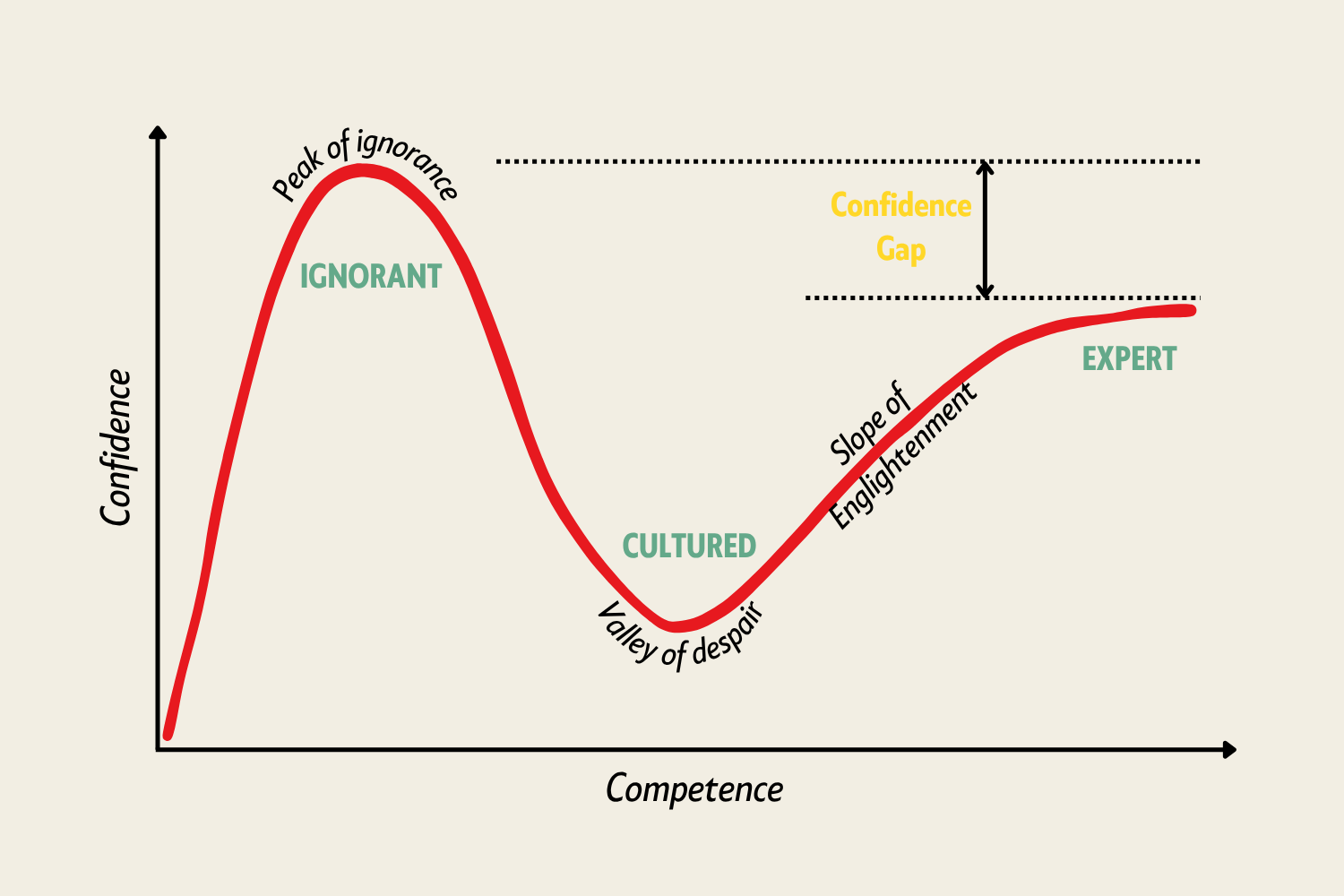
Dunning-Kruger Effect
Knowing little makes you feel unstoppable; knowing more makes you hesitate — the loudest voice is rarely the most reliable one.

McKinsey 7S Framework
The McKinsey 7S model maps seven organizational pieces — Strategy, Structure, Systems, Shared Values, Style, Staff, Skills — to spot misalignment.

The Iceberg Model
Underneath an event sits a pattern, a structure, then the beliefs that built it — fix the wrong layer.
Skills related to Pattern Recognition

Creative Thinking
Finding the approach everyone else misses, by challenging assumptions, widening your options, and testing unfamiliar ideas cheaply before you commit to them.

Decision-Making
Making a measured call fast, on information that's never complete, and correcting course as evidence comes in instead of defending your first answer.

Leading with AI
Knowing when to trust AI-generated work, when to dig into the reasoning behind it, and how to use it without letting your own judgment go soft.

Mental Agility
Matching how you lead to the situation in front of you and the person you're leading, because the approach that worked yesterday might be exactly wrong today.

Political Savvy
Reading the relationships, incentives, and unwritten rules that actually decide whether your idea gets adopted, not just whether it's the right one.

Prioritization
Picking the handful of things that actually matter and putting the team's energy there, which means saying no to almost everything else.

Problem-Solving
Solving problems systematically, diagnosing what's actually wrong before jumping in with a fix.

Productivity
Directing your time and energy at the work that actually matters, instead of letting whatever lands first run your day.

Strategic Thinking
Stepping back to see where things are heading, and actually letting that change what you do today.

Systems Analysis
Tracing how a decision in one part of the organization moves through the rest of it, instead of treating your team as its own island.