AI Superpowers
Kai-Fu Lee's argument, from inside both Silicon Valley and the Chinese tech industry, that the AI race has shifted from who has the best research to who can actually ship and scale it. On that axis, the competitive map looks very different than Western coverage usually suggests.
 Find this on the mind-map
Introduction
Kai-Fu Lee, an AI researcher turned investor who has run major labs for both American and Chinese tech giants, argues that AI's "age of discovery," dominated by a small number of elite researchers making fundamental breakthroughs, is largely over. We're now in the "age of implementation," where the deciding factors are data, entrepreneurial execution, and the willingness to deploy AI aggressively into real products. On those terms, Lee argues China is a far more serious competitor to the US than most Western readers assume.
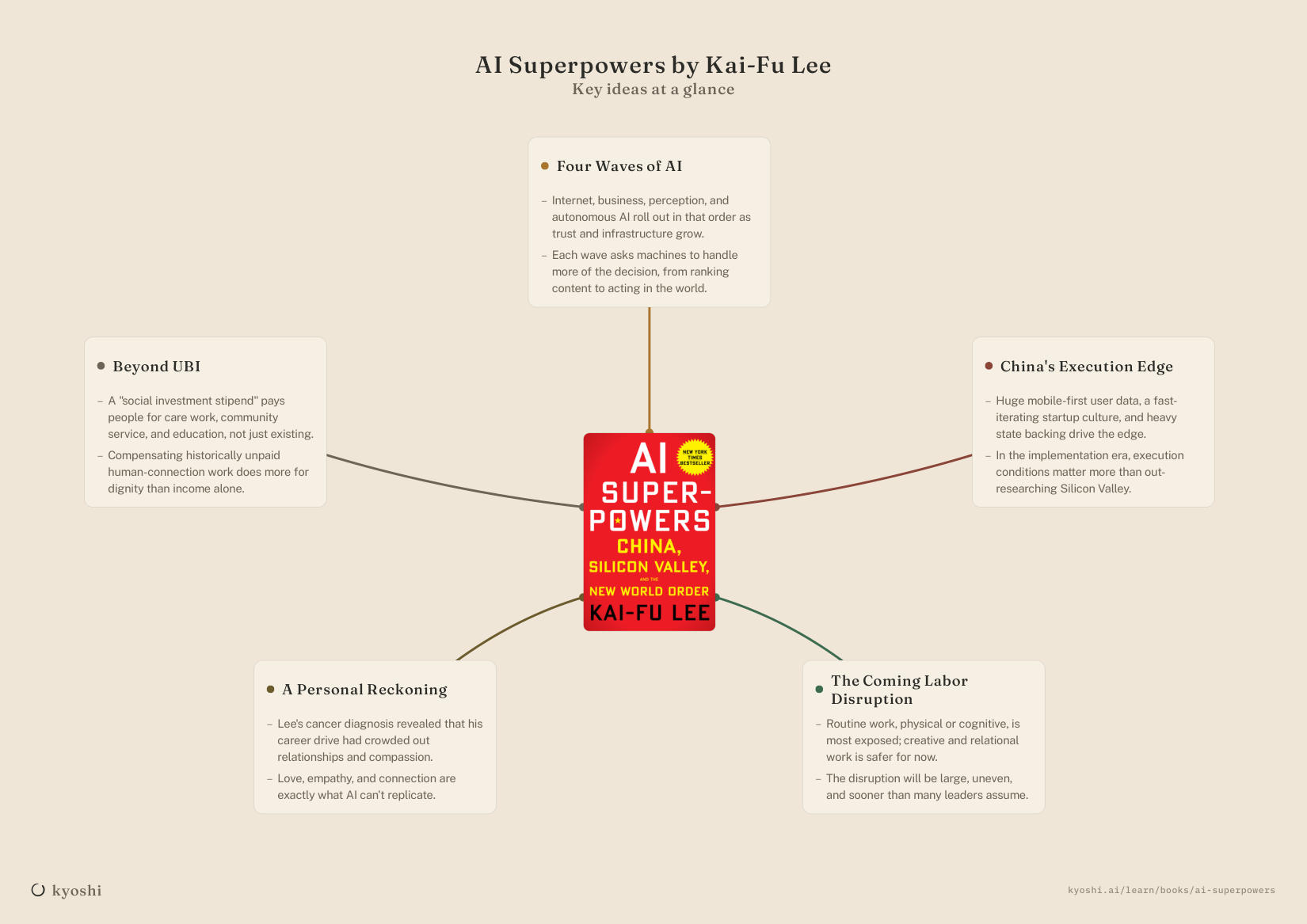
Four Waves of AI
Lee frames the spread of AI in four overlapping waves: internet AI (recommendation and ranking systems learning from massive online behavior data), business AI (using structured business data to outperform human judgment on things like credit risk or fraud), perception AI (sensors and computer vision turning the physical world into data), and autonomous AI (machines that act on the world directly, like self-driving vehicles or automated warehouses). Each wave requires progressively more infrastructure and trust, which is why they roll out roughly in that order rather than all at once.
Why China Competes Differently
Lee's case rests less on algorithms and more on execution conditions: an enormous, mobile-first user base generating huge volumes of real-world behavioral data, a startup culture he describes as "gladiatorial" in its intensity and willingness to iterate fast, and a government willing to back AI infrastructure at scale. None of this requires China to out-research Silicon Valley. In the implementation era, Lee argues, that's precisely the point.
The Coming Labor Disruption
Lee splits work along two axes: how routine the task is, and how much it depends on social or creative skill. He argues the jobs most exposed are routine, whether physical or cognitive (think data entry or basic phone-based customer service), while work high in creativity or genuine human connection is comparatively protected for now. His honest claim is that the disruption will be large, uneven, and arrive on a timeline many business leaders are underestimating.
A Personal Reckoning
Lee's own cancer diagnosis, which came partway through the period the book covers, reshaped his argument in a way that's unusual for a tech book: he writes candidly about realizing that his previous all-consuming drive for professional achievement had crowded out relationships and compassion, and argues that love, empathy, and connection are exactly the things AI can't replicate. He frames this less as a consolation and more as the actual answer to what humans should be investing in as routine work gets automated.
Beyond UBI
Rather than universal basic income, Lee proposes something he calls a "social investment stipend": compensation tied specifically to care work, community service, and education, on the theory that paying people simply to exist does less for dignity and social cohesion than paying them for work that's valuable but historically uncompensated, much of which (caregiving, teaching, mentoring) is also the kind of human-connection work AI is least able to replace.
Putting It Together
The book's arc moves from a competitive argument (implementation beats pure research in this era, and China's execution conditions are a real advantage) to a human one: the jobs AI threatens most are routine ones, and the response isn't just policy, it's redirecting effort toward compassion and connection, the kind of work Lee came to believe matters most only after a diagnosis forced him to slow down.
Why It Matters for Leaders
Most managers think their team's edge is the quality of its ideas. Lee's argument, stripped down to the manager-level version, says that's usually not where the real gap is. Two teams can have the same idea at the same time, and the one that ships a working version, gets it in front of real users, and iterates fast wins, almost regardless of whose idea was better on paper.
That changes what you should actually be measuring. If review meetings spend most of their time debating the merits of a proposal instead of asking how fast you could test a rough version of it, you're optimizing for the wrong stage of the race Lee is describing. The practical shift is small: stop asking "is this the right idea" as the first question, and start asking "what's the fastest way to get real feedback on it."
The second half of the book is about what doesn't automate, and it's just as useful for a manager who isn't thinking about AI at all. Routine work, anything that doesn't require judgment, creativity, or a real relationship, is the first to go. The skills hardest to replace are also the ones easiest to let slide under deadline pressure: mentoring someone, noticing when a teammate is struggling, building the kind of trust that makes people tell you bad news early. Lee only came to value these fully after a cancer diagnosis forced the question on him directly. A manager doesn't need that forcing function to ask it now.
Take a manager named Felix, whose team just lost a pitch to a competitor with a weaker product but a working prototype three weeks earlier. The postmortem could easily turn into a debate about whose idea was better. Instead, Felix asks a different question in the retro: what would it have taken to get a rough version in front of the client two weeks sooner, even an ugly one? That's the lesson the book is actually offering: not a verdict on China versus Silicon Valley, but a test of whether your own team is built to move at the speed the idea deserves.
What to do next
Reinforce your understanding of AI Superpowers
Books related to AI Superpowers

AI 2041
Ten speculative-fiction stories set in the year 2041, each in a different country and paired with Kai-Fu Lee's nonfiction breakdown of the real technology underneath. A way of making abstract AI trends concrete by showing, not just telling, how they might actually land in ordinary lives.

Co-Intelligence
Wharton professor Ethan Mollick's field guide to actually working with generative AI day to day, treating it less like software and more like a fast, occasionally brilliant, occasionally confidently wrong new colleague.

Competing in the Age of AI
Two Harvard Business School professors' argument that AI-native firms aren't running a better version of your business. They're running a fundamentally different machine, one built to scale decisions at almost zero marginal cost.

Empire of AI
Investigative journalist Karen Hao's case, built from years covering OpenAI and hundreds of interviews, that the leading AI labs should be understood not as idealistic research nonprofits but as empires in the old sense: extracting data, labor, and natural resources to concentrate power, dressed in the language of a mission to benefit humanity.

Prediction Machines
Three economists' reframing of AI, stripped of the hype: what modern machine learning actually does is make prediction cheap, and once prediction is cheap, the scarce, valuable thing left is judgment.
Skills related to AI Superpowers

Frameworks related to AI Superpowers
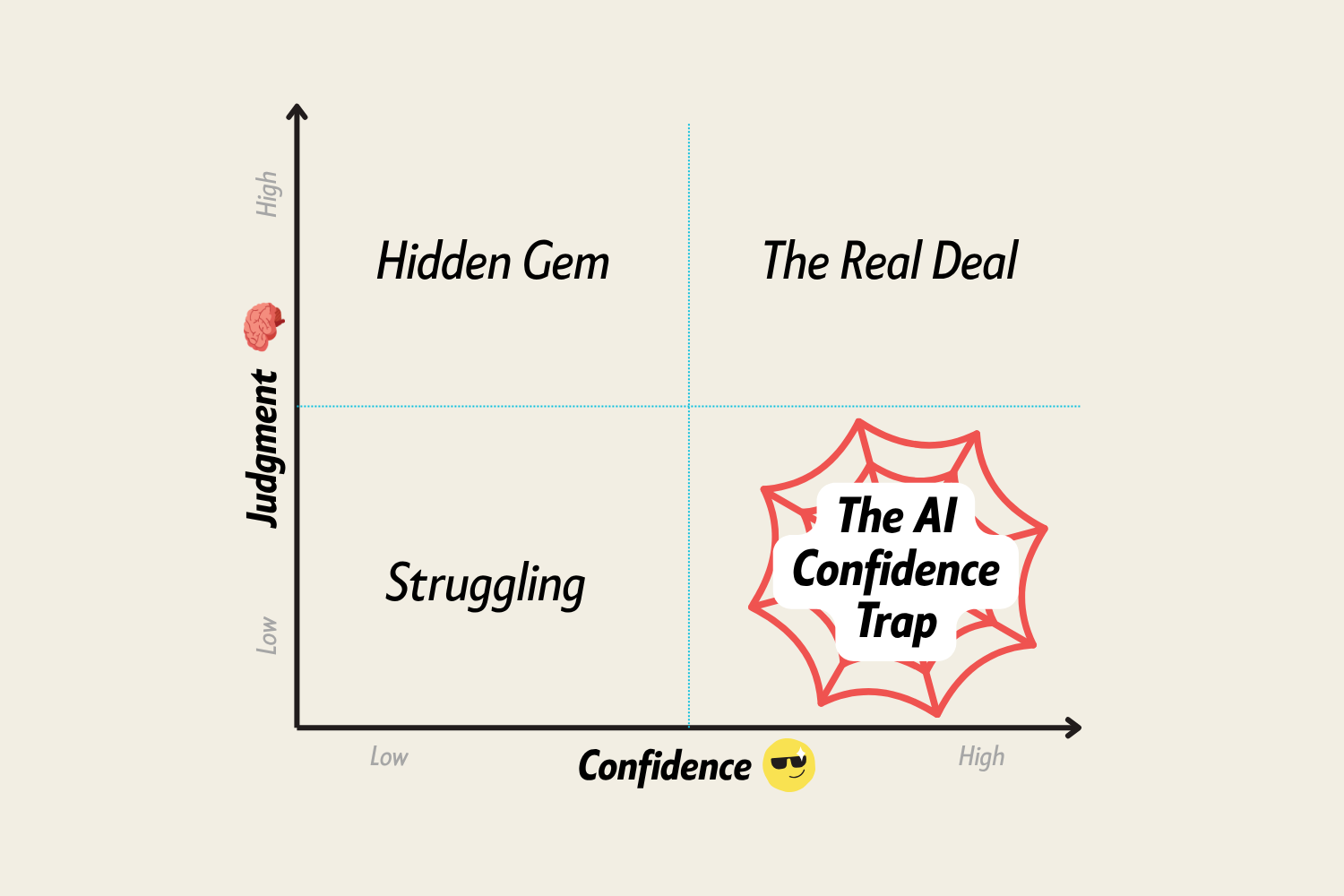
The AI Confidence Trap
AI-polished output can look like real competence when the thinking behind it isn't there — judge the reasoning, not the polish.

The AI Culture Stack
Same AI tools and budget, wildly different results — the gap isn't the technology, it's three layers underneath: permission, fluency, judgment.

The AI Fluency Framework
AI fluency isn't a prompting skill — it's the same four competencies that make someone a good manager: delegating, briefing, reviewing, and owning.
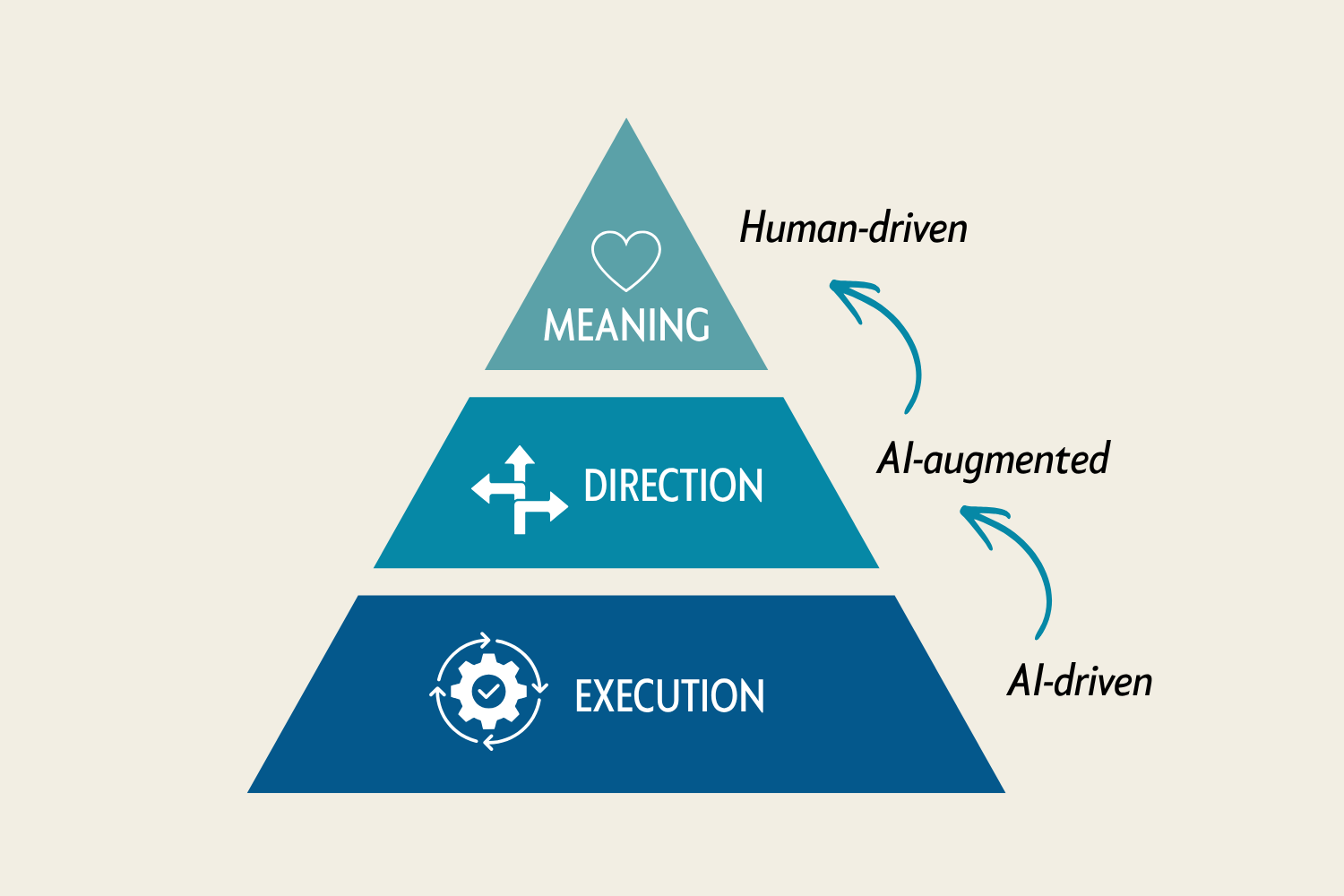
The Three Layers of Leadership
A pyramid — Execution, Direction, Meaning — where your value has to move up as AI automates execution.