Lean In
Sheryl Sandberg's argument that the barriers keeping women out of leadership are real on both sides: structural bias in how organizations operate, and self-imposed caution in how women are taught to see their own ambition. Fixing only one side leaves the other fully intact.
 Find this on the mind-map
Introduction
Sandberg's real argument isn't "women should work harder." It's that two different kinds of barriers are operating at once: an external one (bias baked into how organizations promote, reward, and perceive ambition) and an internal one (the ways women are socialized to pull back, downplay their own contributions, and wait to be chosen rather than claim the seat). Lean In is mostly concerned with the internal half, not because it's the bigger problem, but because it's the half an individual reader has more direct control over.
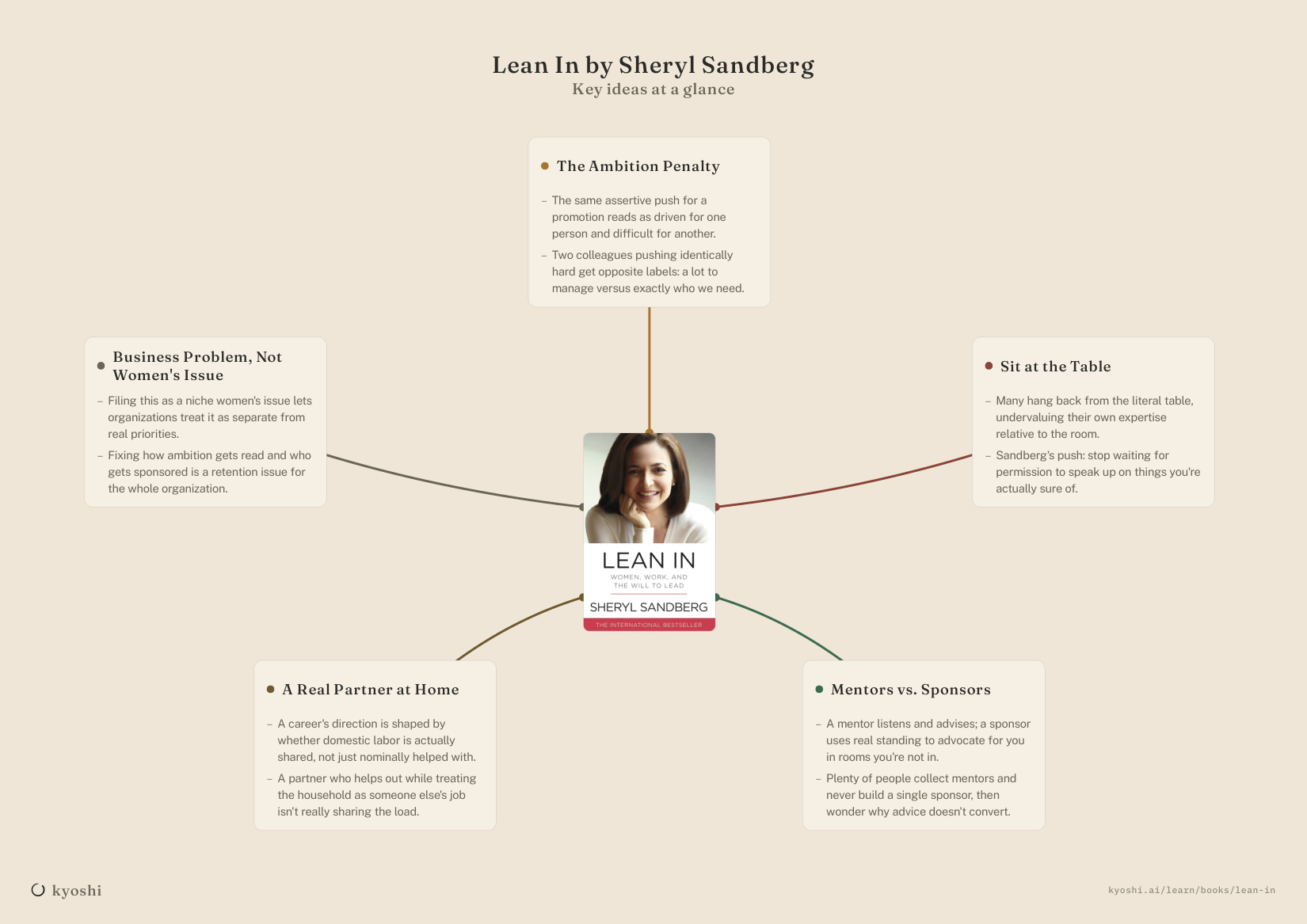
The Ambition Penalty
Overt ambition reads differently depending on who's showing it. The same assertive push for a promotion that earns one person a reputation as "driven" earns another a reputation as "aggressive" or "difficult." That's a penalty that makes claiming credit, asking for more, and visibly wanting to lead far more costly for women than for men in otherwise identical situations. Picture two colleagues, Priya and Dev, independently pushing just as hard for the same stretch assignment, using nearly identical language in the meeting. Priya's manager later describes her as "a lot to manage." Dev's manager describes him as "exactly the kind of person we want more of." Neither manager thinks they're being unfair.
Sit at the Table
A specific, recurring pattern: hanging back from the literal table in a meeting room, undervaluing your own expertise relative to the room, waiting for permission or validation before speaking up with something you actually know. Sandberg's push is blunt: stop waiting to be invited into the room you're already qualified to be in, and stop performing modesty about things you're actually sure of.
Mentors Are Not the Same as Sponsors
A mentor listens and advises. A sponsor is someone with real organizational standing who advocates for you in rooms you're not in, who puts your name forward for the opportunity you don't even know exists yet. Plenty of people accumulate mentors and never build a single sponsor relationship, and then wonder why advice never seems to translate into advancement.
Make Your Partner a Real Partner
A career's direction is shaped heavily by what's happening at home, specifically by whether domestic and parenting labor is actually shared or just nominally "helped with." A partner who "helps out" while still treating the household as fundamentally someone else's responsibility to manage isn't actually sharing the load, and the imbalance shows up later as a career tradeoff that looks individual but isn't.
This Is a Business Problem, Not a Women's Problem
The closing reframe: treating this as a niche "women's issue" lets organizations file it separately from their real priorities. Fixing the structural half (how ambition gets read, how promotion decisions actually get made, who gets sponsored) is a performance and retention issue for the whole organization, not a favor extended to one group.
Putting It Together
The internal barriers (hesitating, under-claiming, lacking sponsors) and the external ones (the ambition penalty, biased promotion patterns, unequal domestic load) reinforce each other. Caution born from watching the penalty play out isn't irrational, it's a reasonably learned response to a real cost. Which means fixing only the individual-behavior half, without the organization also fixing how it rewards ambition, asks half the people to lean into a table that's still tilted.
Why It Matters for Leaders
The useful thing this book gives a manager isn't advice for the person facing the bias, it's a mirror for the person doing the evaluating. Most leaders who read this nod along at the ambition penalty as something that happens out there, in some other manager's performance reviews. The harder, more useful move is pulling your own last round of reviews and checking whether the same assertive behavior got called "driven" in one write-up and "abrasive" in another, split roughly along who was being described. That's not a thought exercise. It's a five-minute audit most managers have never actually run on themselves.
The second practical shift is distinguishing mentoring from sponsoring in your own behavior, not just in theory. Giving someone advice in a 1:1 feels like real support, and it is, but it changes nothing about their actual opportunities unless you're also putting their name forward in rooms they're not in. If you can name people you've mentored this year but can't name a single opportunity you've routed to one of them specifically, you've been generous with your time and stingy with your actual influence.
The sit-at-the-table pattern is also something a leader can act on directly, not just preach about. If you notice someone consistently taking a seat at the edge of the room, the fix isn't a generic pep talk about confidence. It's naming the specific thing they know that's relevant right now and asking for it directly, in the room, in front of the people who matter. Confidence often follows being asked; it doesn't have to come first.
Picture a manager, Keisha, reviewing promotion packets for two analysts who did comparable work this cycle. One write-up describes Marco as "someone who pushes hard and gets results." The other describes Aditi, who pushed just as hard on the same kind of calls, as "someone who can be a lot to manage." Keisha almost signs off on both packets as written. Instead, she rereads Aditi's with one question in mind: would this exact behavior, from a man, have been written up this way? It wouldn't have, so she sends the write-up back before it goes anywhere near the promotion committee.
What to do next
Reinforce your understanding of Lean In
Books related to Lean In

Dare to Lead
Brené Brown's case that vulnerability isn't the opposite of strong leadership. It's the precondition for it, and the armor most leaders wear to look strong is usually what's actually holding their team back.

Developing the Leader Within You
John Maxwell's foundational case that leadership is influence, not title, and that the gap between "manager" and "leader" is a set of learnable habits, not a personality you were or weren't born with.

Drive
Daniel Pink's case that the carrot-and-stick playbook most managers inherited is actually the wrong tool for most of today's work, and what motivates people doing complex, creative work instead.

Extreme Ownership
Two Navy SEAL officers' blunt rule for leadership, forged in the Battle of Ramadi and translated straight into the business world: there are no bad teams, only bad leaders, and the leader owns every outcome, full stop, no exceptions, no shared blame.

Good to Great
Jim Collins' research into why some companies go from average to sustained market dominance, and others don't. Read less as a book about companies and more as a book about the kind of leader you have to become before a company (or a team) can get great.

Inclusify
Stefanie Johnson's argument that most leaders miss inclusion by over-indexing on one of two basic human needs, belonging or uniqueness, and her six named archetypes for exactly how that imbalance shows up, from the "Meritocracy Manager" to the "White Knight."

Leaders Eat Last
Simon Sinek's case that leadership is a biological deal, not a rank. The people at the top give up safety and comfort first, so everyone below them doesn't have to spend their energy watching their back instead of doing the work.

Leadership in Turbulent Times
Historian Doris Kearns Goodwin places Lincoln, Theodore Roosevelt, FDR, and LBJ side by side and asks the same question about each: what did their worst personal crisis actually build in them, and how did they spend it once real power and a real emergency arrived at the same time.

Mindset
Carol Dweck's research on why some people treat ability as fixed and others treat it as something built, and why the belief you hold about yourself shapes how your whole team learns, fails, and improves, often without anyone noticing it happening.

No Rules Rules
Netflix co-founder Reed Hastings, with culture researcher Erin Meyer, on why Netflix removed vacation policies, expense approvals, and most of the rulebook most companies treat as non-negotiable, and the two things that have to be true first, or the whole thing backfires.

Primal Leadership
The case that a leader's mood isn't a private matter. It's contagious through the whole team, which makes emotional intelligence the real infrastructure underneath every other leadership skill.

Rebel Ideas
Matthew Syed's case that the smartest team in the room is rarely the one stacked with the highest individual IQs, it's the one with the widest range of genuinely different ways of seeing the same problem. A pointed argument against hiring people who think like you, no matter how impressive they are.

The 21 Irrefutable Laws of Leadership
John Maxwell's attempt to turn leadership into something closer to a set of physical laws than a personality trait. Rules that hold regardless of your industry, your title, or how naturally charismatic you are.

The 5 Levels of Leadership
John Maxwell's map of how leadership actually gets earned, level by level, and why the title on your door only ever buys you the lowest, least durable form of it.

The Culture Code
Daniel Coyle's reverse-engineering of highly successful groups: not through their strategy or talent, but through small, repeated signals that most leaders never notice they're sending, or failing to send.

The Culture Map
Erin Meyer's field guide to why a management style that works perfectly in one country reads as either rude or weak in another, and why "just be yourself" is actually terrible advice for anyone leading across cultures.

The Diary of a CEO
Steven Bartlett's attempt to turn hundreds of founder and expert conversations into 33 numbered laws, organized into four pillars: the self, the story, the philosophy, and the team.

The Fearless Organization
Amy Edmondson's case that psychological safety isn't a soft perk for making people feel nice. It's a hard performance requirement, because teams without it make worse decisions, catch fewer errors, and learn slower than teams that have it.

The Person You Mean to Be
Dolly Chugh's case for giving up on being a "good person" (a fixed, defensive identity) in favor of becoming a "good-ish person": someone actively building toward better, who treats their own blind spots as something to work on instead of something to deny.

Tribal Leadership
A model for diagnosing a team's culture by literally listening to how people talk: five stages of "tribal" language, from "life sucks" to "life is great," and a surprisingly specific playbook for moving a team up one stage at a time.

Winning
Jack Welch's unapologetically blunt playbook for running a business and a team, built on the belief that most management dysfunction is really just a candor problem wearing a nicer name.
Skills related to Lean In

Culture Building
Culture isn't the perks or the values on the wall, but what you tolerate, reward, and let slide.

Leadership Development
Deliberately growing the next generation of leaders on your team, because your legacy ends up measured by the leaders you develop, not by what you accomplish alone.
Frameworks related to Lean In

IKEA Effect
You value things more when you helped build them — which is why a strategy handed to a team lands flat.
Maslow's Hierarchy of Needs
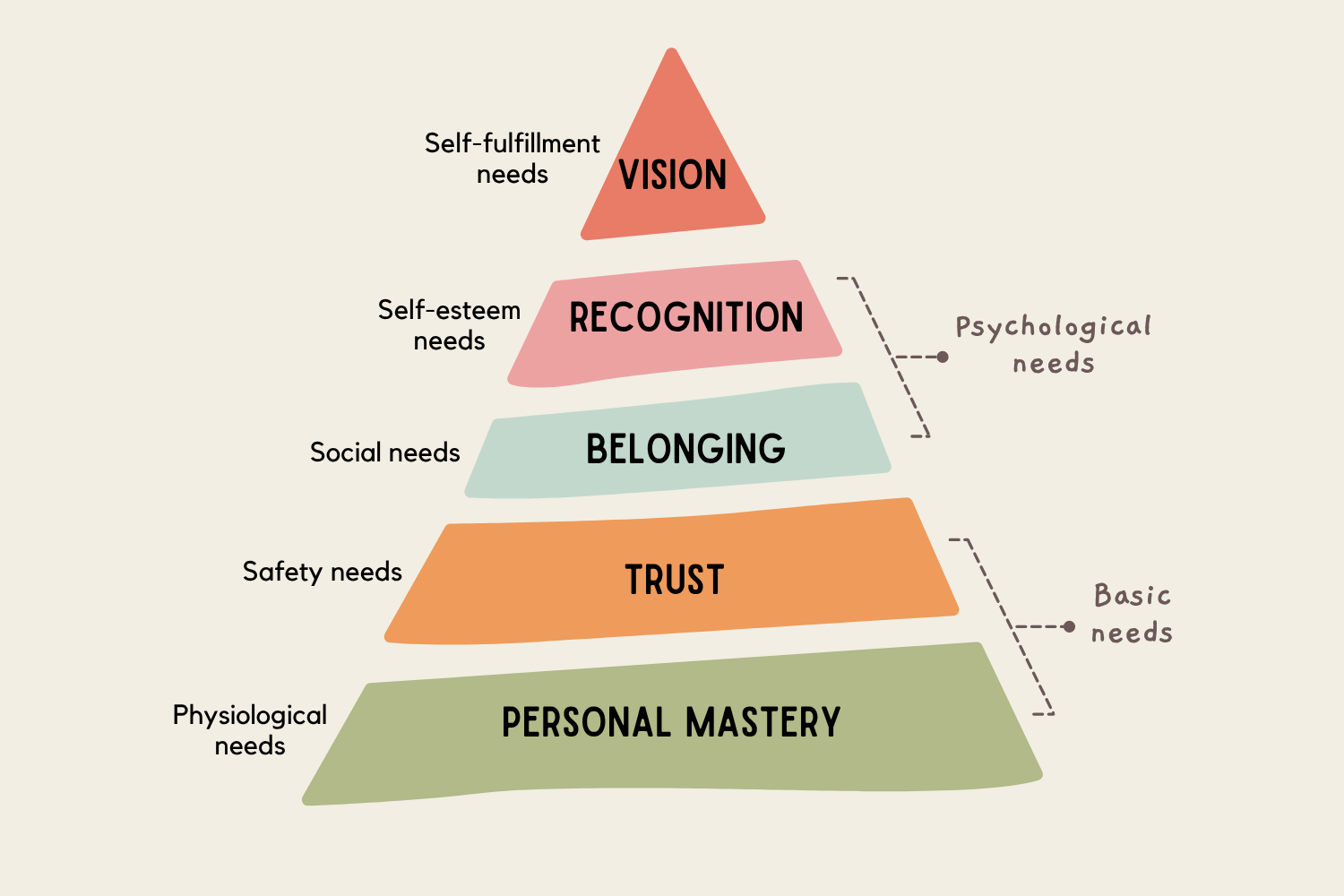
Abraham Maslow's five-level model of motivation, applied to leadership as a stack — mastery, trust, belonging, up through recognition and vision.
McKinsey 9-Box Model
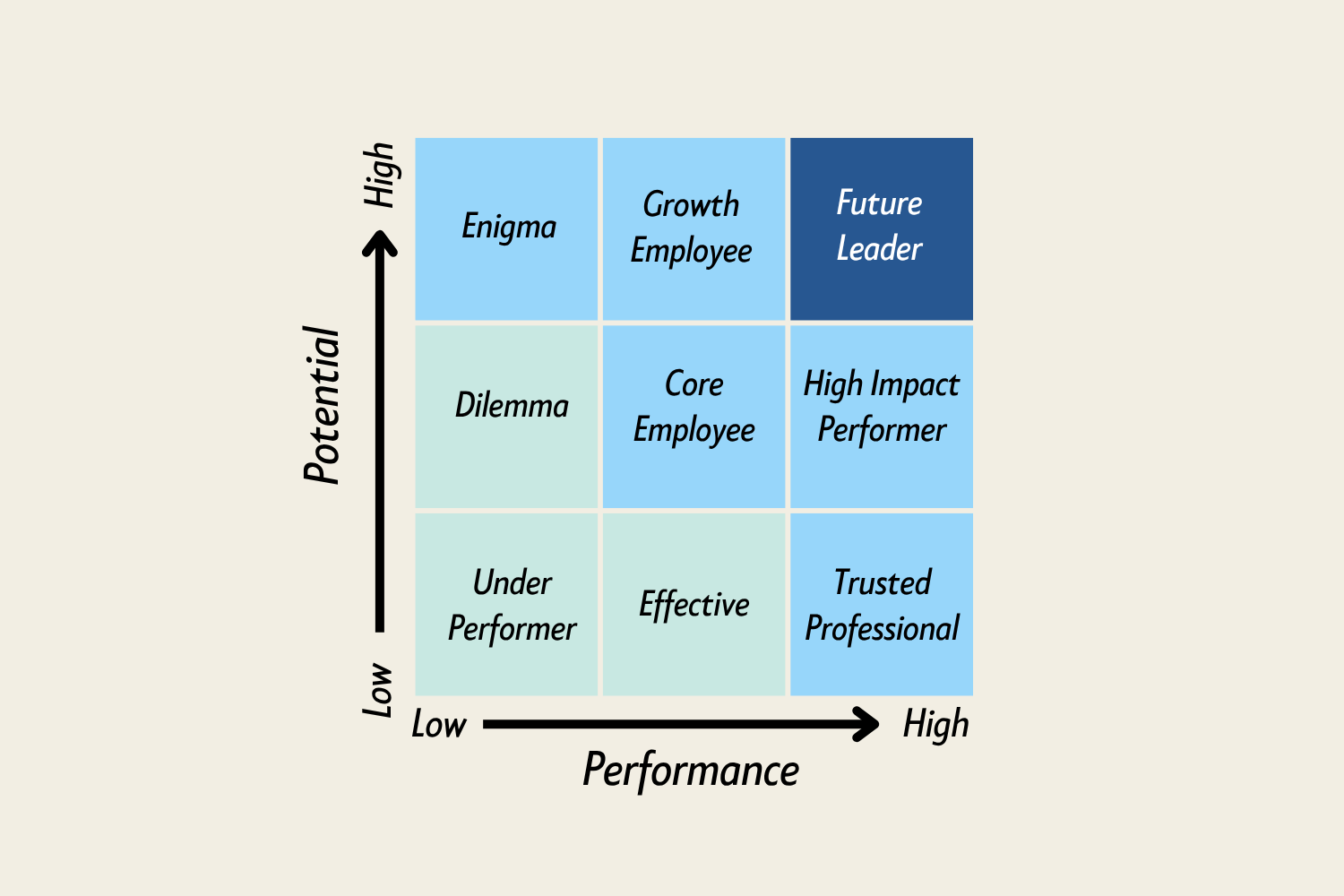
A 3x3 grid that plots each person on performance against potential, giving nine distinct calls instead of one blurry verdict.

Peter Principle
In a hierarchy, everyone rises to their level of incompetence, because promotion rewards your current job, not tomorrow's.
Psychological Safety
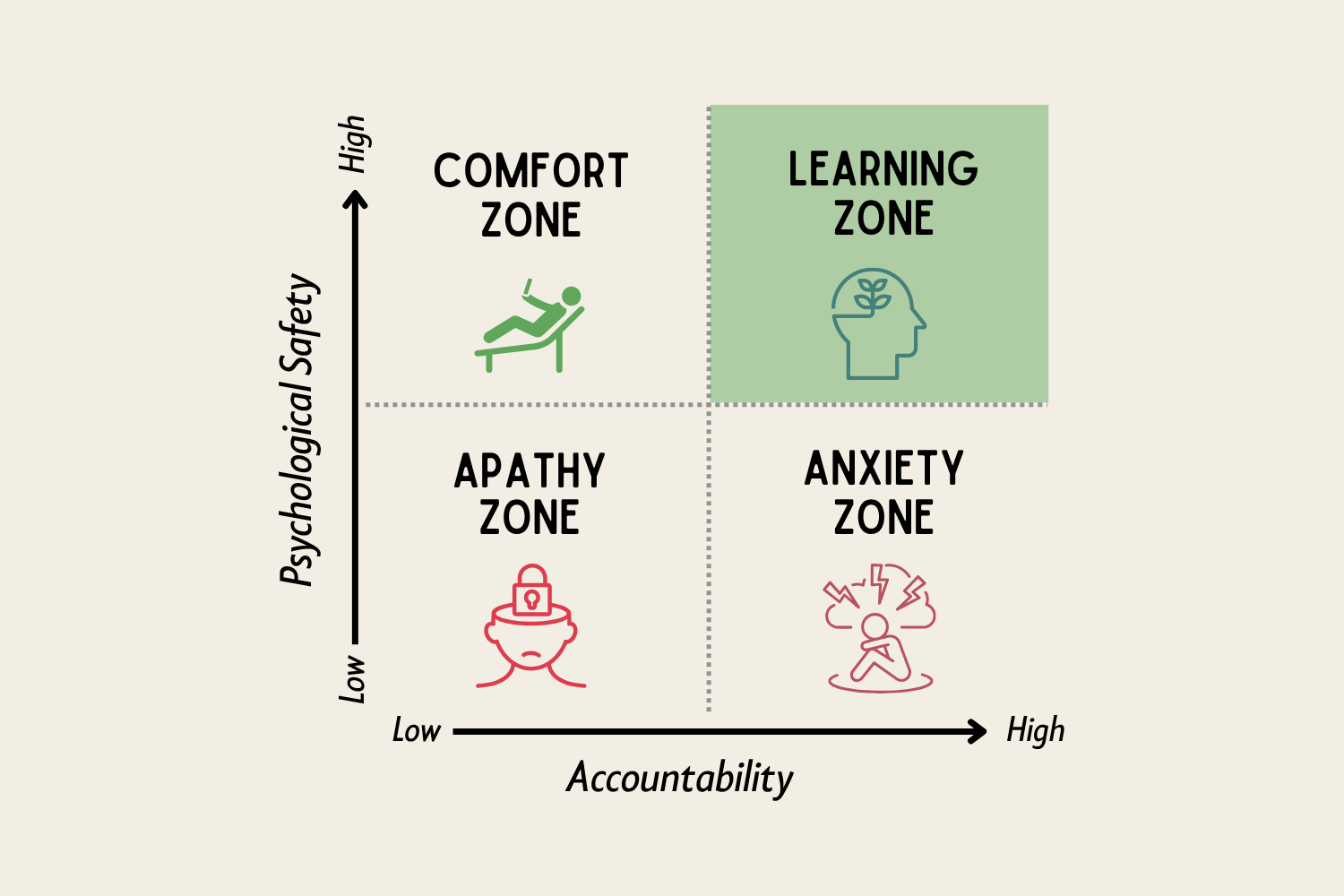
Amy Edmondson's finding that people must feel safe taking risks — a dumb question, a mistake — before a team can perform.
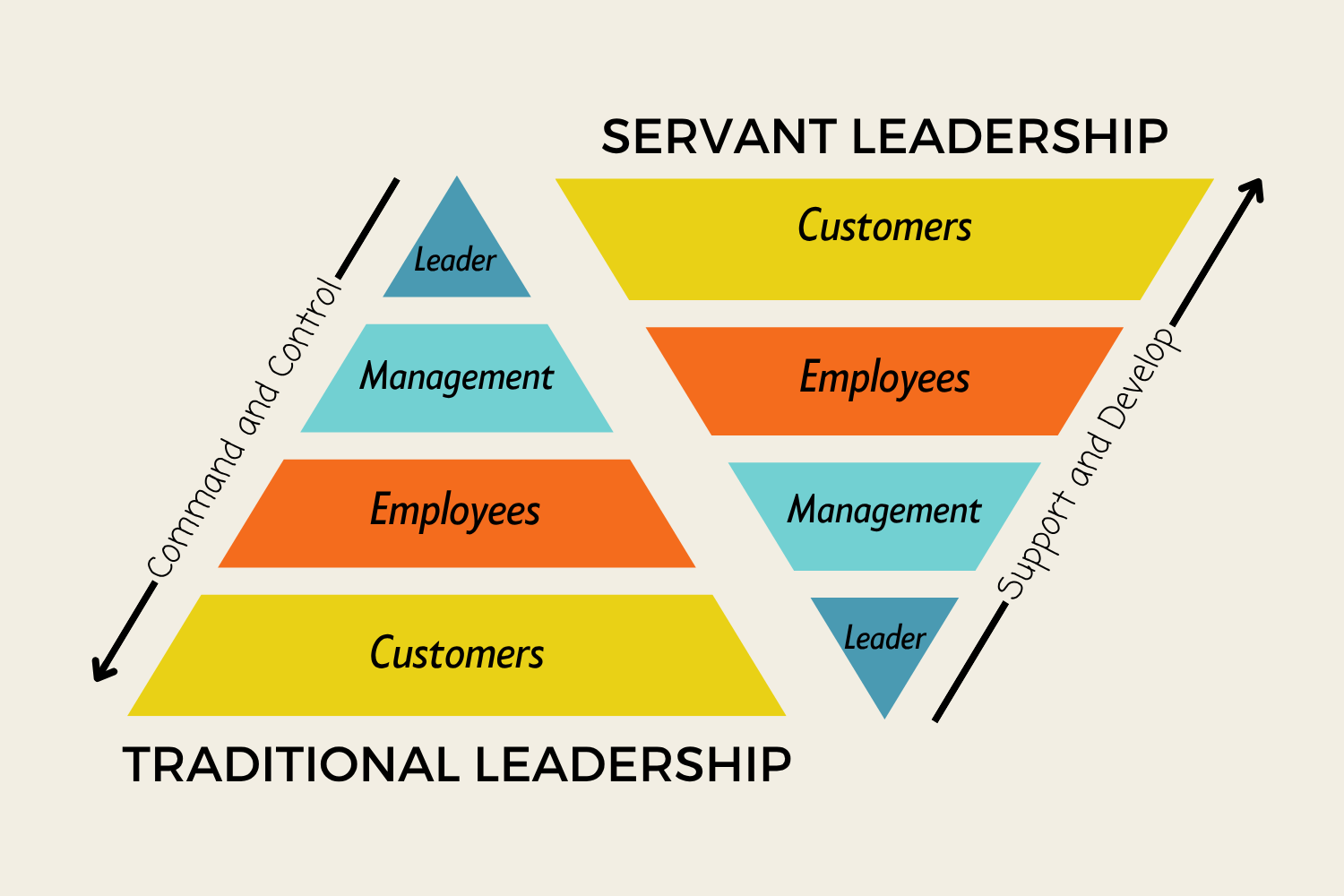
Servant Leadership
Flip "how can my team help me?" to "how can I help my team?" — job becomes removing obstacles, growing people.

Spiral Dynamics
Eight color-coded value systems shaping what people care about at work — success, purpose, relationships — matched to stop guessing motivation.

The AI Culture Stack
Same AI tools and budget, wildly different results — the gap isn't the technology, it's three layers underneath: permission, fluency, judgment.

The Bannister Effect
One person breaking a barrier makes it stop being fixed for everyone else — break the unspoken belief in public first.
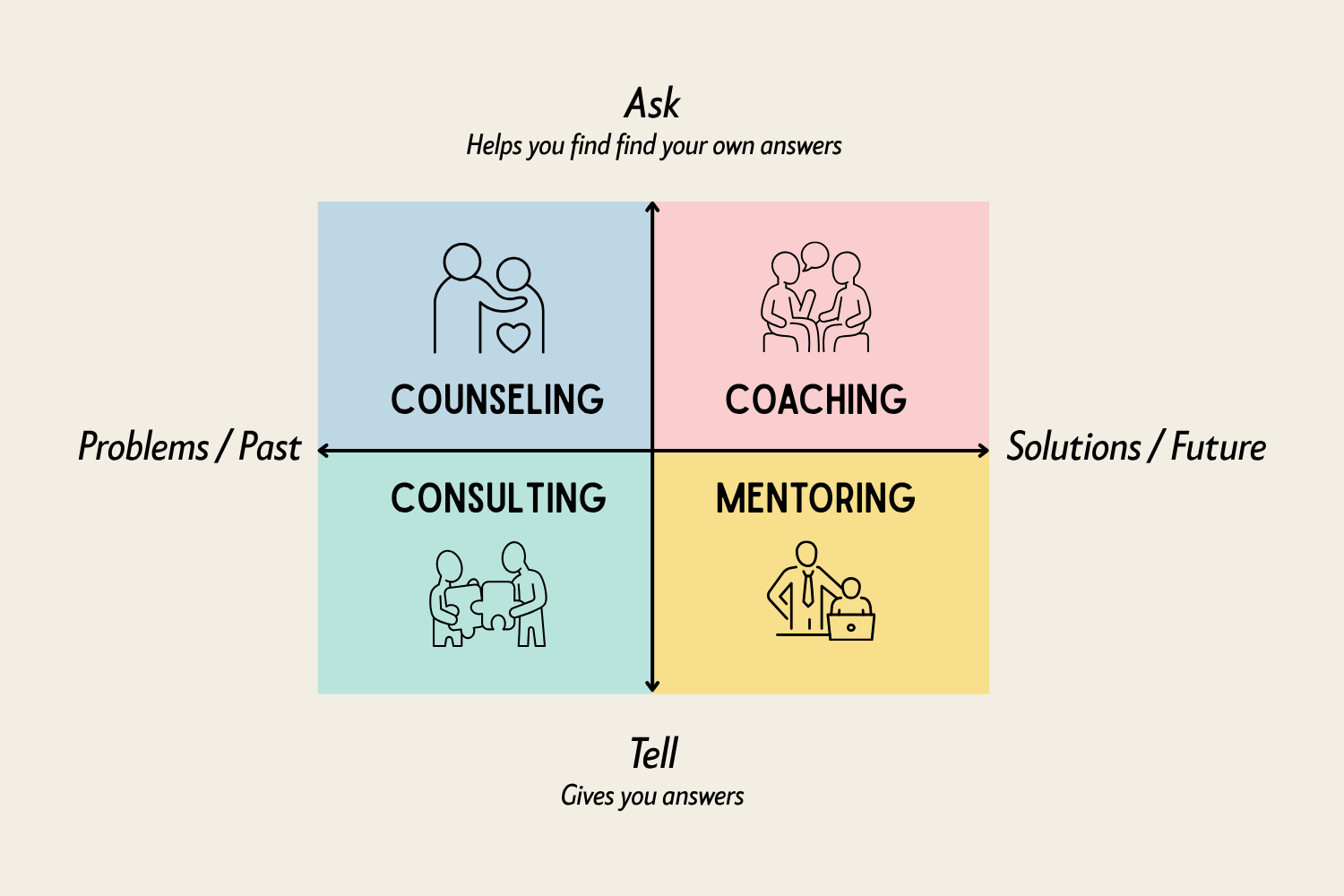
The Four Leadership Support Roles
A 2x2 separating four modes for helping someone — coaching, mentoring, counseling, consulting — plus a test for picking the right one.

The Inner Drive
A leadership take on Daniel Pink's *Drive* that turns three conditions for motivation — autonomy, mastery, purpose — into habits for 1:1s.

The Leadership Code
Leadership runs on three traits — head, gut, heart — each toxic alone: competence without character is arrogance, courage without it reckless.
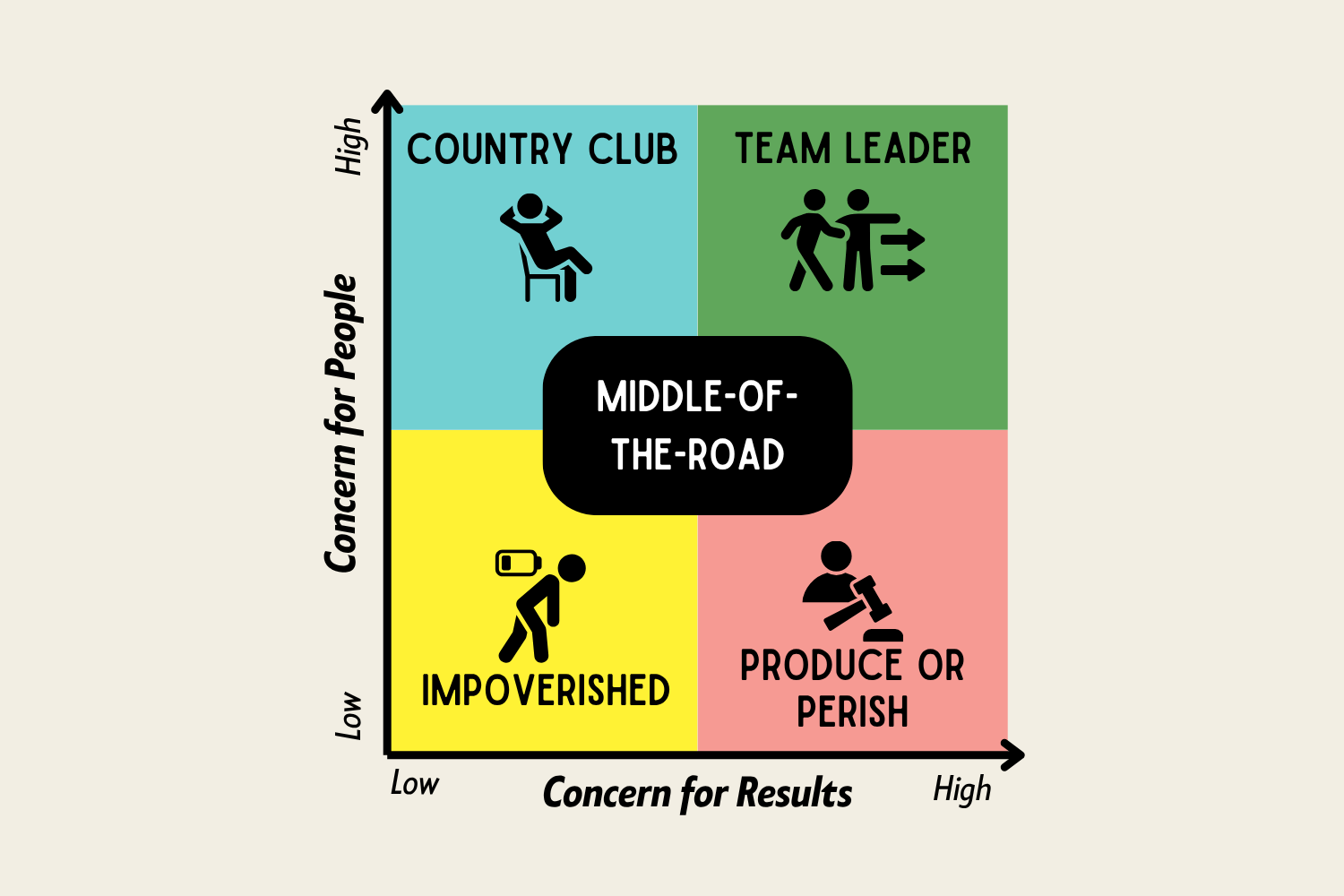
The Leadership Grid
Blake and Mouton mapped two axes — care for people, care for results — into five leadership styles you'll recognize instantly.
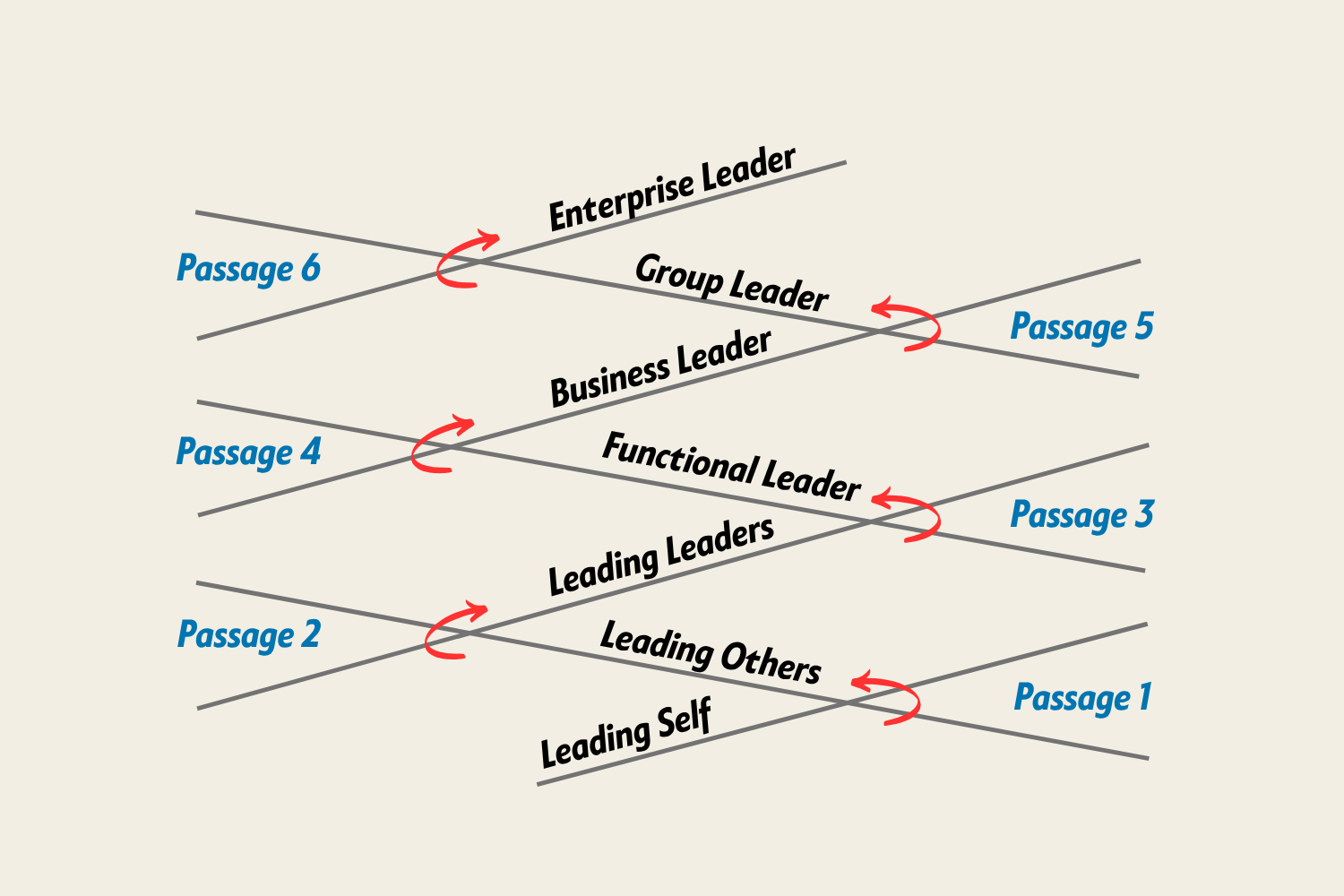
The Leadership Pipeline
Ram Charan mapped six passages into bigger leadership roles — at each one, old habits are exactly how you stall.
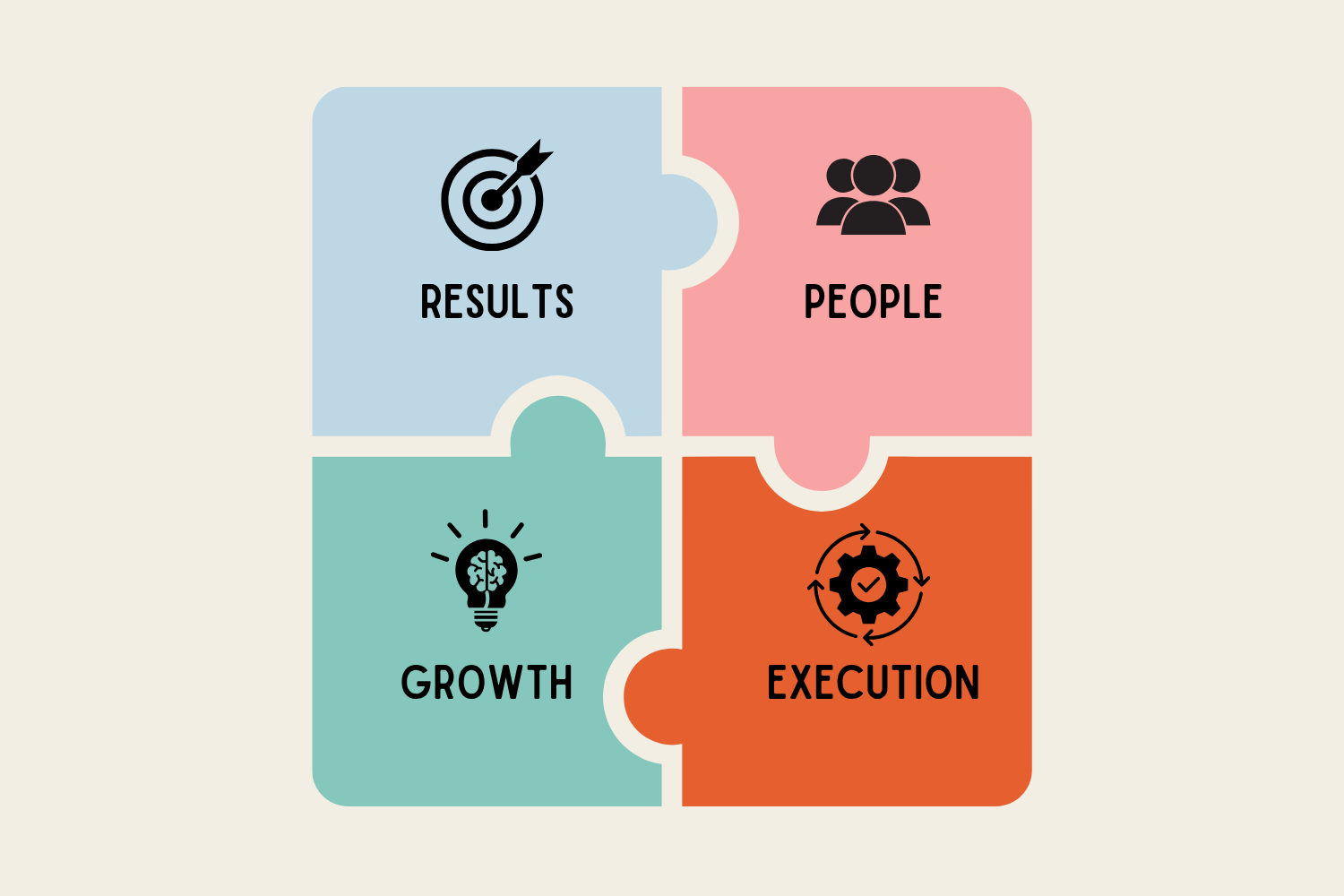
The Leadership Scorecard
A personal take on the Balanced Scorecard — Results, People, Execution, Growth — catching which one you're quietly neglecting.
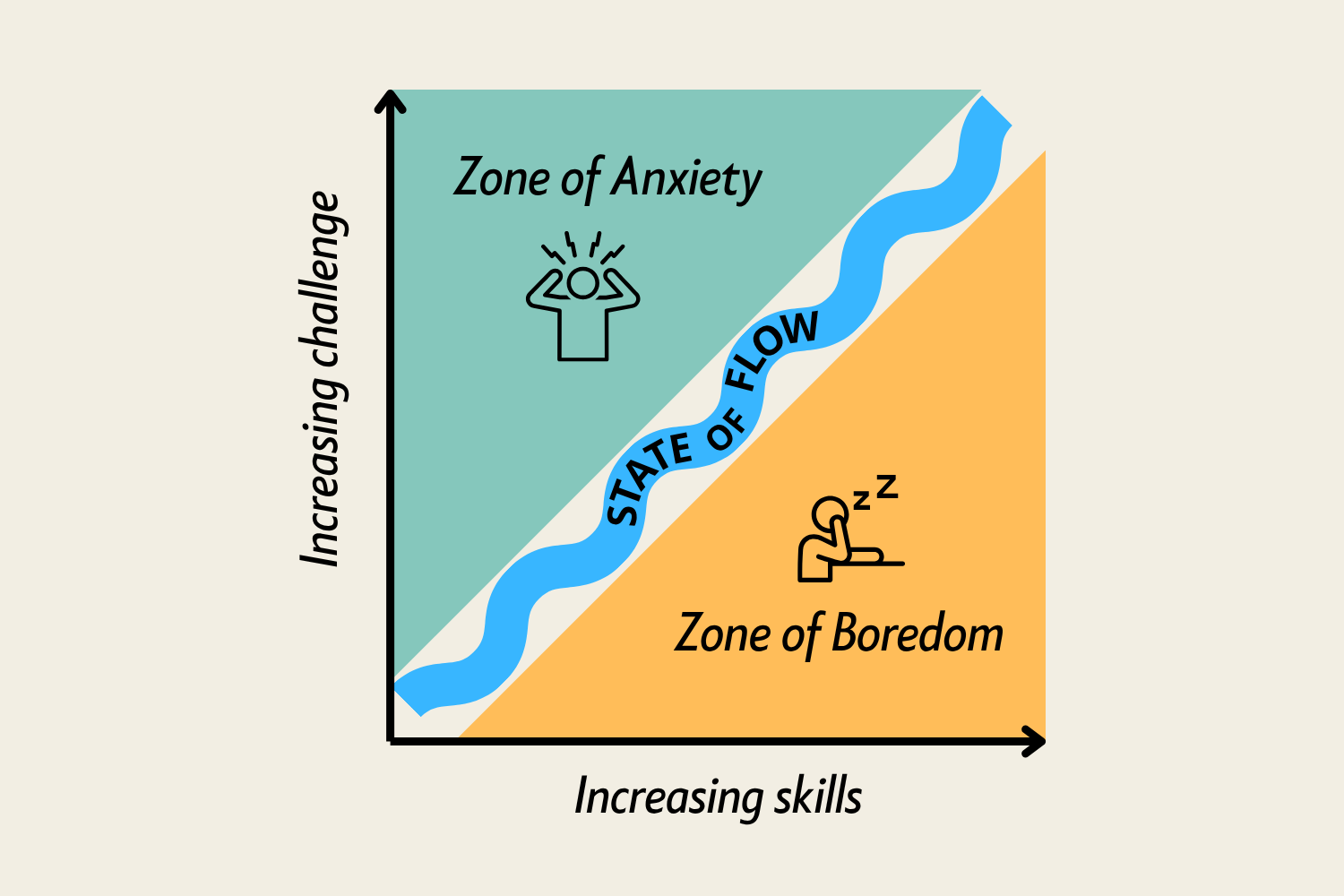
The State of Flow
The zone between anxiety and boredom, where challenge meets skill — your job is moving each person, with a different push.
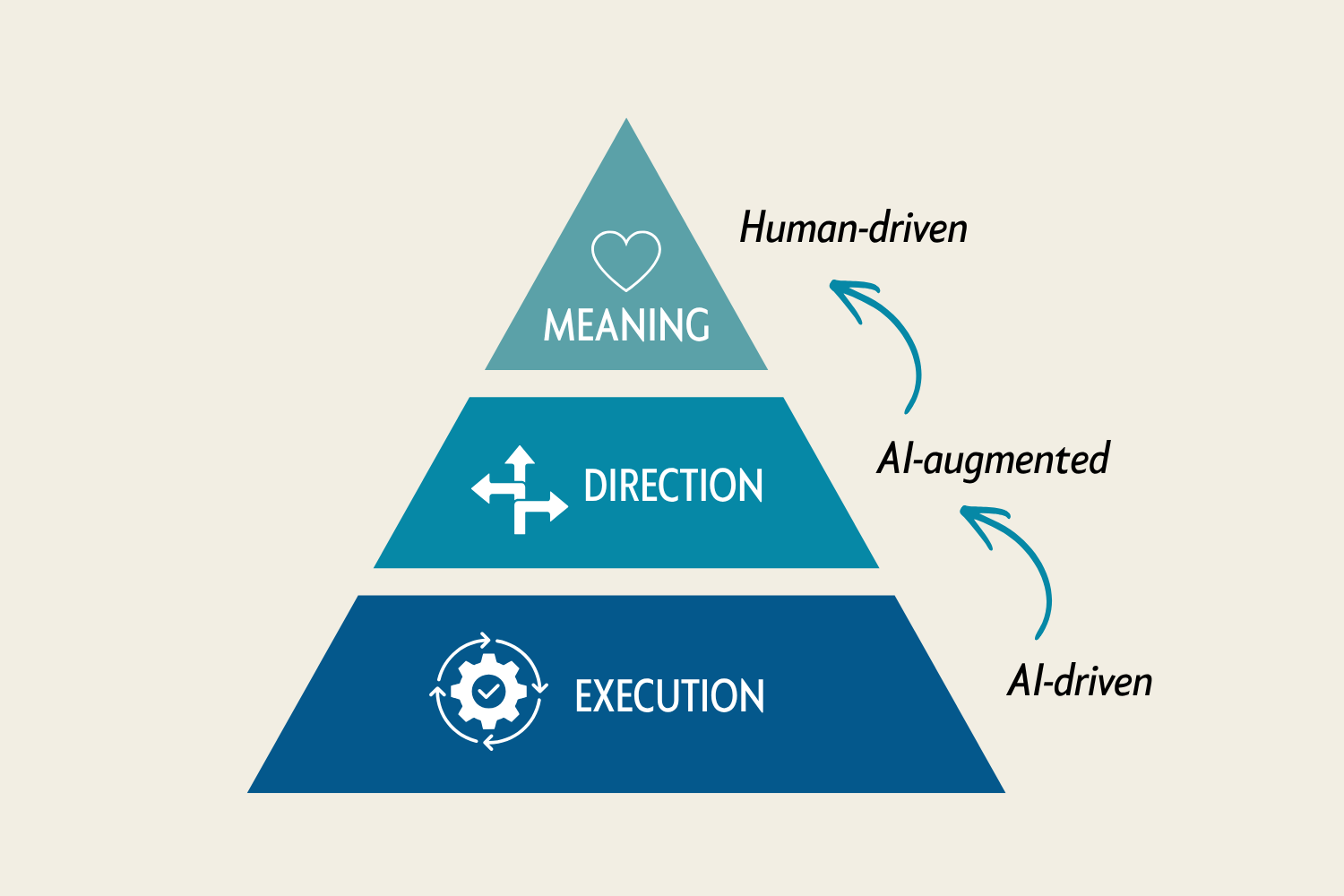
The Three Layers of Leadership
A pyramid — Execution, Direction, Meaning — where your value has to move up as AI automates execution.
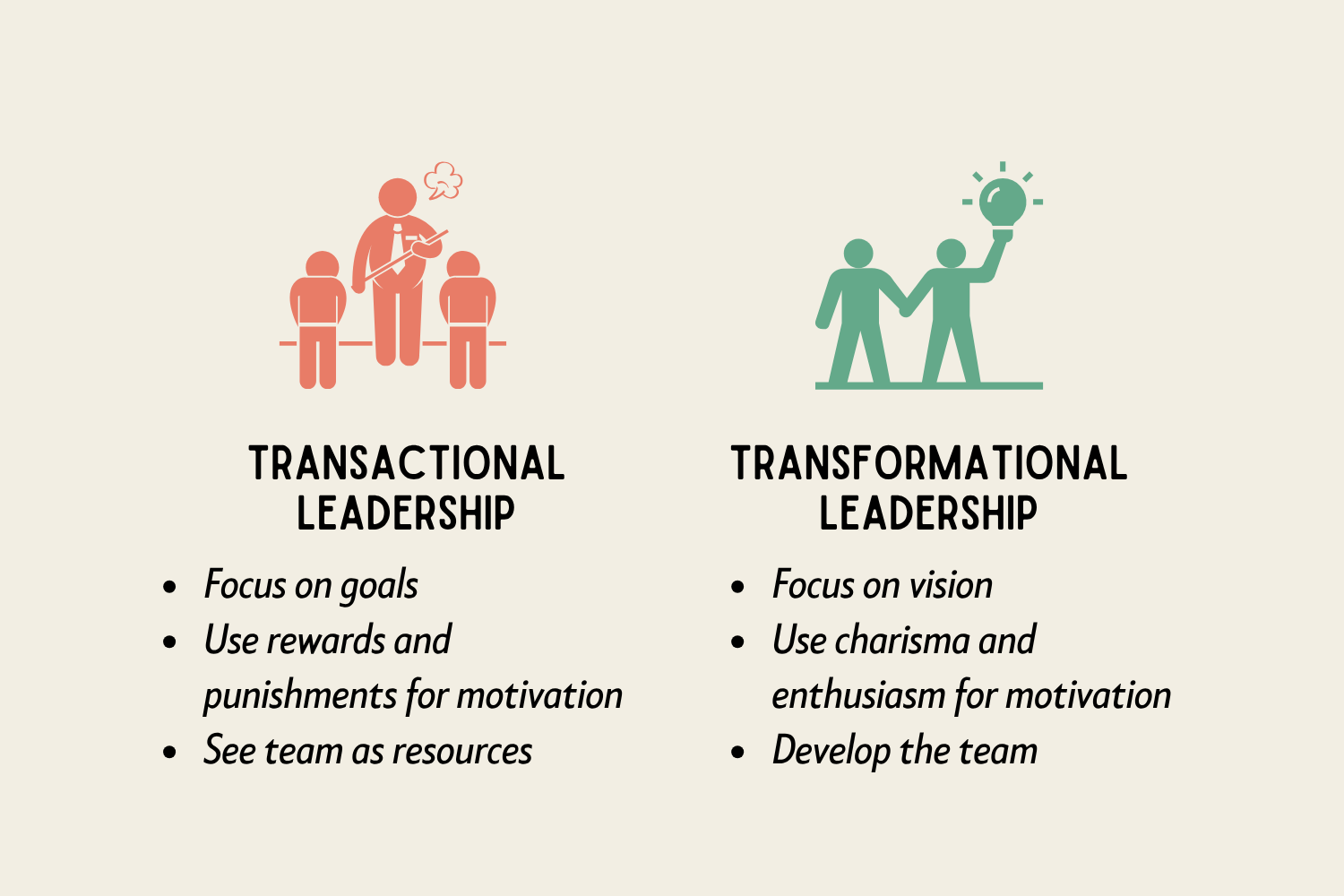
Transformational Leadership
Inspire people past self-interest and into a shared vision, raising what they aim for and what they're capable of.