The 5 Levels of Leadership
John Maxwell's map of how leadership actually gets earned, level by level, and why the title on your door only ever buys you the lowest, least durable form of it.
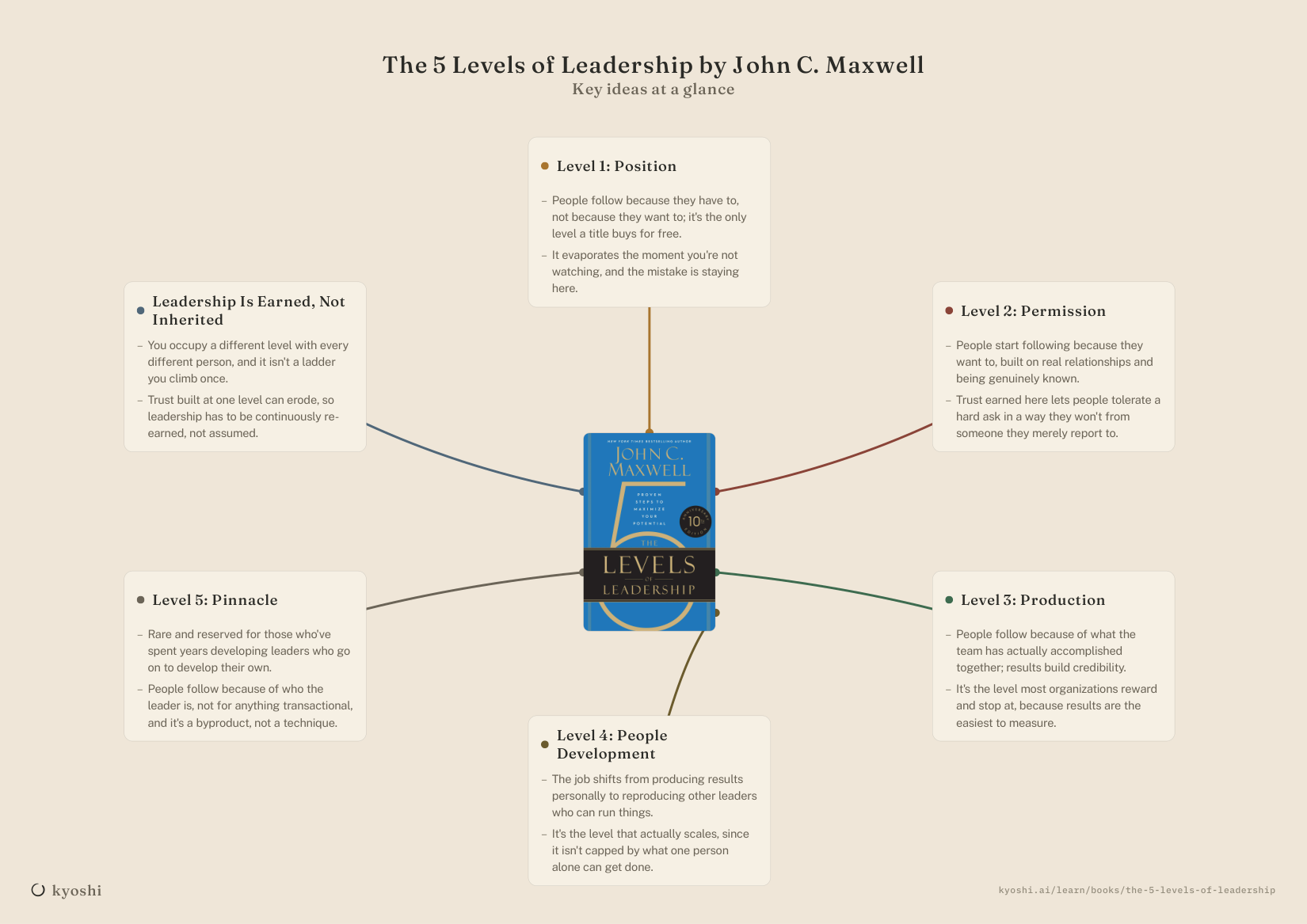
 Find this on the mind-map
Introduction
Maxwell's core claim is that leadership isn't one thing you either have or don't. It's a ladder, and most people are standing on a lower rung than they think. Each level is earned differently, with a different group of people, and climbing one doesn't mean you've climbed it with everyone. You can be Level 4 with your longest-tenured report and still be stuck at Level 1 with someone who joined last month.
Level 1: Position
This is leadership by title alone. People follow because they have to, not because they want to. It's the only level you get for free the day you're promoted, and it's also the weakest: it buys compliance with instructions, not genuine effort, and it evaporates the moment you're not watching. Every leader starts here. The mistake is staying here, mistaking the org chart for actual influence.
Level 2: Permission
People start following because they want to, not because they're required to. It's built on real relationships. A manager who knows what's actually going on in someone's life, who listens before directing, earns something a title never buys: people will tolerate a hard ask from someone they trust in a way they won't from someone they merely report to. The trap here is treating relationship-building as a detour from "real" management work, rather than the thing that makes every later level possible.
Level 3: Production
People follow because of what you and the team have actually accomplished together. Results create credibility. This is where momentum shows up: wins compound, problems get easier to solve, and the team starts believing in itself. It's also the level most organizations reward and stop at, because results are visible and measurable in a way the other levels aren't.
Level 4: People Development
The leader's job shifts from producing results personally to reproducing other leaders. Picture two managers who both hit their numbers: one is still the top individual performer on the team two years in; the other has spent those two years building three people capable of running the team without her. The second one is practicing Level 4, and it's the level that actually scales, because it's the only one that doesn't cap out at what one person alone can get done.
Level 5: Pinnacle
Maxwell is explicit that this level is rare and not required reading for most leaders. It's reserved for those who've spent years developing Level 4 leaders who go on to develop their own, creating an influence that outlives any single role. People follow here because of who the leader is and what they represent, not because of anything transactional. It's less a technique to apply and more a byproduct of everything below it, sustained over a very long time.
Leadership Is Earned, Not Inherited
The levels aren't a one-time ladder you climb and stay on. Maxwell's sharper point is that you occupy a different level with every different person, and a level once earned isn't permanent. Trust built at Level 2 can erode, results at Level 3 can dry up. The work of leadership is less "arriving" at a level and more continuously re-earning the ones you're on.
Putting It Together
Position gets you in the room. Permission gets people to actually listen. Production gives you something real to point to. People Development is what makes the whole thing scale past your own two hands. Pinnacle is what's left standing after decades of doing the first four well, for a lot of people, consistently. Most leaders could do more for their effectiveness by correctly diagnosing which level they're actually operating at with each person on their team than by assuming the title covers it.
Why It Matters for Leaders
Most leaders don't operate at one level. They operate at several, with different people, at the same time, and they don't actually know it until something forces them to look. The value of this model isn't the ladder itself, it's the diagnostic habit of asking, with each specific person, which level you're actually at with them right now, rather than assuming your title or your general reputation covers everyone equally.
The place this changes behavior fastest is with your newest and most skeptical reports. A manager who leads a six-month hire the same way they lead a ten-year veteran is applying the wrong tool twice: over-explaining to someone who already trusts them, and under-investing in the relationship with someone who's still deciding whether to. Level 1-to-2 work, actually knowing someone, listening before directing, isn't a detour from management. It's the thing that makes every later level possible with that specific person.
The level most organizations stop at is Production, because it's the one that shows up on a scorecard. But a manager who's permanently Level 3 with their best people is capping the whole team's future at their own two hands. The real test of a manager isn't their own output, it's whether they can name, specifically, who they're building into someone capable of running part of the operation without them.
Picture a manager, Oliver, who's convinced his team trusts him because results have been strong for two years straight. When he finally asks his newest hire for honest feedback, she tells him she's never once pushed back on a deadline, because she assumed that isn't something people do with him. Oliver thought he was Level 2 with everyone. With her, he was still Level 1, and he'd never checked.
What to do next
Reinforce your understanding of The 5 Levels of Leadership
Books related to The 5 Levels of Leadership

Dare to Lead
Brené Brown's case that vulnerability isn't the opposite of strong leadership. It's the precondition for it, and the armor most leaders wear to look strong is usually what's actually holding their team back.

Developing the Leader Within You
John Maxwell's foundational case that leadership is influence, not title, and that the gap between "manager" and "leader" is a set of learnable habits, not a personality you were or weren't born with.

Drive
Daniel Pink's case that the carrot-and-stick playbook most managers inherited is actually the wrong tool for most of today's work, and what motivates people doing complex, creative work instead.

Extreme Ownership
Two Navy SEAL officers' blunt rule for leadership, forged in the Battle of Ramadi and translated straight into the business world: there are no bad teams, only bad leaders, and the leader owns every outcome, full stop, no exceptions, no shared blame.

Good to Great
Jim Collins' research into why some companies go from average to sustained market dominance, and others don't. Read less as a book about companies and more as a book about the kind of leader you have to become before a company (or a team) can get great.

Leadership in Turbulent Times
Historian Doris Kearns Goodwin places Lincoln, Theodore Roosevelt, FDR, and LBJ side by side and asks the same question about each: what did their worst personal crisis actually build in them, and how did they spend it once real power and a real emergency arrived at the same time.

Lean In
Sheryl Sandberg's argument that the barriers keeping women out of leadership are real on both sides: structural bias in how organizations operate, and self-imposed caution in how women are taught to see their own ambition. Fixing only one side leaves the other fully intact.

Mindset
Carol Dweck's research on why some people treat ability as fixed and others treat it as something built, and why the belief you hold about yourself shapes how your whole team learns, fails, and improves, often without anyone noticing it happening.

Primal Leadership
The case that a leader's mood isn't a private matter. It's contagious through the whole team, which makes emotional intelligence the real infrastructure underneath every other leadership skill.

The 21 Irrefutable Laws of Leadership
John Maxwell's attempt to turn leadership into something closer to a set of physical laws than a personality trait. Rules that hold regardless of your industry, your title, or how naturally charismatic you are.

The Diary of a CEO
Steven Bartlett's attempt to turn hundreds of founder and expert conversations into 33 numbered laws, organized into four pillars: the self, the story, the philosophy, and the team.

Winning
Jack Welch's unapologetically blunt playbook for running a business and a team, built on the belief that most management dysfunction is really just a candor problem wearing a nicer name.
Skills related to The 5 Levels of Leadership

Frameworks related to The 5 Levels of Leadership
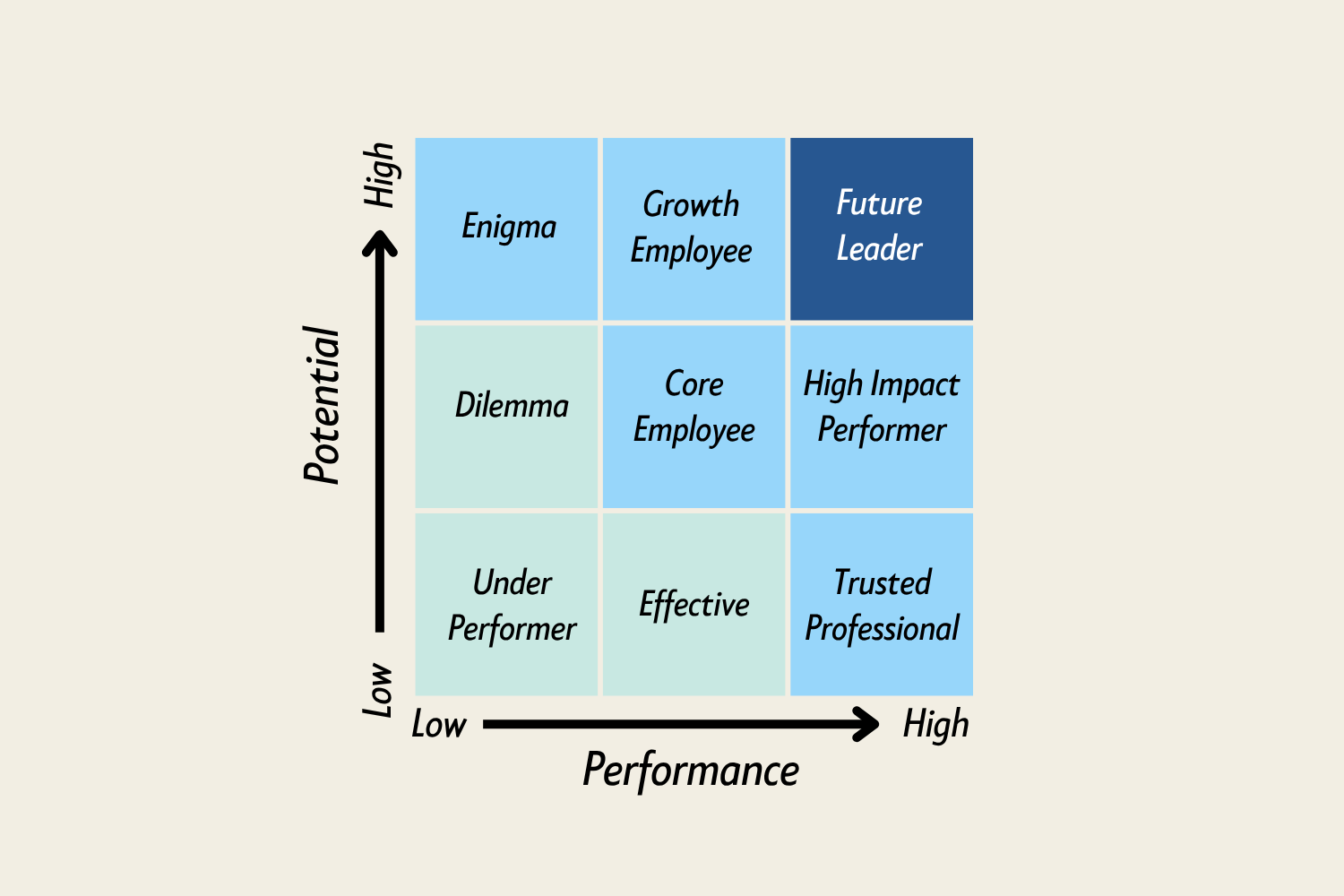
McKinsey 9-Box Model
A 3x3 grid that plots each person on performance against potential, giving nine distinct calls instead of one blurry verdict.

Peter Principle
In a hierarchy, everyone rises to their level of incompetence, because promotion rewards your current job, not tomorrow's.
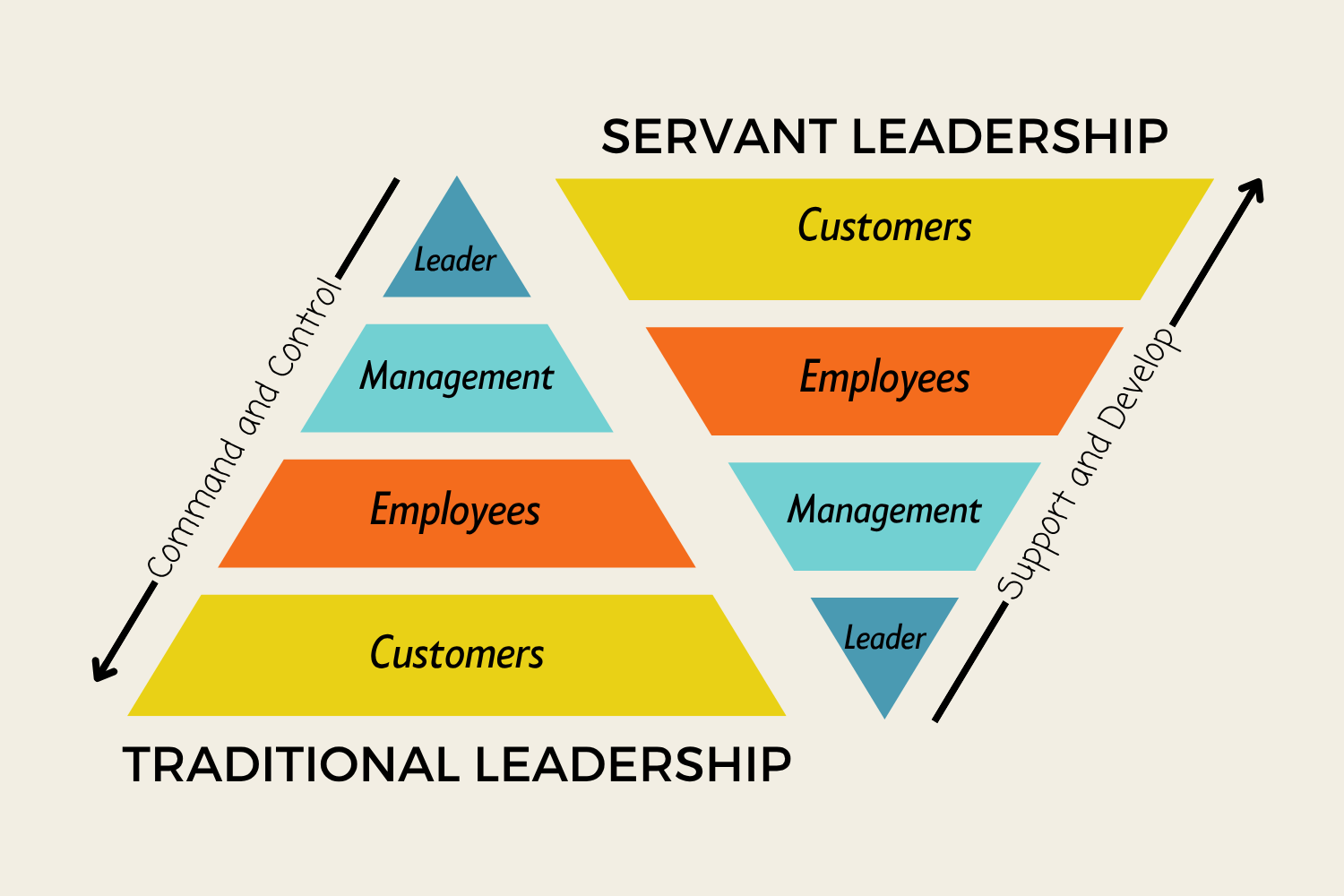
Servant Leadership
Flip "how can my team help me?" to "how can I help my team?" — job becomes removing obstacles, growing people.

The Leadership Code
Leadership runs on three traits — head, gut, heart — each toxic alone: competence without character is arrogance, courage without it reckless.
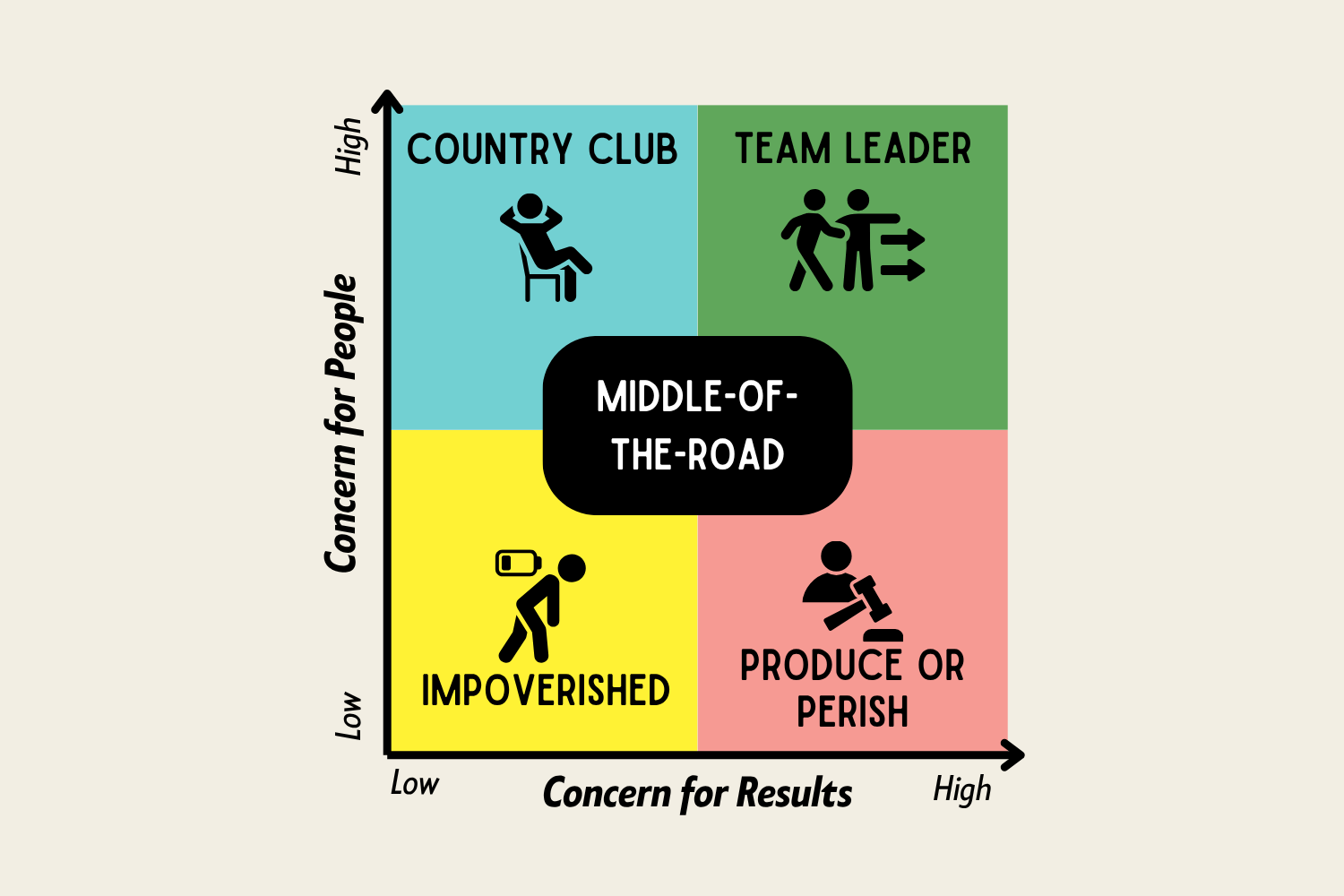
The Leadership Grid
Blake and Mouton mapped two axes — care for people, care for results — into five leadership styles you'll recognize instantly.
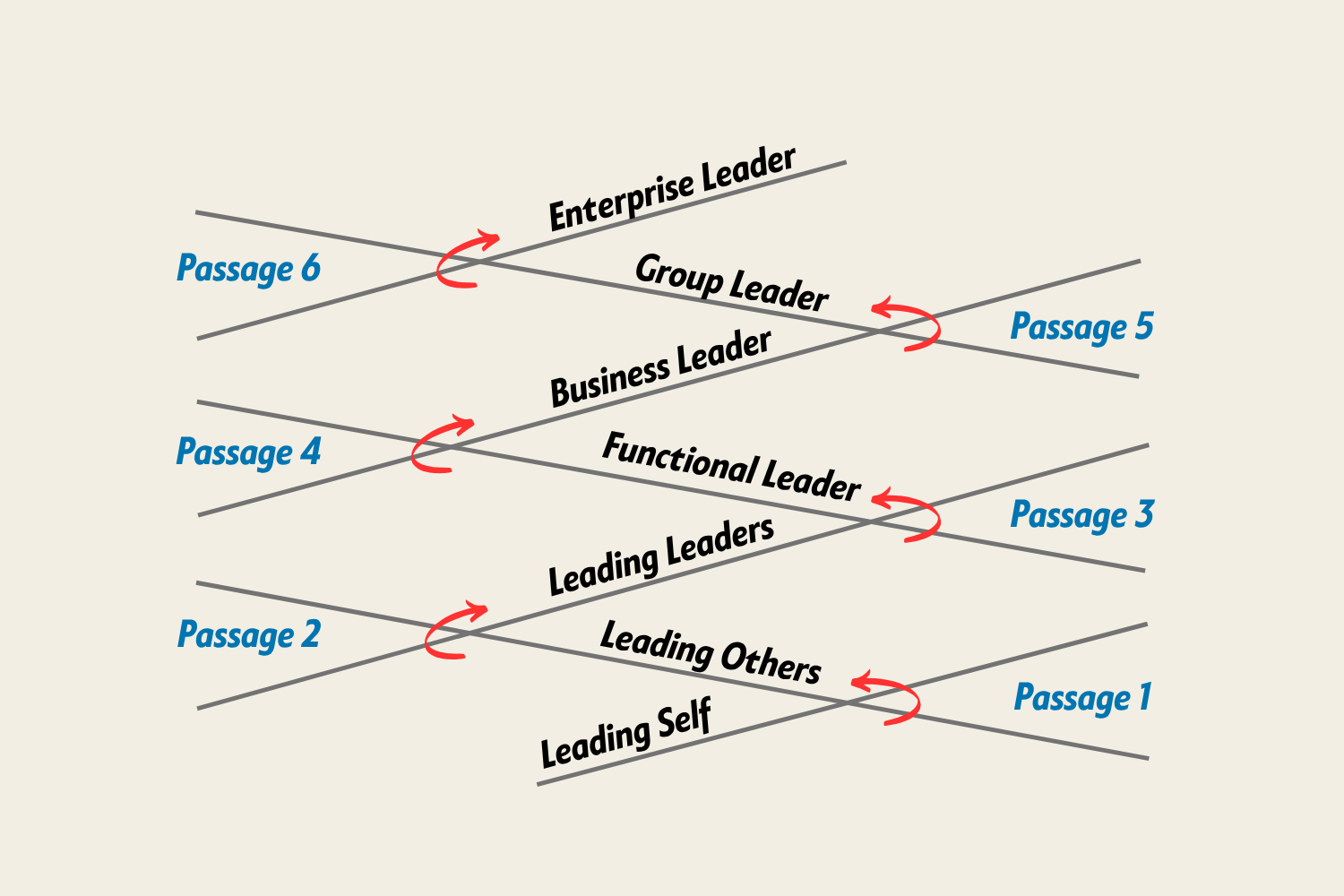
The Leadership Pipeline
Ram Charan mapped six passages into bigger leadership roles — at each one, old habits are exactly how you stall.
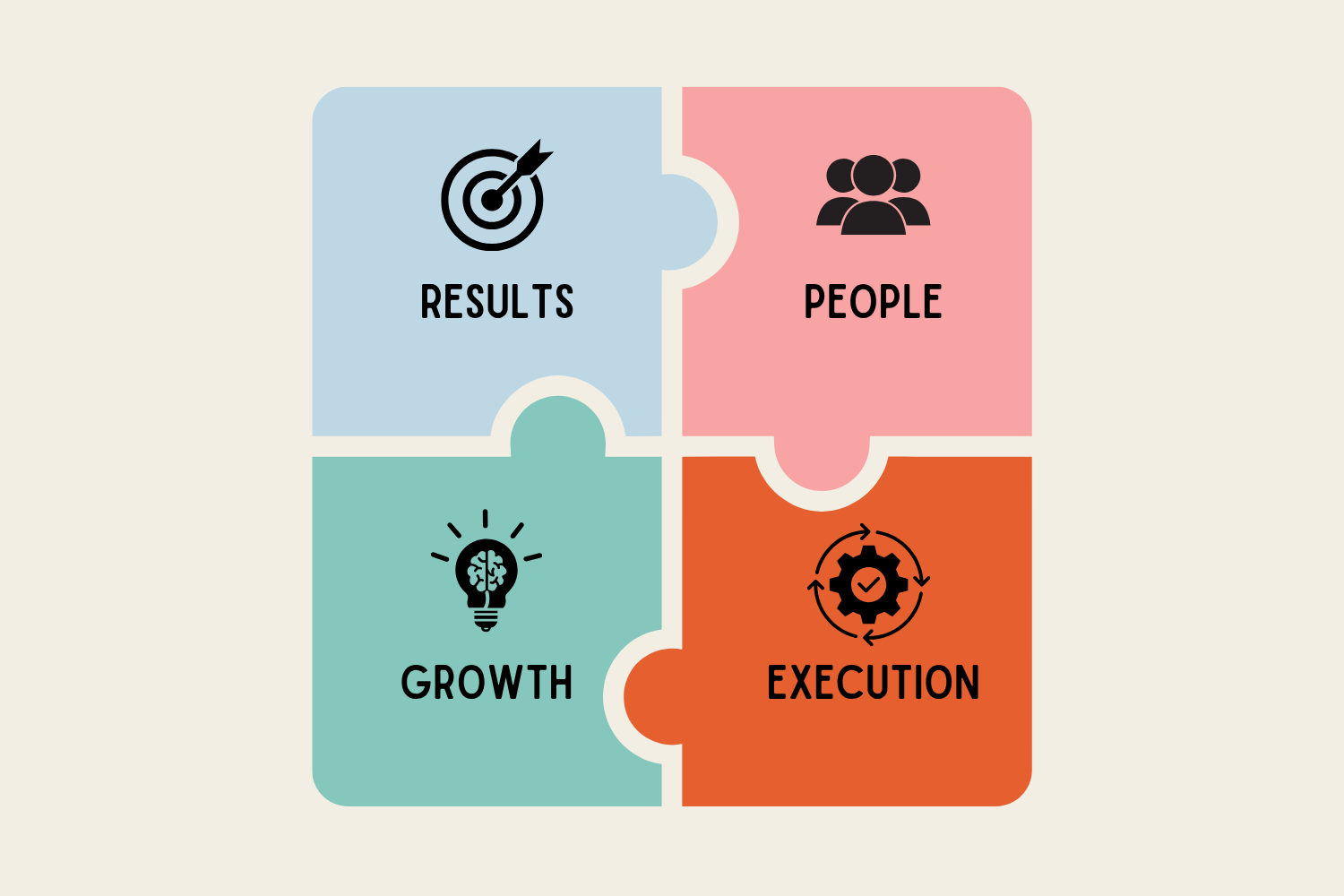
The Leadership Scorecard
A personal take on the Balanced Scorecard — Results, People, Execution, Growth — catching which one you're quietly neglecting.
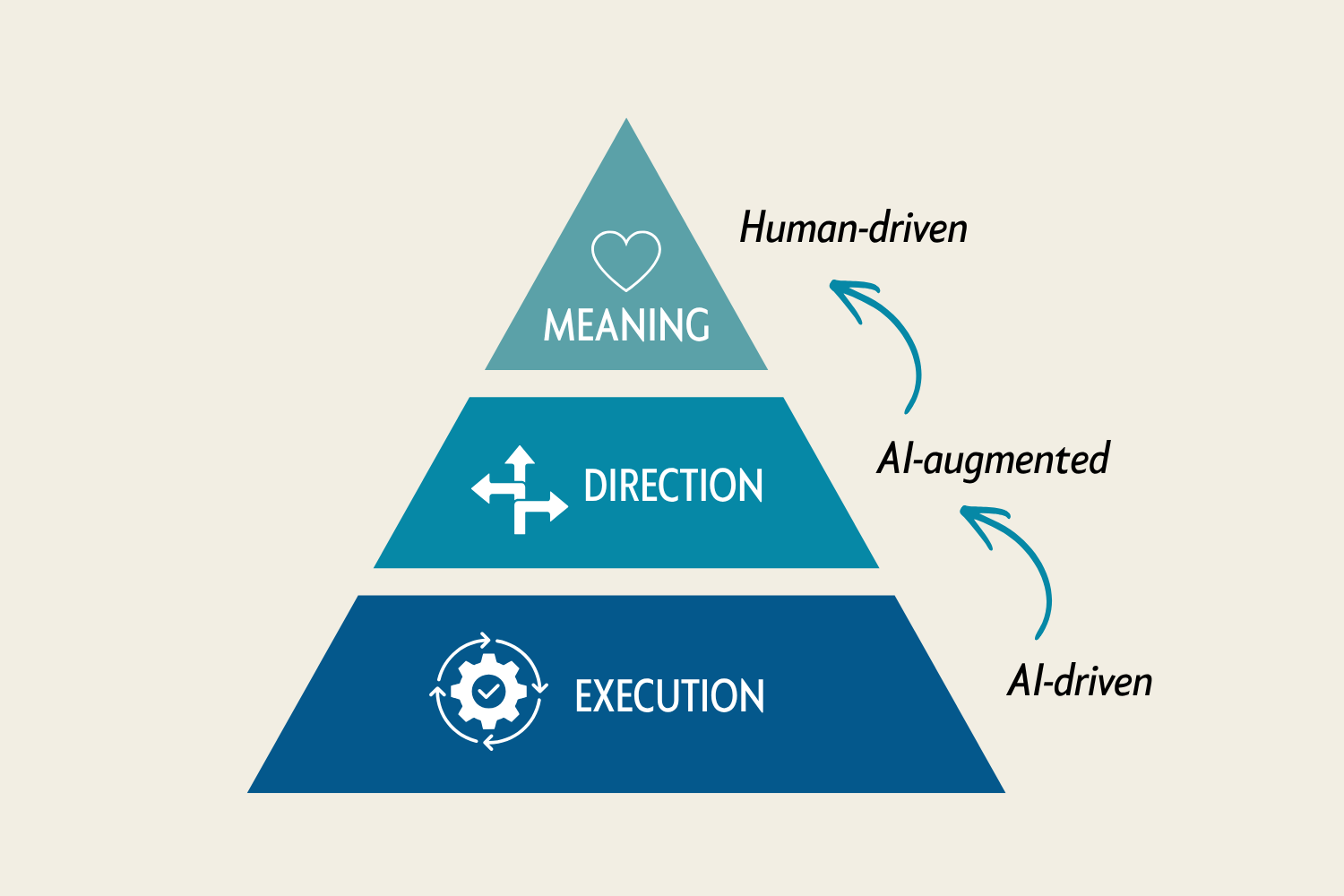
The Three Layers of Leadership
A pyramid — Execution, Direction, Meaning — where your value has to move up as AI automates execution.
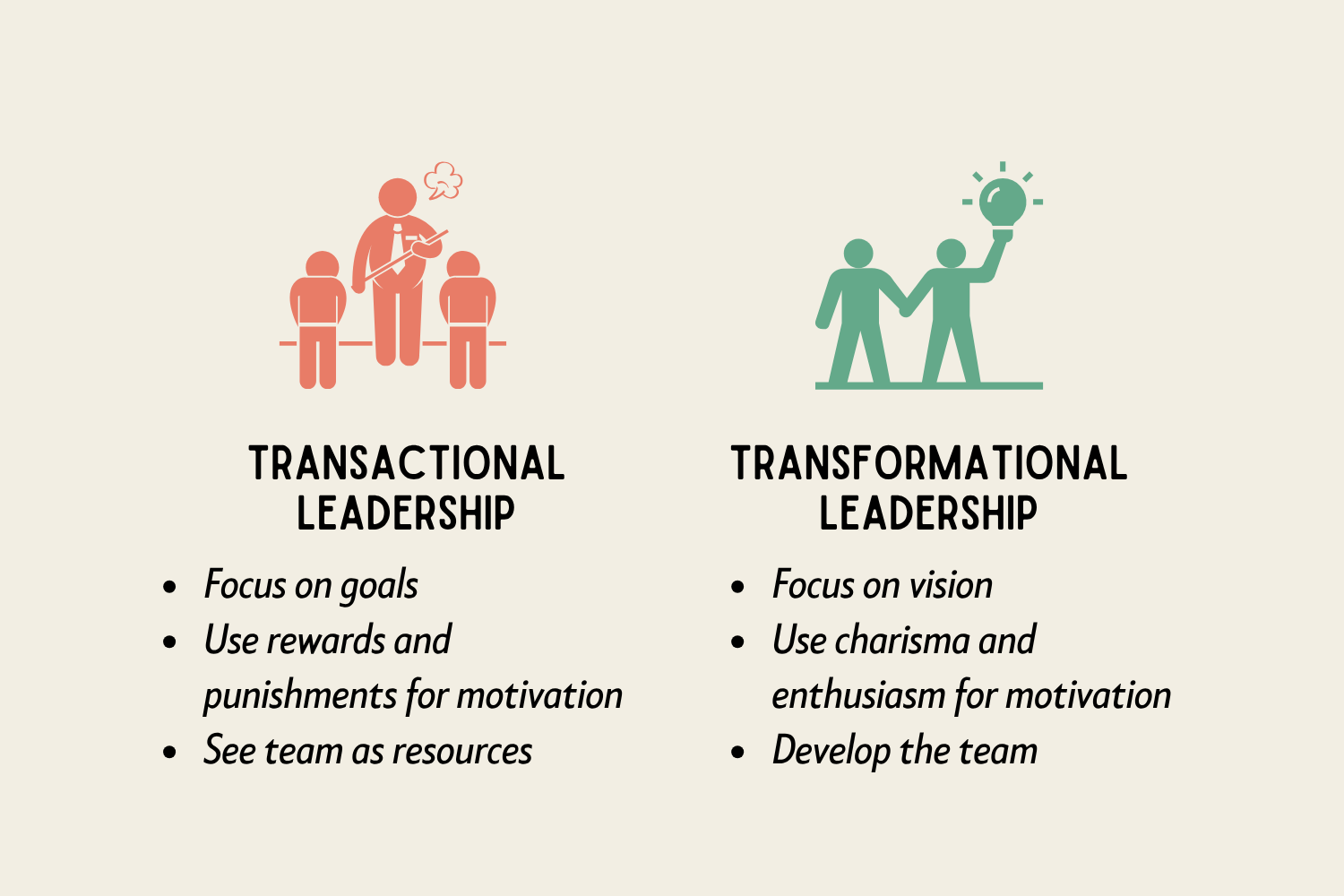
Transformational Leadership
Inspire people past self-interest and into a shared vision, raising what they aim for and what they're capable of.