Extreme Ownership
Two Navy SEAL officers' blunt rule for leadership, forged in the Battle of Ramadi and translated straight into the business world: there are no bad teams, only bad leaders, and the leader owns every outcome, full stop, no exceptions, no shared blame.
 Find this on the mind-map
Introduction
Jocko Willink and Leif Babin's core rule is stated early and never softened: a leader owns everything in their world (every mission failure, every missed deadline, every team member's mistake) completely, with no asterisks and no shared blame passed down to a subordinate or sideways to circumstance. "There are no bad teams, only bad leaders" isn't meant as motivational language. It's meant as a diagnostic: if the team is underperforming, look at the leadership first, every time, before looking anywhere else.
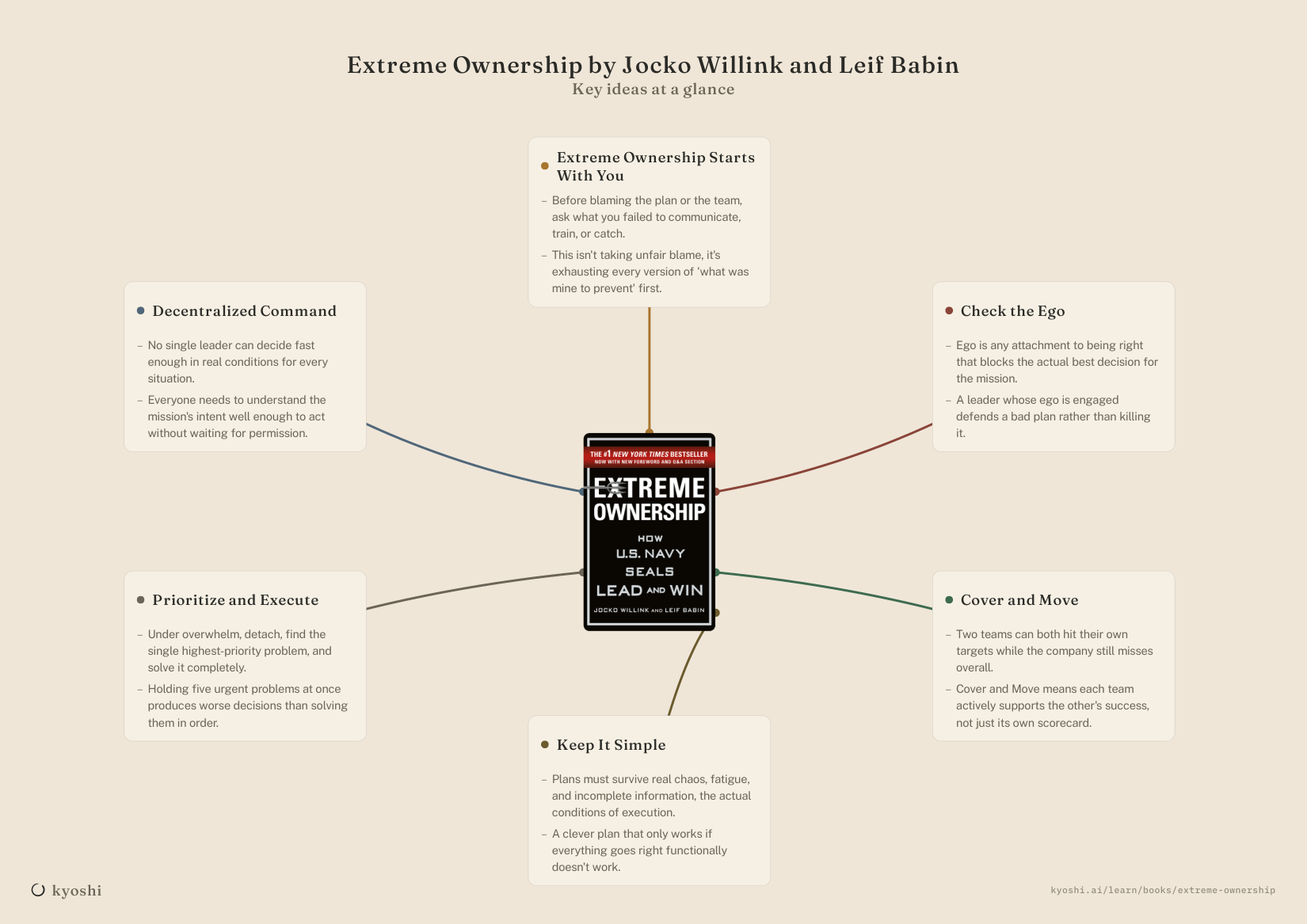
Extreme Ownership Starts With You
The habit this replaces is the instinct, under pressure, to explain a failure: the plan was unrealistic, the team member didn't execute, the timeline was unreasonable. Extreme Ownership asks a harder question first: what did I, as the leader, fail to communicate, train, plan for, or catch, that allowed this to happen? The authors are explicit that this isn't about accepting unfair blame for things genuinely outside your control. It's about exhausting every version of "what was mine to prevent" before reaching for an external explanation.
Check the Ego
Ego, in the authors' use, isn't just arrogance. It's any attachment to being right, being the one with the plan, or being seen as competent, that gets in the way of making the actual best decision for the mission. A leader whose ego is engaged will defend a bad plan rather than kill it, because killing it feels like admitting personal failure rather than making the correct call.
Cover and Move
No part of a team succeeds by optimizing only for itself. Picture two department heads, Priya in sales and Marcus in operations, each hitting their individual targets while blaming the other department for the company's overall miss. Both are technically right about their own numbers, and the company is still losing. Cover and Move means Priya's team actively supports Marcus's team's success, and vice versa, because the only unit that actually matters is the whole mission, not the individual department's scorecard.
Simple
Plans and instructions have to be simple enough that they survive contact with real chaos, fatigue, and incomplete information. Those are the conditions every plan actually gets executed under. A clever, detailed plan that only works if everything goes right is, functionally, a plan that doesn't work, because something always doesn't go right.
Prioritize and Execute
Under genuine overwhelm, with multiple simultaneous problems demanding attention, the move isn't to try to solve everything at once. It's to detach for a moment, identify the single highest-priority problem, solve that one completely, then move to the next. Trying to hold five urgent problems in your head simultaneously produces worse decisions on all five than solving them properly, one at a time, in the right order.
Decentralized Command
No single leader can make every decision fast enough in real conditions. Every person on a team needs to understand the mission's actual intent well enough to make the right call themselves, without waiting for permission, because the information they need to decide is often only available to them, in the moment, not to the leader back at headquarters.
Putting It Together
Every principle traces back to the first one. Owning the outcome completely is what forces a leader to check their ego, build genuinely simple plans, prioritize ruthlessly under pressure, and trust the team enough to decentralize real decisions, because a leader who's busy protecting their own position doesn't do any of those things well.
Why It Matters for Leaders
The test of this book isn't how a leader talks about ownership when things are going well. It's what they say in the first thirty seconds after something goes wrong. Most managers' first instinct under real pressure is to locate the cause outside themselves: the deadline was unrealistic, the other team dropped the ball, the client changed scope late. Extreme Ownership asks you to hold that instinct for a second and ask what you, specifically, failed to communicate, train for, plan for, or catch.
This isn't about publicly taking the fall for things you didn't control. It's a private discipline you run before you ever get to the external explanation: did I give clear enough direction, did I check in often enough, did I build a plan simple enough to survive the real conditions it got executed under. Most of the time, there's at least one honest answer in there, and finding it is what actually prevents the same failure next quarter.
It also changes how you handle conflict between parts of your own team. When two people, or two teams, are each hitting their own numbers while the shared outcome still misses, the instinct is to let them sort it out or to referee who's more right. The leader's actual job is to notice that both sides optimizing for their own scorecard is the problem itself, and to fix the incentive or the hand-off causing it, rather than picking a side.
Picture a manager, Grace, whose launch slips by two weeks. Her first instinct is to tell her VP that engineering under-scoped the work and the design team handed off assets late. Both things are true. But before that conversation, she asks herself the harder question: did she set a timeline she knew was tight without flagging the risk loudly enough, and did she check in with design early enough to catch the handoff problem before it became a crisis. The answer is yes, on both counts. She walks into the VP conversation owning the miss first, then explains what she's changing about how she runs the next launch. Her team notices. The next launch doesn't slip the same way.
What to do next
Reinforce your understanding of Extreme Ownership
Books related to Extreme Ownership

Dare to Lead
Brené Brown's case that vulnerability isn't the opposite of strong leadership. It's the precondition for it, and the armor most leaders wear to look strong is usually what's actually holding their team back.

Developing the Leader Within You
John Maxwell's foundational case that leadership is influence, not title, and that the gap between "manager" and "leader" is a set of learnable habits, not a personality you were or weren't born with.

Drive
Daniel Pink's case that the carrot-and-stick playbook most managers inherited is actually the wrong tool for most of today's work, and what motivates people doing complex, creative work instead.

Good to Great
Jim Collins' research into why some companies go from average to sustained market dominance, and others don't. Read less as a book about companies and more as a book about the kind of leader you have to become before a company (or a team) can get great.

Leadership in Turbulent Times
Historian Doris Kearns Goodwin places Lincoln, Theodore Roosevelt, FDR, and LBJ side by side and asks the same question about each: what did their worst personal crisis actually build in them, and how did they spend it once real power and a real emergency arrived at the same time.

Lean In
Sheryl Sandberg's argument that the barriers keeping women out of leadership are real on both sides: structural bias in how organizations operate, and self-imposed caution in how women are taught to see their own ambition. Fixing only one side leaves the other fully intact.

Mindset
Carol Dweck's research on why some people treat ability as fixed and others treat it as something built, and why the belief you hold about yourself shapes how your whole team learns, fails, and improves, often without anyone noticing it happening.

Primal Leadership
The case that a leader's mood isn't a private matter. It's contagious through the whole team, which makes emotional intelligence the real infrastructure underneath every other leadership skill.

The 21 Irrefutable Laws of Leadership
John Maxwell's attempt to turn leadership into something closer to a set of physical laws than a personality trait. Rules that hold regardless of your industry, your title, or how naturally charismatic you are.

The 5 Levels of Leadership
John Maxwell's map of how leadership actually gets earned, level by level, and why the title on your door only ever buys you the lowest, least durable form of it.

The Diary of a CEO
Steven Bartlett's attempt to turn hundreds of founder and expert conversations into 33 numbered laws, organized into four pillars: the self, the story, the philosophy, and the team.

Winning
Jack Welch's unapologetically blunt playbook for running a business and a team, built on the belief that most management dysfunction is really just a candor problem wearing a nicer name.
Skills related to Extreme Ownership

Frameworks related to Extreme Ownership
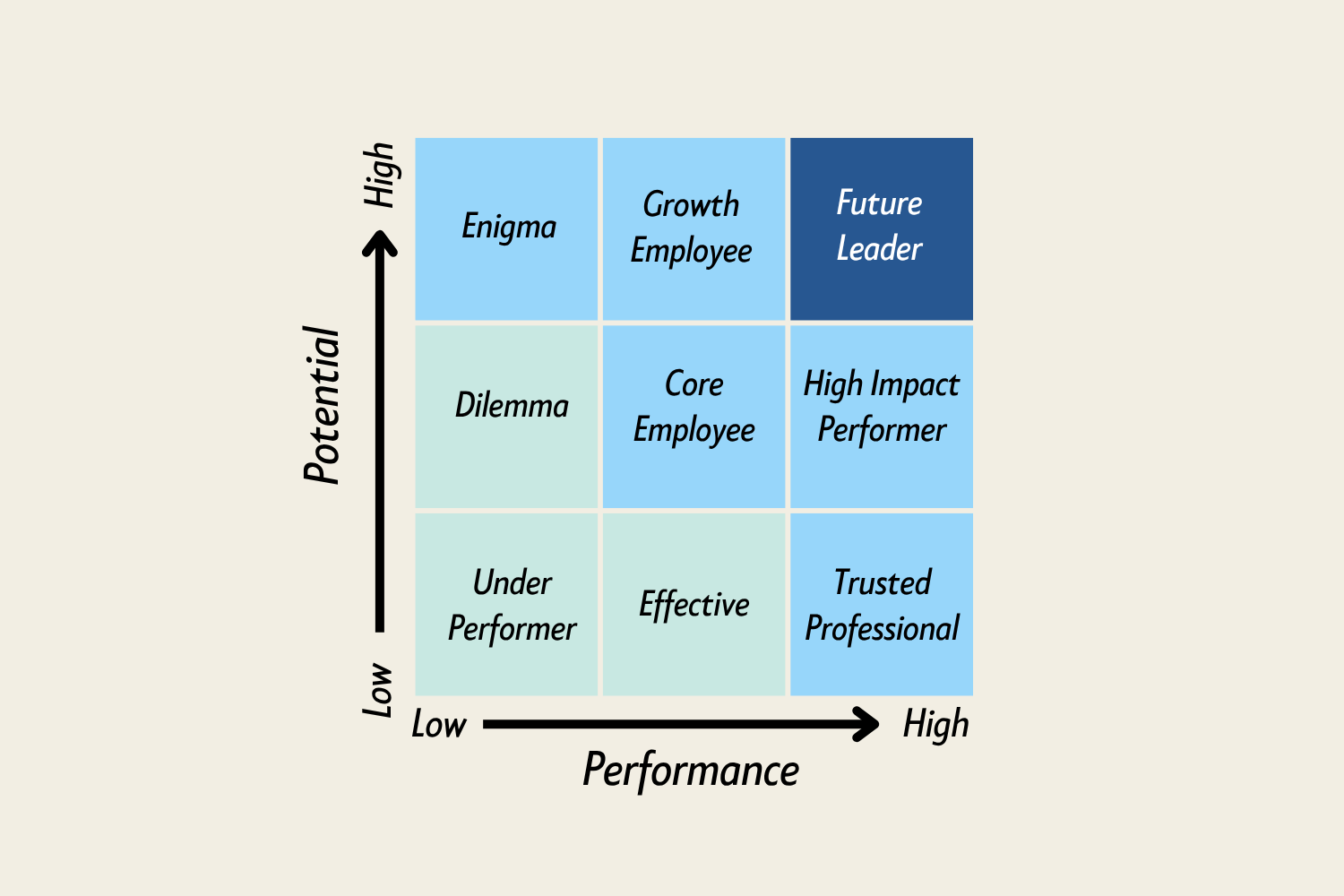
McKinsey 9-Box Model
A 3x3 grid that plots each person on performance against potential, giving nine distinct calls instead of one blurry verdict.

Peter Principle
In a hierarchy, everyone rises to their level of incompetence, because promotion rewards your current job, not tomorrow's.
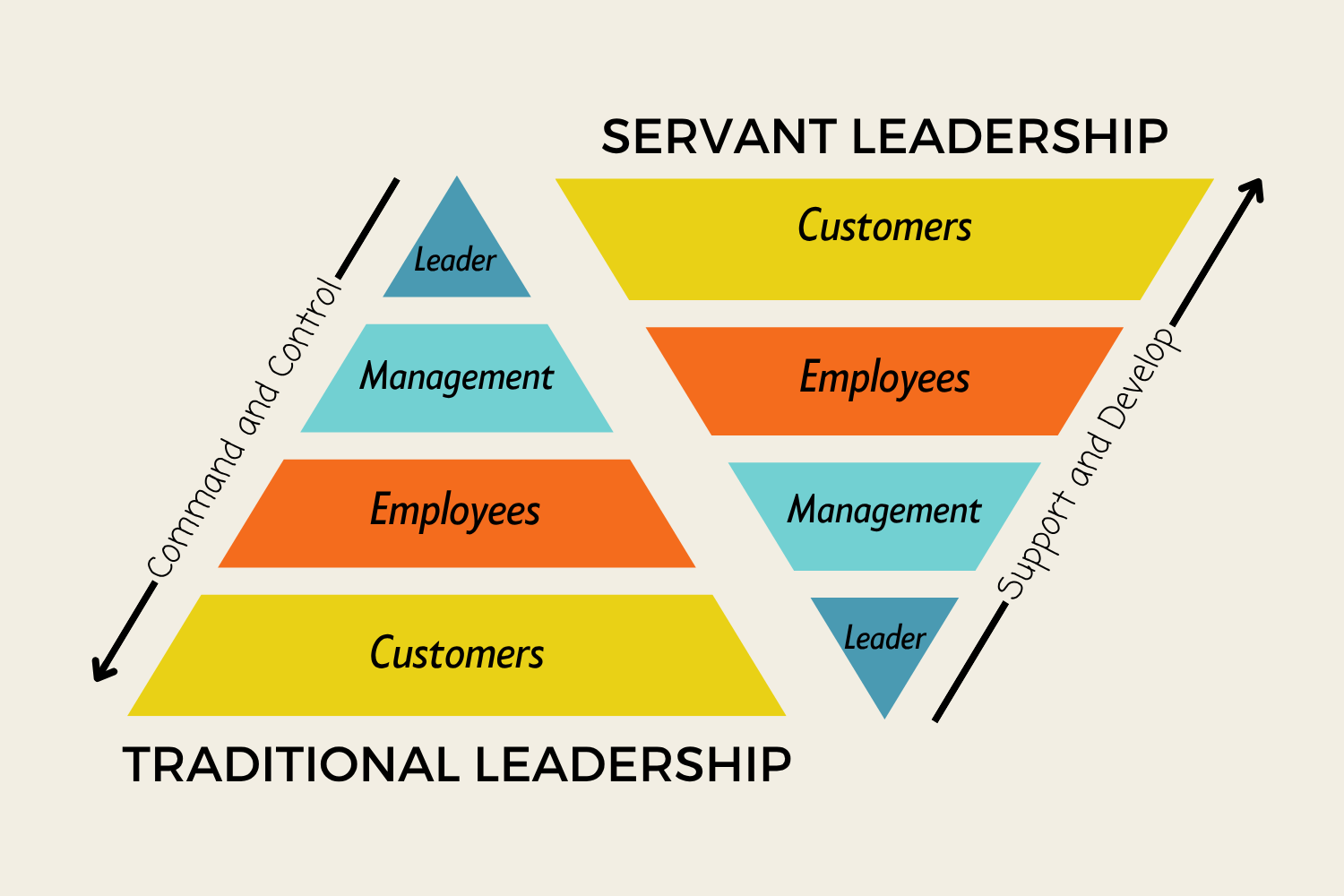
Servant Leadership
Flip "how can my team help me?" to "how can I help my team?" — job becomes removing obstacles, growing people.

The Leadership Code
Leadership runs on three traits — head, gut, heart — each toxic alone: competence without character is arrogance, courage without it reckless.
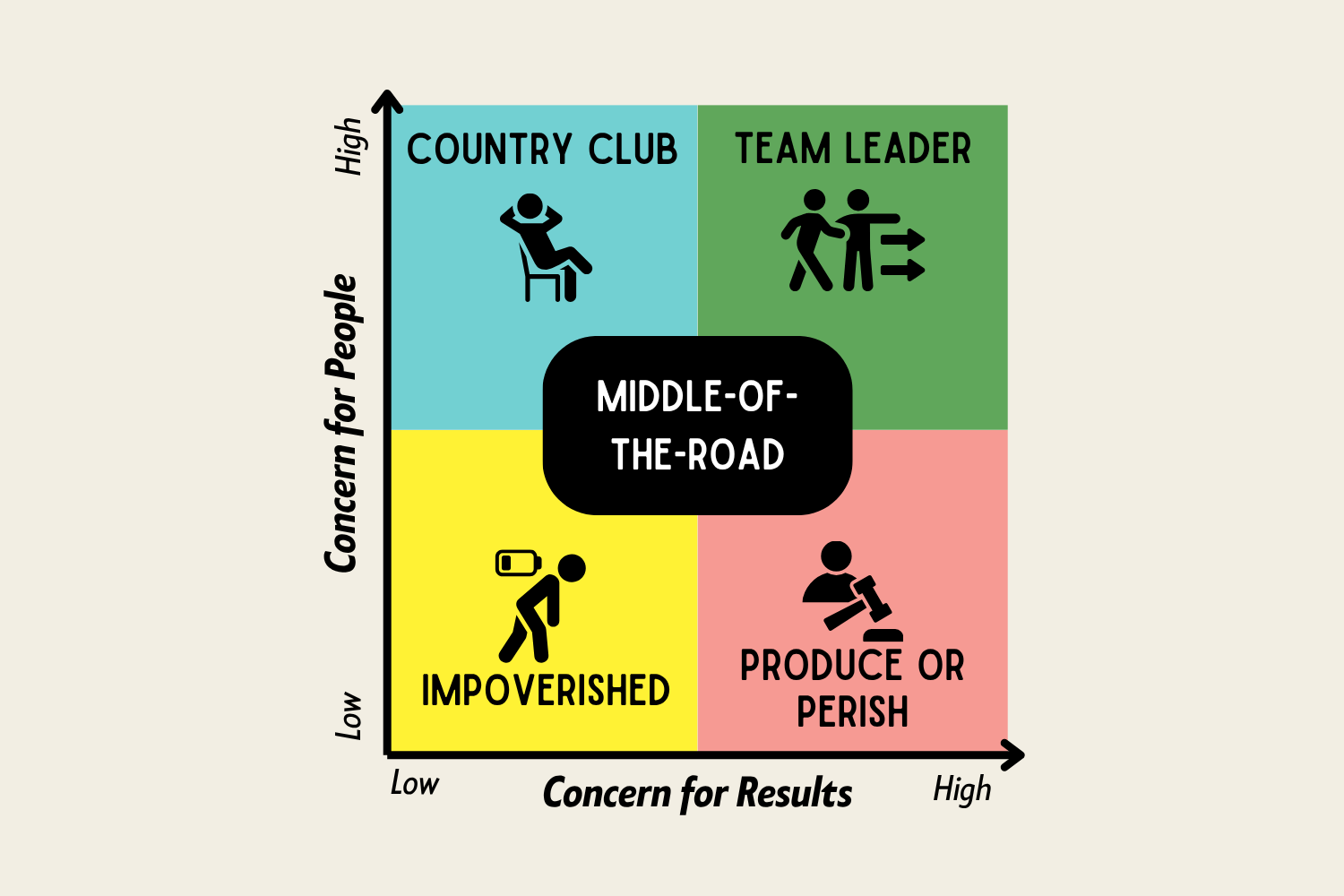
The Leadership Grid
Blake and Mouton mapped two axes — care for people, care for results — into five leadership styles you'll recognize instantly.
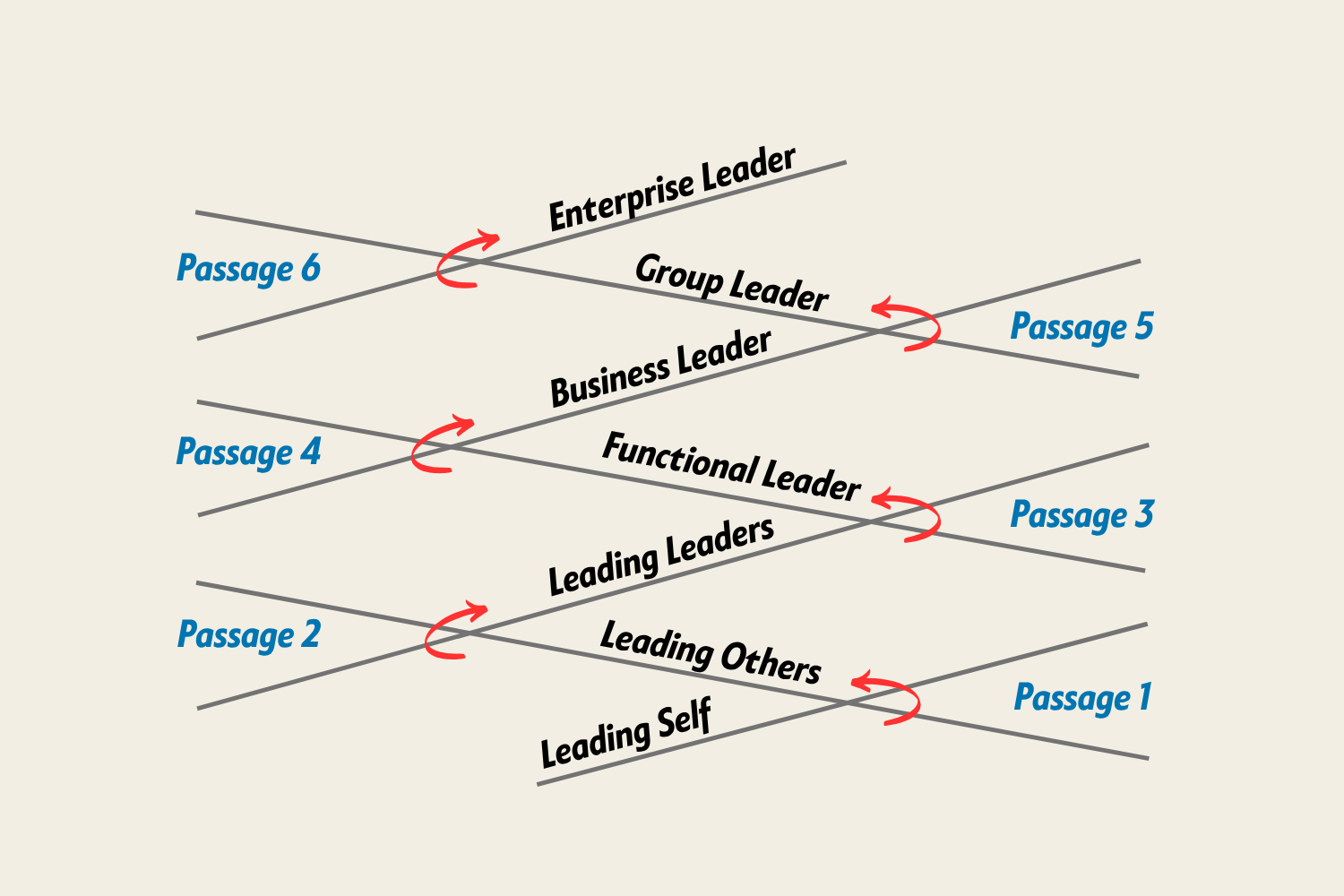
The Leadership Pipeline
Ram Charan mapped six passages into bigger leadership roles — at each one, old habits are exactly how you stall.
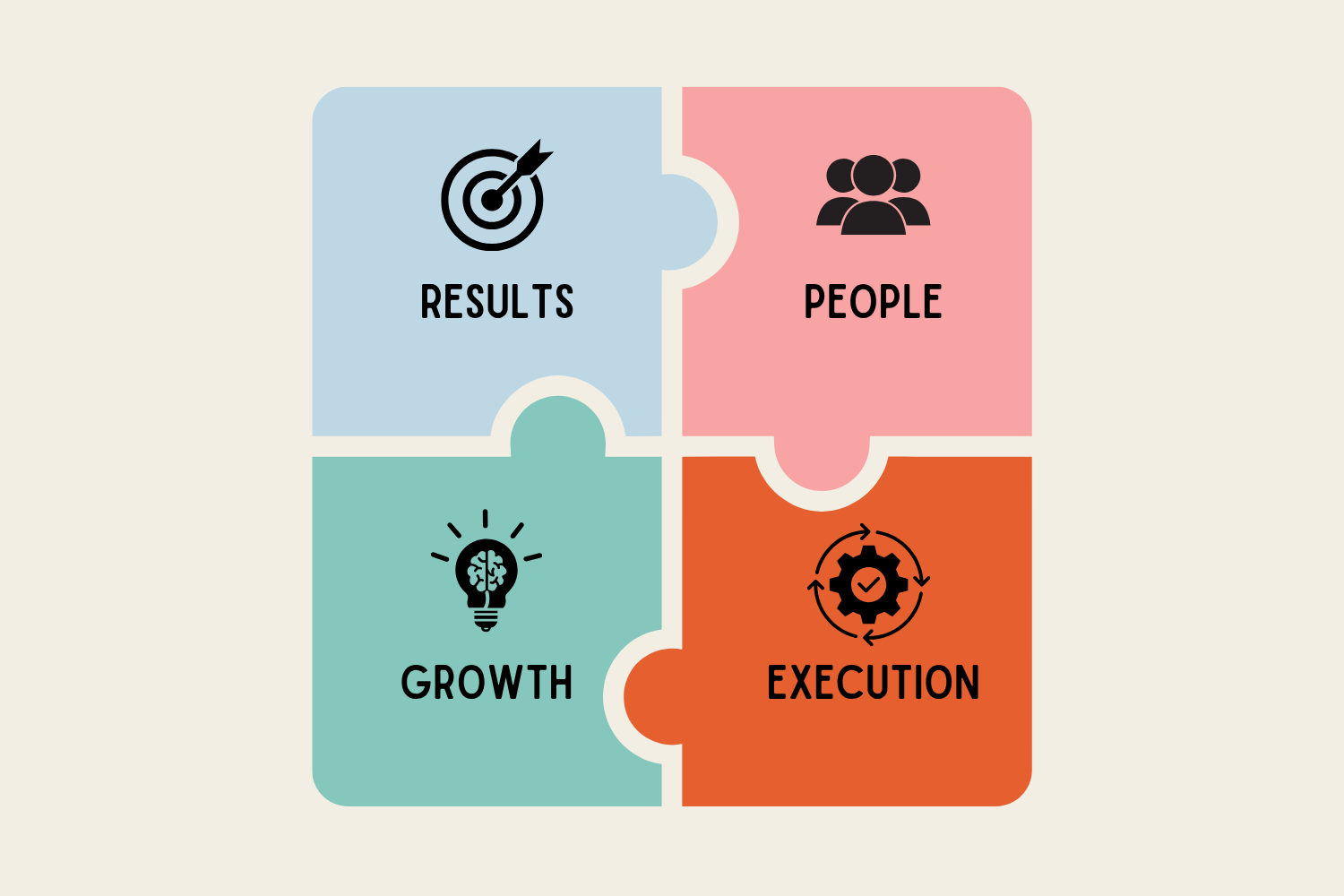
The Leadership Scorecard
A personal take on the Balanced Scorecard — Results, People, Execution, Growth — catching which one you're quietly neglecting.
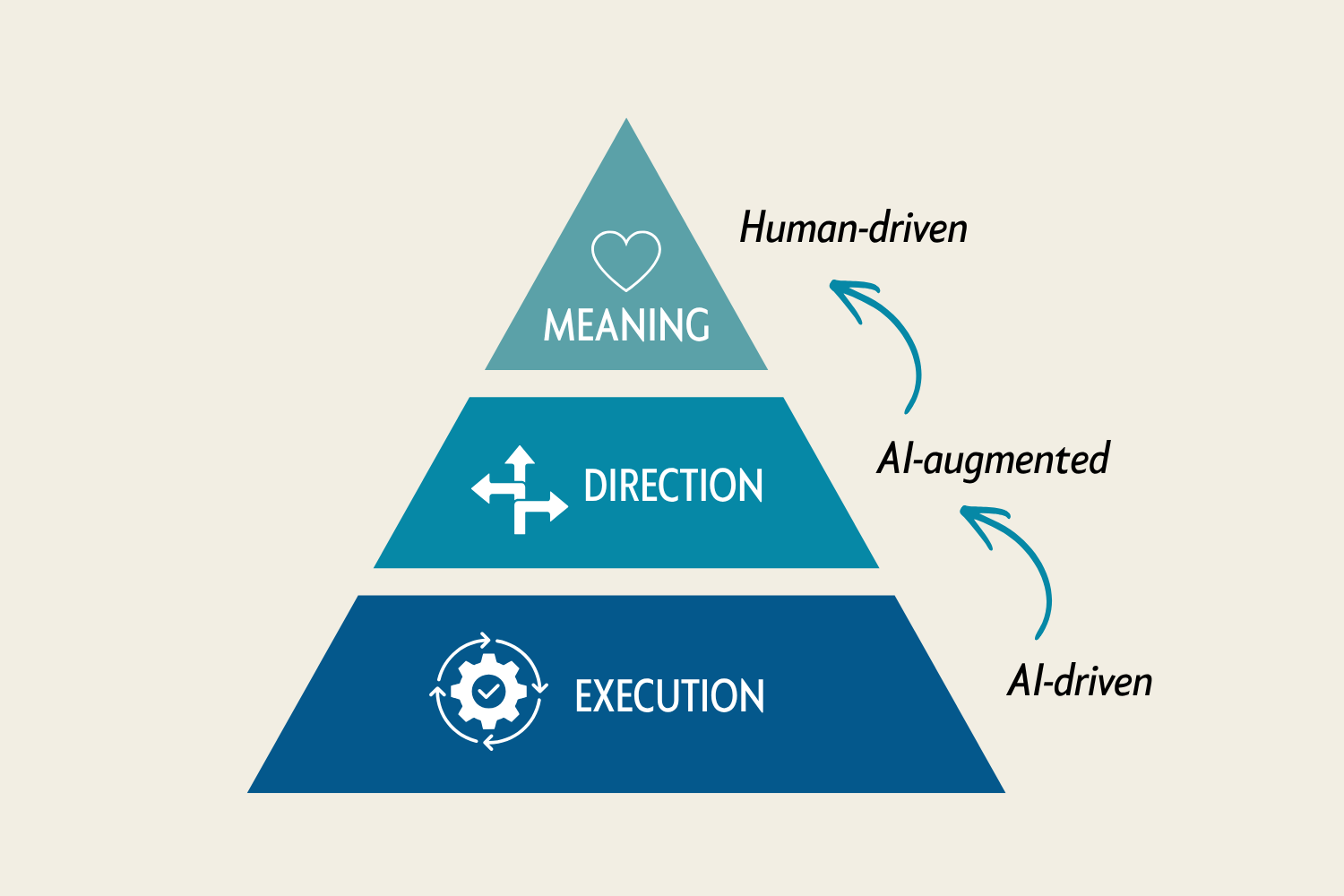
The Three Layers of Leadership
A pyramid — Execution, Direction, Meaning — where your value has to move up as AI automates execution.
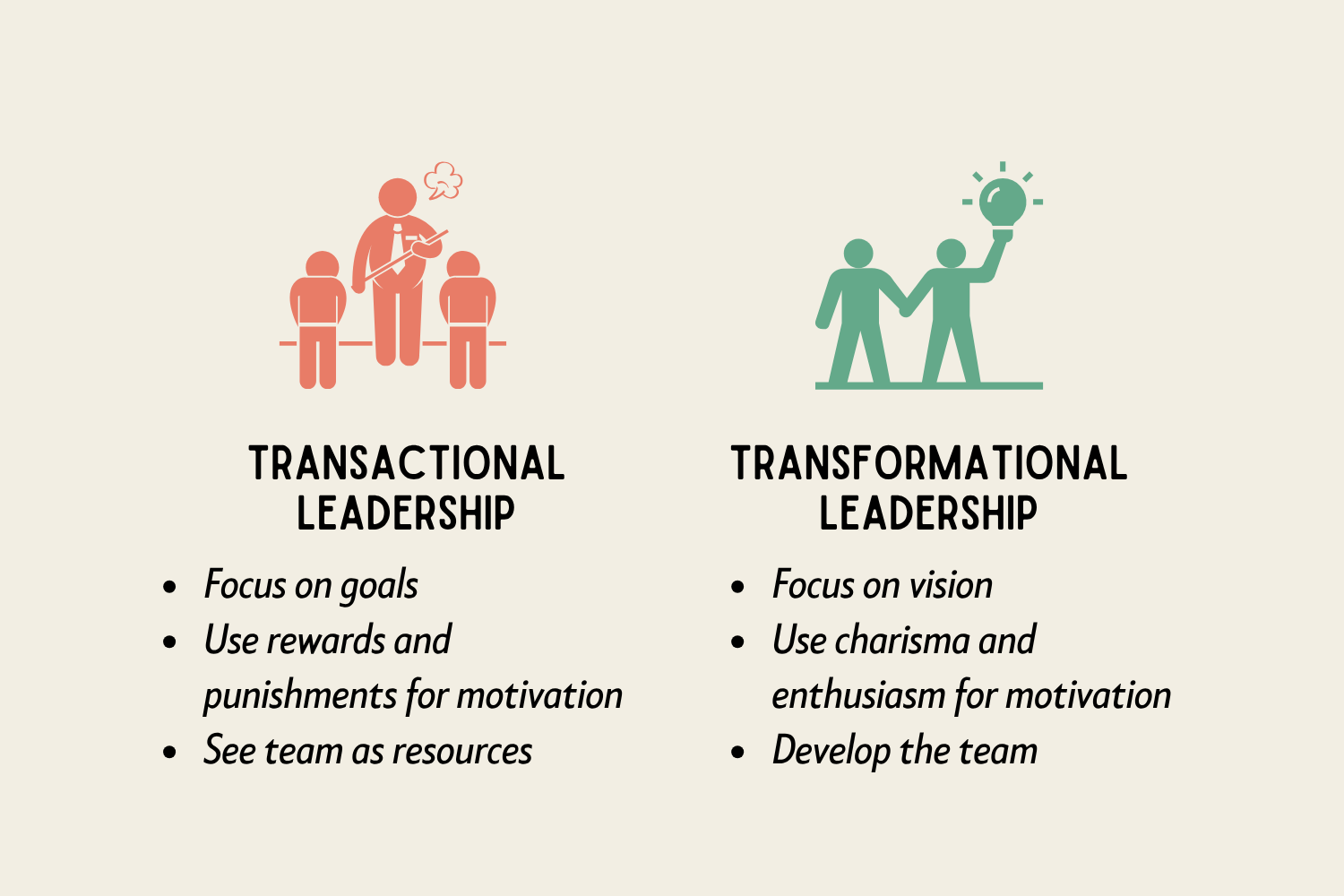
Transformational Leadership
Inspire people past self-interest and into a shared vision, raising what they aim for and what they're capable of.