The Person You Mean to Be
Dolly Chugh's case for giving up on being a "good person" (a fixed, defensive identity) in favor of becoming a "good-ish person": someone actively building toward better, who treats their own blind spots as something to work on instead of something to deny.
 Find this on the mind-map
Introduction
Chugh's starting point is almost a trick: most people's biggest obstacle to becoming more fair, more aware, and less biased is their own desire to already believe they are. Wanting to be a good person, as a fixed fact about yourself, makes you defensive the instant something suggests otherwise. Wanting to become a better person treats the same suggestion as useful information. The whole book is an argument for choosing the second stance on purpose.
Believer vs. Builder
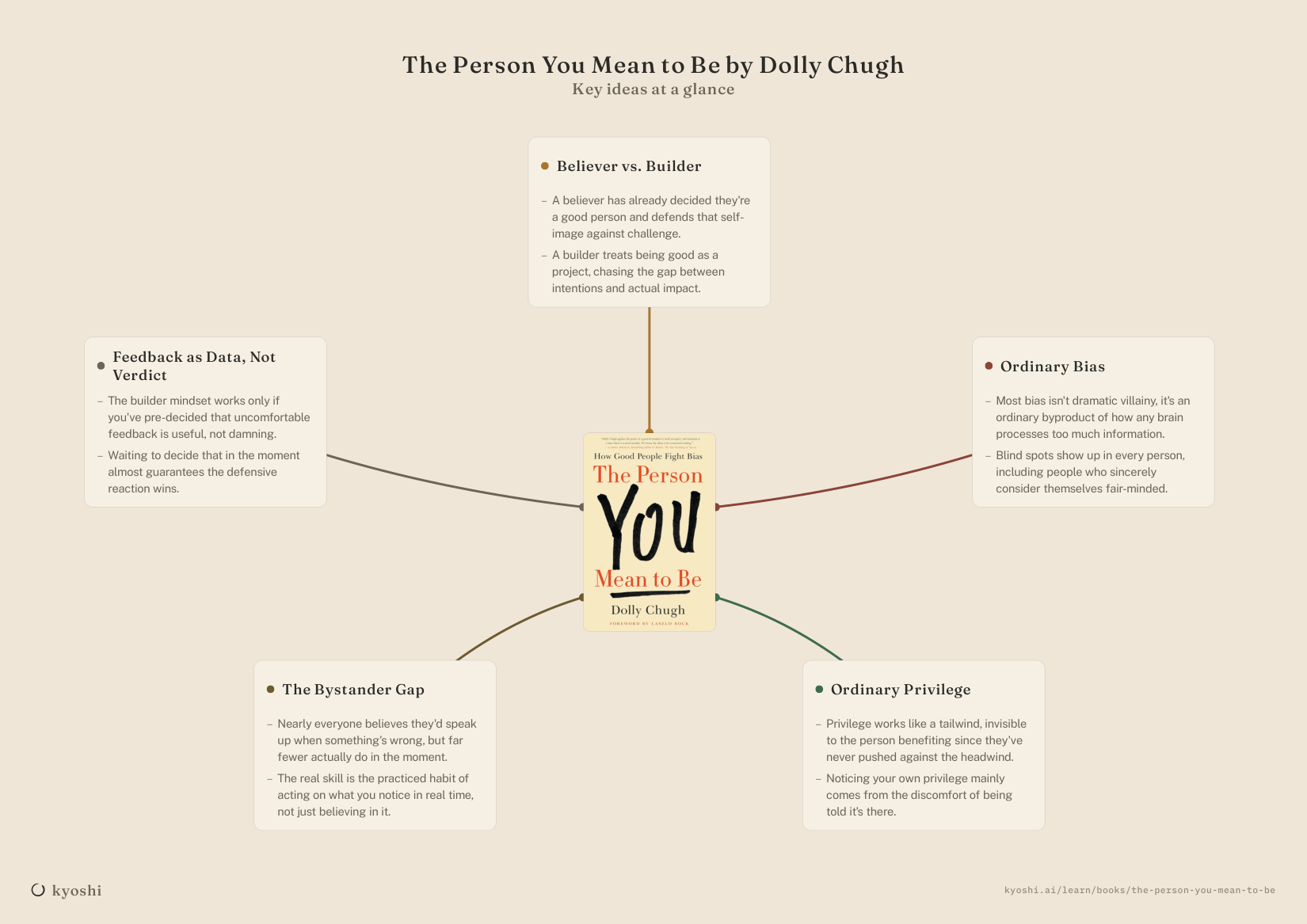
A "believer" has already decided the question of their own character is settled. They're a good person, full stop, and they experience any feedback that challenges that as an attack to repel. A "builder" treats being a good person as a project, not a status, and goes looking for the gap between their intentions and their actual impact, because closing that gap is the whole point. Picture two managers getting the same piece of feedback: a comment in a team meeting landed badly with a junior colleague. Manager A responds with "that's not what I meant, and honestly I'm one of the least biased people on this team," defending the self-image. Manager B responds with "tell me more about how that landed, I clearly missed something," defending nothing, pursuing the information instead.
Ordinary Bias and Ordinary Privilege
Chugh's bigger point is that most bias isn't dramatic villainy. It's ordinary: a byproduct of how anyone's brain processes a world with more information than it can consciously handle, which produces blind spots in every single person, including people who sincerely consider themselves fair-minded. Privilege works the same way, without announcing itself: it functions like a tailwind, invisible to the person benefiting from it precisely because they've never had to push against the equivalent headwind, and noticing it mainly comes from the discomfort of being told it's there.
From Noticing to Acting: The Bystander Gap
Nearly everyone believes they would speak up if they saw something wrong happen in front of them. Far fewer people actually do, in the moment, when it's socially awkward and happening fast. Most people already have the moral conviction in the abstract. The real skill is building the specific, practiced habit of acting on what you notice in real time, which is a muscle, not a belief.
Treat Feedback About Blind Spots as Data, Not Verdict
The builder mindset only works in practice if you've pre-decided, before the uncomfortable moment arrives, that being told you missed something is useful rather than damning. Waiting to figure that out in the moment almost guarantees the defensive reaction wins, because defensiveness is the faster reflex.
Putting It Together
Believer-mode protects a self-image; builder-mode protects nothing and improves something. The ordinary biases and ordinary privilege every person carries aren't a verdict on anyone's character. They're simply the starting condition everyone is building from. The only real choice is whether you're defending the story that you've already arrived, or building toward somewhere better.
Why It Matters for Leaders
The managers who do the most damage on fairness rarely think of themselves as biased. They think of themselves as fair, and that belief is exactly what keeps them from checking. A manager who's already decided she's one of the good ones has no reason to look twice at who she promotes, who she interrupts in meetings, or whose names she actually remembers. The belief doesn't cause the blind spot, but it does make sure nobody, including her, ever goes looking for it.
The practical shift is small and specific: treat feedback about your impact as data about what happened, not a verdict on who you are. That sounds easy until the moment it's actually tested, usually right after you've done something you didn't mean as unfair. The instinct in that moment is to explain your intent. The useful move is to ask what the other person actually experienced, and then sit with the answer instead of arguing with it.
This matters most in the ordinary, low-drama decisions a manager makes every week: who gets the stretch assignment, whose name comes to mind first for a promotion, whose comment in a meeting gets built on versus talked over. None of these moments feel like a bias test in the moment. They just feel like normal judgment calls, which is exactly why the pattern is so easy to miss from the inside and so easy to see from outside.
Picture a manager named Sam who's asked, in a skip-level survey, why two equally strong engineers on his team have had very different paths this year: one promoted, one still waiting. Sam's first reaction is to list reasons the promoted engineer earned it, which is true as far as it goes. The harder, more useful question is why the other engineer's work never made it into the room where those decisions got made. Asking that question, and treating the answer as information rather than an accusation, is the whole difference between a manager who's a believer and one who's actually building.
What to do next
Reinforce your understanding of The Person You Mean to Be
Books related to The Person You Mean to Be

Inclusify
Stefanie Johnson's argument that most leaders miss inclusion by over-indexing on one of two basic human needs, belonging or uniqueness, and her six named archetypes for exactly how that imbalance shows up, from the "Meritocracy Manager" to the "White Knight."

Leaders Eat Last
Simon Sinek's case that leadership is a biological deal, not a rank. The people at the top give up safety and comfort first, so everyone below them doesn't have to spend their energy watching their back instead of doing the work.

Lean In
Sheryl Sandberg's argument that the barriers keeping women out of leadership are real on both sides: structural bias in how organizations operate, and self-imposed caution in how women are taught to see their own ambition. Fixing only one side leaves the other fully intact.

No Rules Rules
Netflix co-founder Reed Hastings, with culture researcher Erin Meyer, on why Netflix removed vacation policies, expense approvals, and most of the rulebook most companies treat as non-negotiable, and the two things that have to be true first, or the whole thing backfires.

Rebel Ideas
Matthew Syed's case that the smartest team in the room is rarely the one stacked with the highest individual IQs, it's the one with the widest range of genuinely different ways of seeing the same problem. A pointed argument against hiring people who think like you, no matter how impressive they are.

The Culture Code
Daniel Coyle's reverse-engineering of highly successful groups: not through their strategy or talent, but through small, repeated signals that most leaders never notice they're sending, or failing to send.

The Culture Map
Erin Meyer's field guide to why a management style that works perfectly in one country reads as either rude or weak in another, and why "just be yourself" is actually terrible advice for anyone leading across cultures.

The Fearless Organization
Amy Edmondson's case that psychological safety isn't a soft perk for making people feel nice. It's a hard performance requirement, because teams without it make worse decisions, catch fewer errors, and learn slower than teams that have it.

Tribal Leadership
A model for diagnosing a team's culture by literally listening to how people talk: five stages of "tribal" language, from "life sucks" to "life is great," and a surprisingly specific playbook for moving a team up one stage at a time.
Skills related to The Person You Mean to Be

Frameworks related to The Person You Mean to Be

IKEA Effect
You value things more when you helped build them — which is why a strategy handed to a team lands flat.
Maslow's Hierarchy of Needs
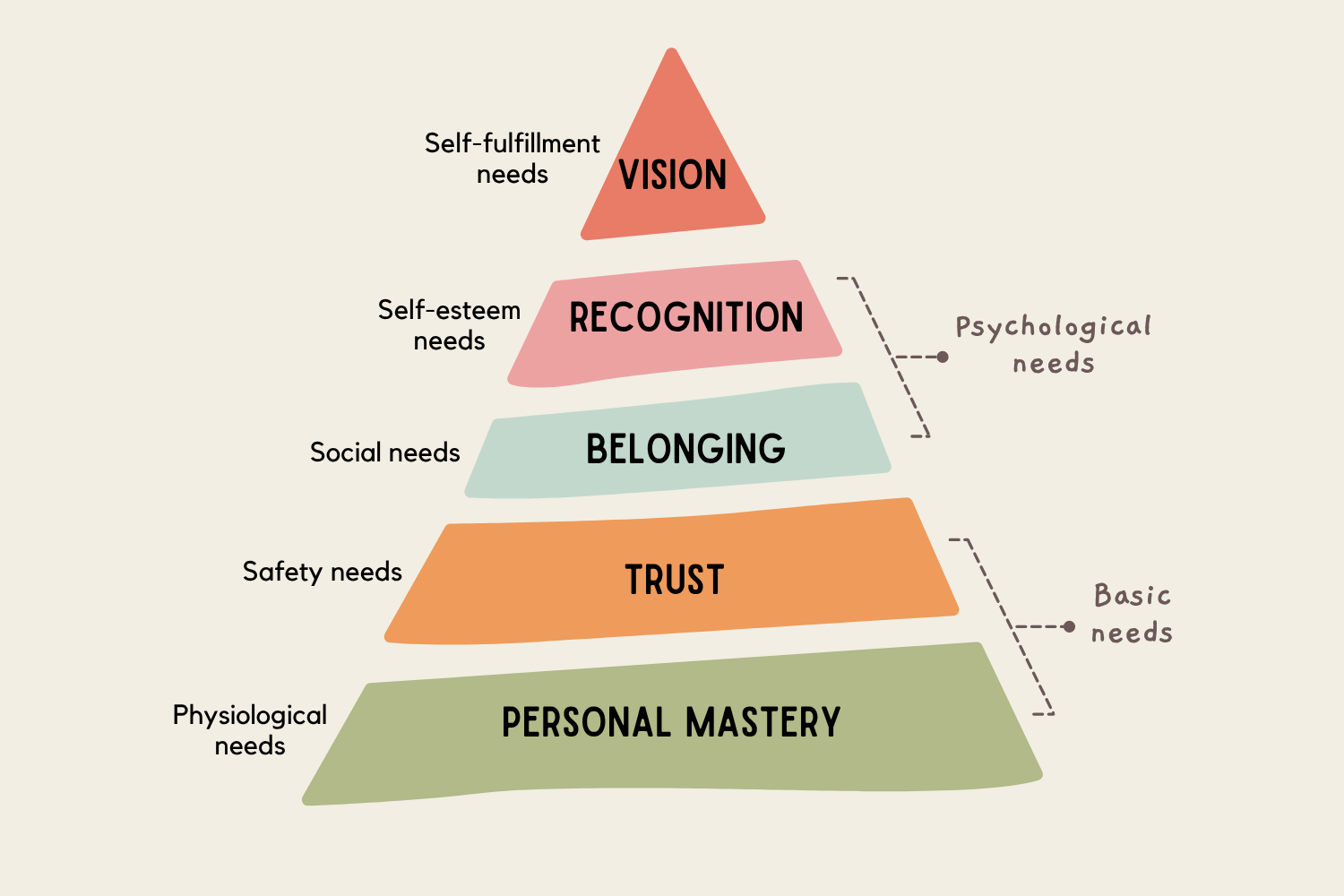
Abraham Maslow's five-level model of motivation, applied to leadership as a stack — mastery, trust, belonging, up through recognition and vision.
Psychological Safety
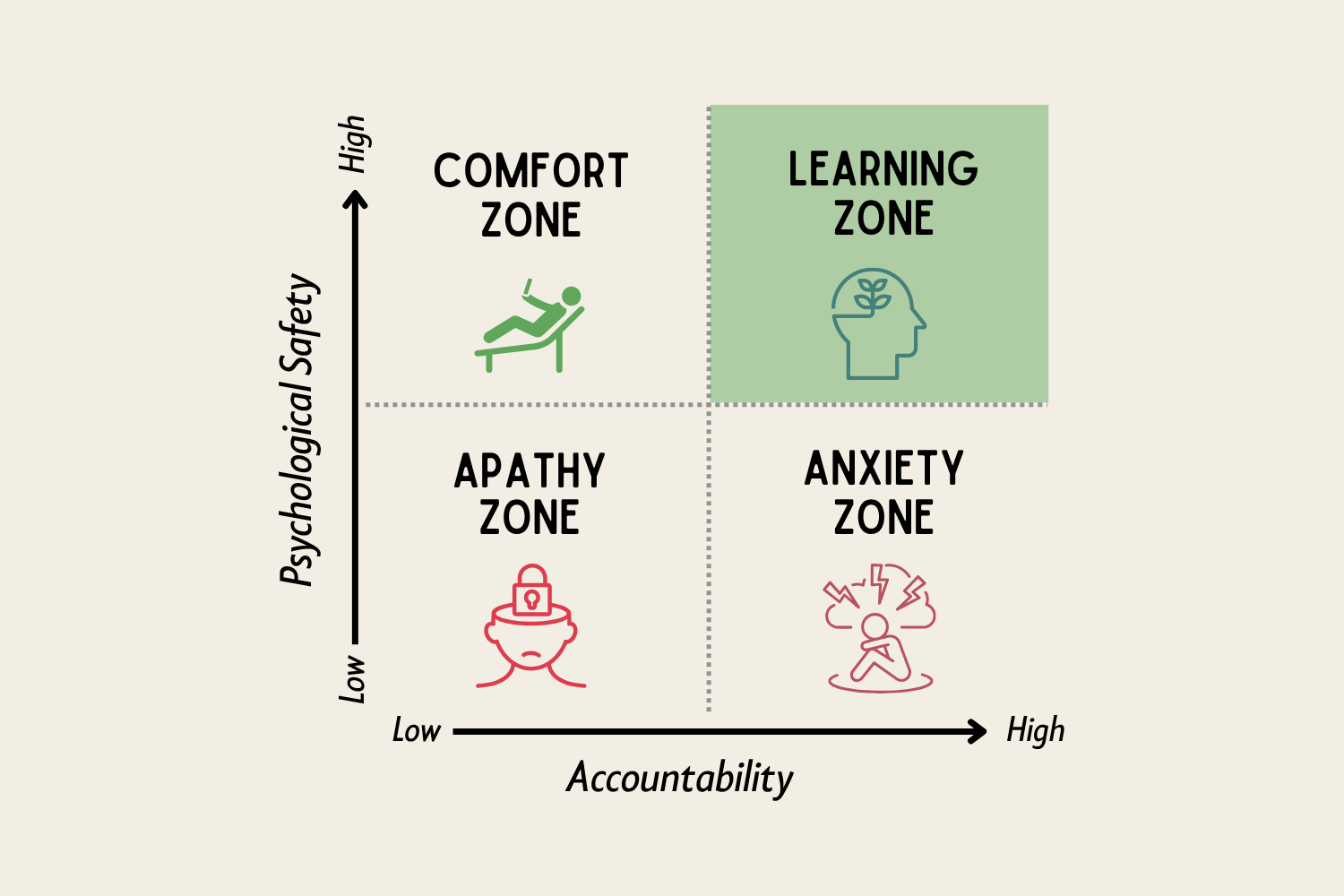
Amy Edmondson's finding that people must feel safe taking risks — a dumb question, a mistake — before a team can perform.

Spiral Dynamics
Eight color-coded value systems shaping what people care about at work — success, purpose, relationships — matched to stop guessing motivation.

The AI Culture Stack
Same AI tools and budget, wildly different results — the gap isn't the technology, it's three layers underneath: permission, fluency, judgment.

The Bannister Effect
One person breaking a barrier makes it stop being fixed for everyone else — break the unspoken belief in public first.
The Four Leadership Support Roles
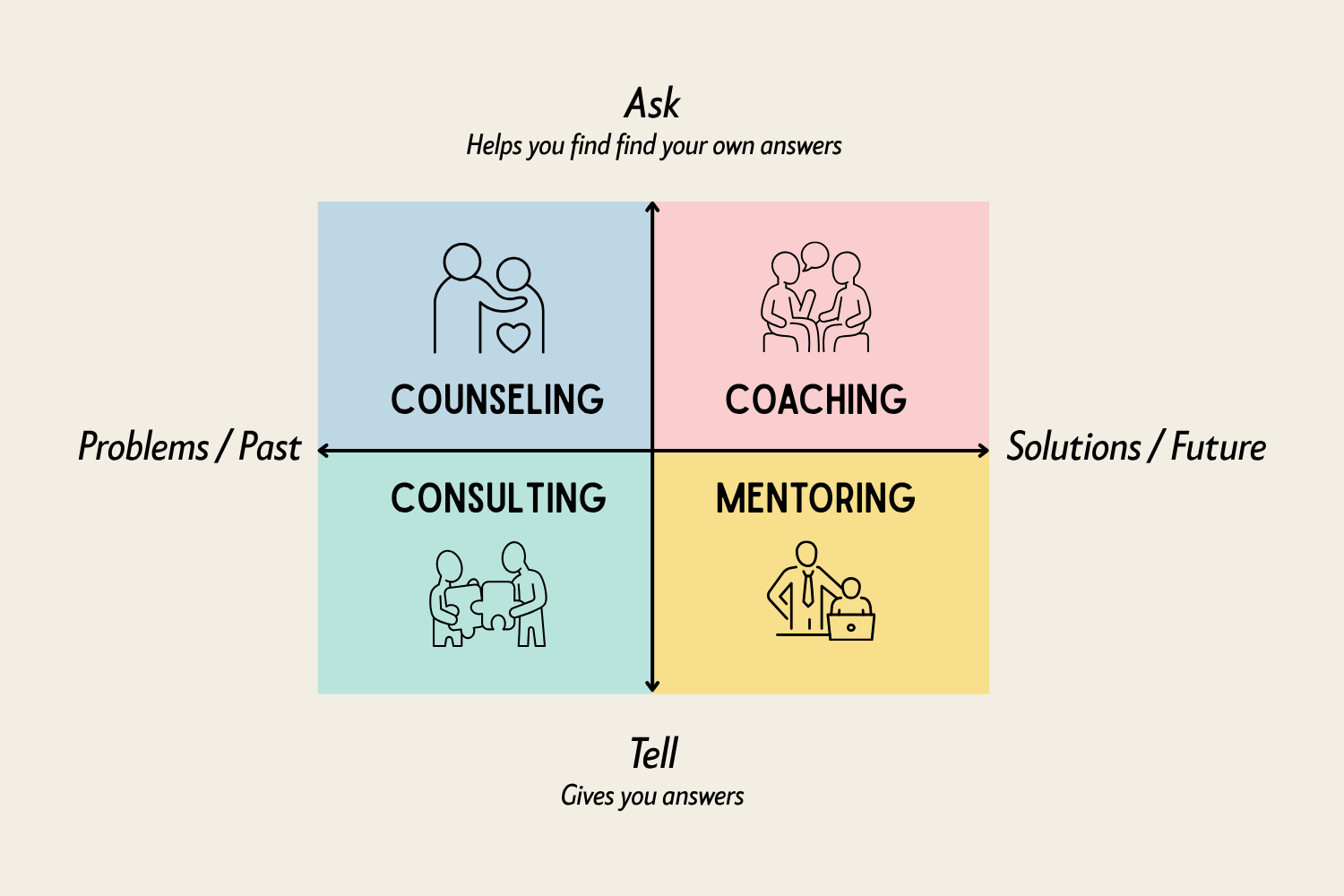
A 2x2 separating four modes for helping someone — coaching, mentoring, counseling, consulting — plus a test for picking the right one.

The Inner Drive
A leadership take on Daniel Pink's *Drive* that turns three conditions for motivation — autonomy, mastery, purpose — into habits for 1:1s.
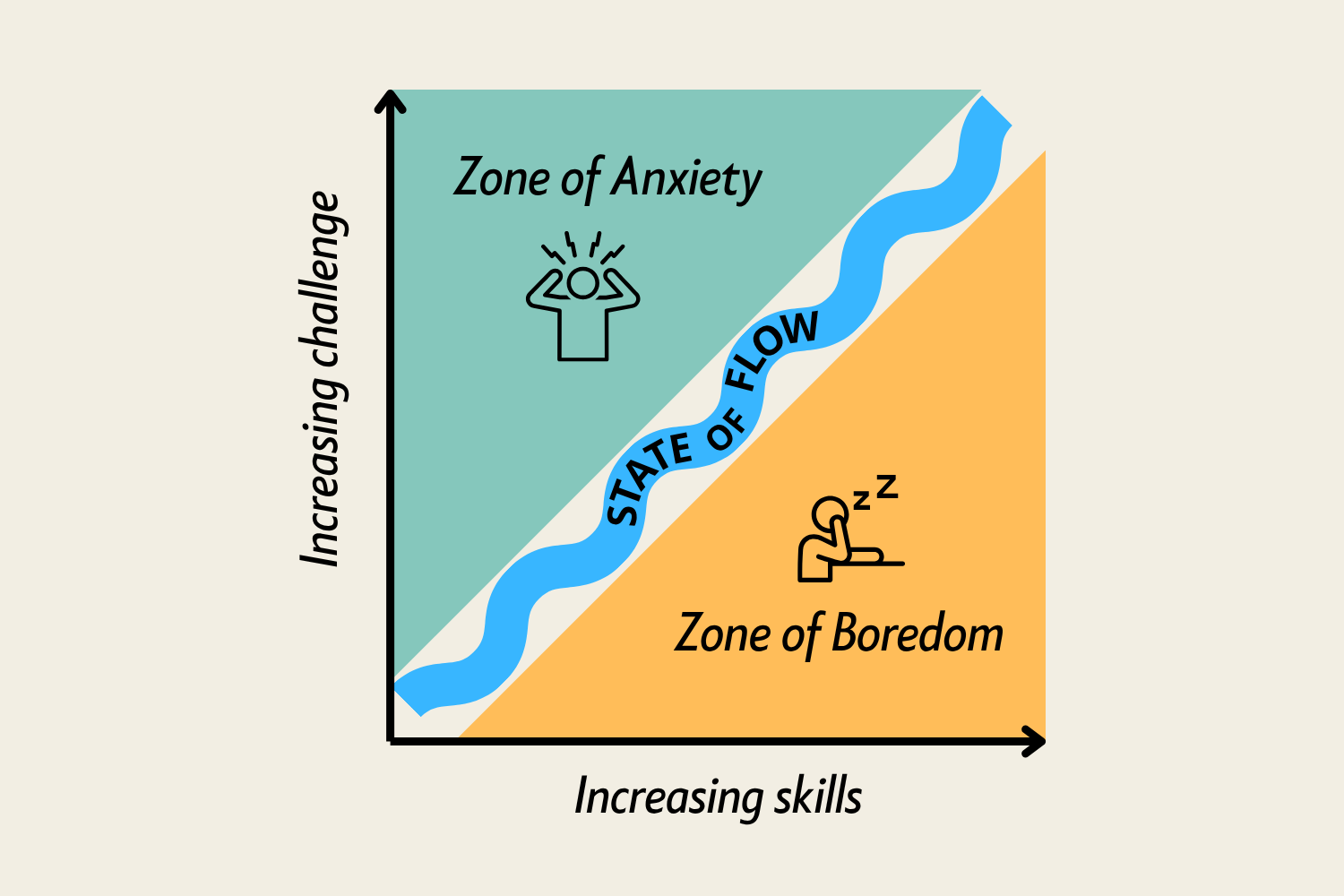
The State of Flow
The zone between anxiety and boredom, where challenge meets skill — your job is moving each person, with a different push.