Managerial Leverage
Andy Grove's idea that a manager's output is their team's output, and that every meeting, decision, or process you run has a leverage value somewhere between high and negative.
 Find this on the mind-map
Introduction
Andy Grove, who ran Intel, had a simple way of defining what a manager actually produces. In High Output Management, he argues a manager's output isn't their own list of finished tasks. It's the output of their team, plus the output of the neighboring teams they influence.
That one shift changes what counts. The code you reviewed, the deck you built, the decision you made, none of it counts on its own. It only counts if it moved your team's output. From there, Grove defines leverage as the output your team produces per activity you do: every meeting you attend, every decision you make, every piece of feedback you give has a leverage value. Some of it is high. Some is low. Some is even negative.
How It Works
An activity has high leverage when at least one of three things is true:
- It affects many people at once. Explaining a decision to the whole team in one go has higher leverage than answering the same question eight times in Slack or in separate 1:1s.
- It affects someone's work for a long time. A good hire who stays and contributes for years has more leverage than a great hire who leaves within a year. Clear feedback that changes how someone works for months has more leverage than feedback they forget within a week.
- It provides a key insight only you have. Sharing context from a leadership meeting that changes what the team builds next is high leverage, because nobody else in the room had that information.
On top of those three, there's a multiplier: timing. The same action is worth a lot more taken early than taken late. Flagging a design concern in the first review might cost your team ten minutes. Flagging the same concern after launch might cost half a year.
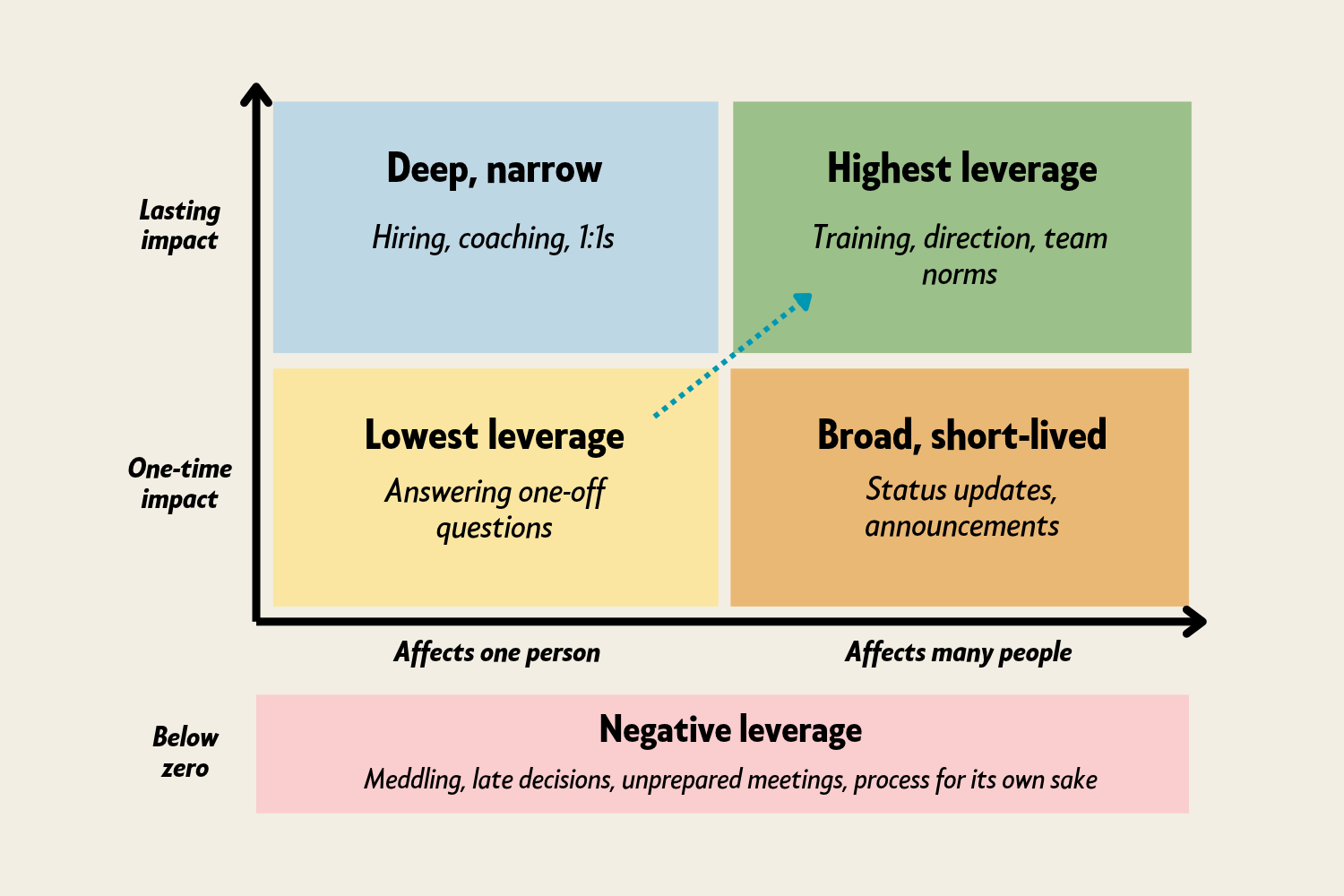
Plot the first two conditions, how long the impact lasts and how many people it reaches, on a 2x2, and you get a map of where your time actually goes. Most managers spend most of their time in the box with narrow reach and short duration, and think that's the job. The goal is to keep moving time toward the opposite corner.
Grove's sharper point is that some activities don't just have low leverage. They actively reduce your team's output. He calls this negative leverage, and it usually feels productive while you're doing it:
- Meddling. Taking over a task because you can do it faster feels like helping. Over time your team loses ownership and starts waiting for you to step in.
- Late decisions. Waiting for "more data" feels careful. It can train your team to become slow and overcautious every time they need to move forward.
- Unprepared meetings. Skipping an agenda feels flexible. Everyone in the room just lost an hour.
- Process for its own sake. A new process can feel like control. Many processes outlive the problem they were built for and become speed bumps instead of accelerators.
The wider an activity's reach, the more carefully you should check whether it's actually helping, because the downside of getting it wrong scales right along with the upside of getting it right.
Why It Matters for Leaders
This framework is most useful as a question you ask before adding anything to your calendar: whose output does this raise? If the honest answer is "mine," that's worth noticing.
Say Farah runs a platform team of seven. A look back at her calendar shows most of her negative-leverage hours went into approving small infrastructure changes herself. She traces it back to one missing decision: nobody on the team knows what they can ship without her sign-off. So she writes one page spelling that out, drops her daily approval slot, and spends part of the time she gets back teaching the team how she actually reviews risky changes. One page and one session replace dozens of approvals a week, and the decision keeps paying off long after that one meeting ends.
Books that reference this framework

What to do next
Test your knowledge of Managerial Leverage
Practice Managerial Leverage
Apply Managerial Leverage to a real situation
Skills related to Managerial Leverage

Driving Execution
Turning an agreed plan into delivered results through the focus, systems, and accountability that keep a team moving from decision to outcome.

Prioritization
Picking the handful of things that actually matter and putting the team's energy there, which means saying no to almost everything else.
Frameworks related to Managerial Leverage

Agile Methodology
Short cycles beat long plans — build a slice, ship it, get real feedback, adjust, and repeat until it fits.

Dreamboxing
A model for turning vision into disciplined execution by cycling through three stages — Dream, Drive, Do — rather than favoring one.

Eisenhower Matrix
A simple 2x2 that sorts tasks by urgency and importance, so what actually matters gets scheduled instead of whatever's loudest.

Impact-Effort Matrix
A 2x2 that plots initiatives by value against effort, so you see what to start now, plan for, or kill.

Lean Startup
Eric Ries's Build-Measure-Learn loop: test your riskiest assumption with the smallest product, measure what people do, then pivot or persist.

MoSCoW Method
A prioritization method sorting your plate into four buckets — Must have, Should have, Could have, Won't have — forcing trade-offs early.
Pareto Principle
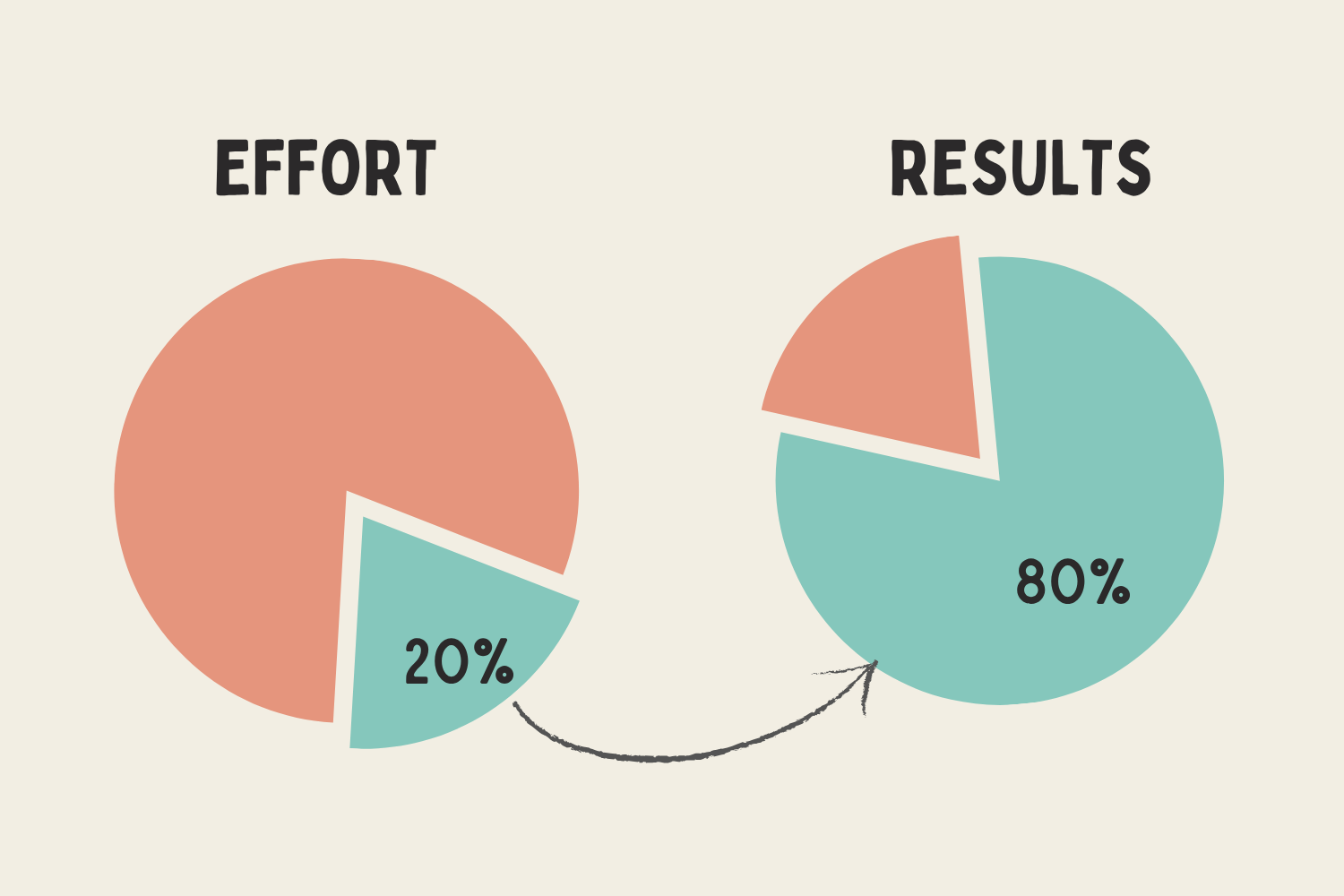
Roughly 80% of outcomes come from 20% of causes — find the vital few projects, people, and bottlenecks driving results.

The 4 Disciplines of Execution
Four disciplines for hitting your important goals: narrow focus, act on lead measures, keep a visible scoreboard, run weekly accountability.
The Value Triangle
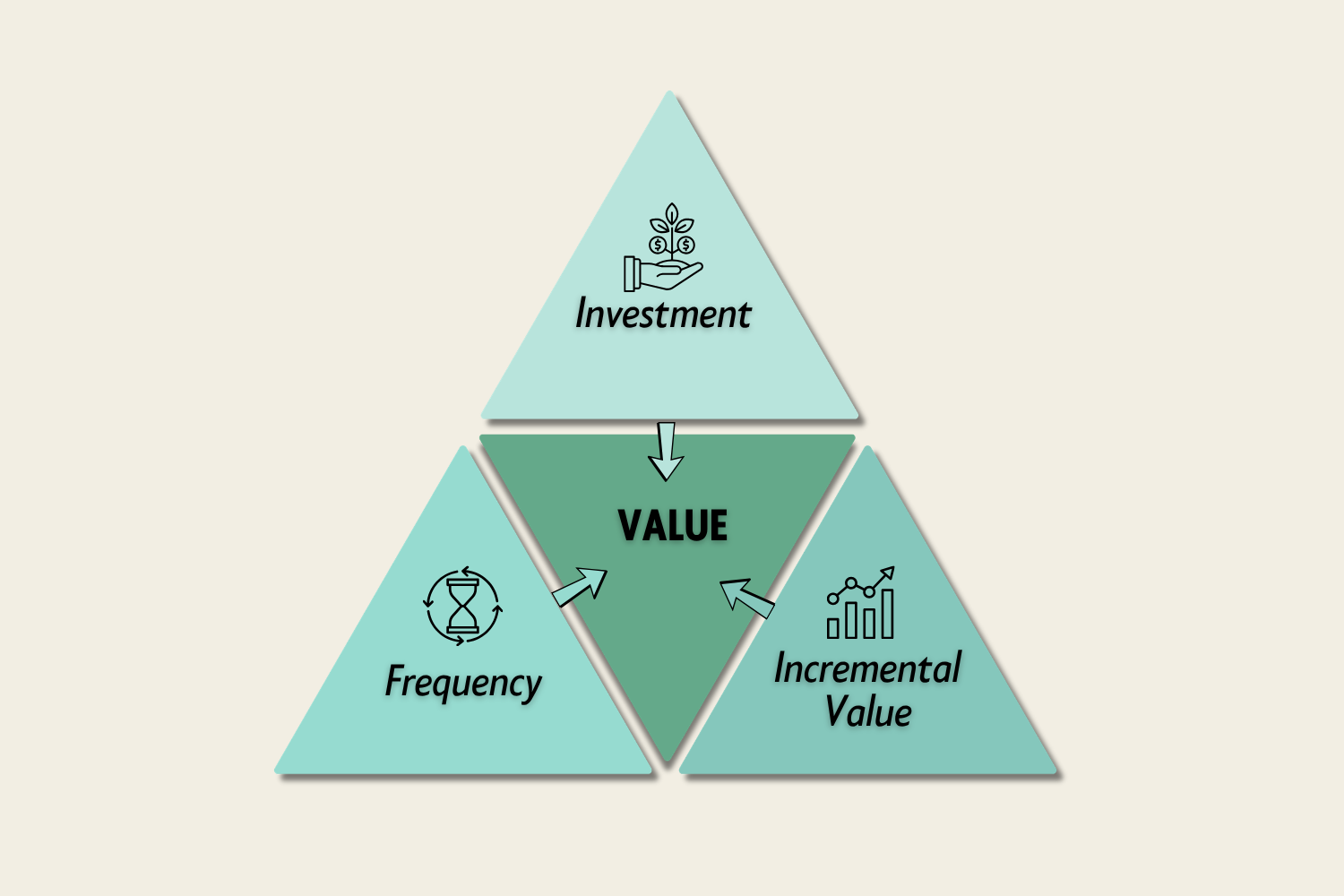
A modern replacement for the Iron Triangle — swap cost, time, scope for investment, frequency, and incremental value — levers, not constraints.
Books related to Managerial Leverage

Essentialism
Greg McKeown's argument that "doing less, but better" isn't a time-management trick. It's a different operating system for deciding what deserves your effort at all, built on one uncomfortable premise: almost everything is non-essential.

Team of Teams
General Stanley McChrystal's account of rebuilding a special-operations task force to fight a decentralized enemy network, and the argument that efficient hierarchy, the thing most organizations are explicitly built for, is the wrong design for a fast, complex environment.

The One Thing
Gary Keller and Jay Papasan's case that most to-do lists are really long lists of ways to avoid asking the one question that matters. Success usually comes from sequencing, not from doing more things at once.