Leadership and Self-Deception
A business parable about the moment a leader stops seeing the people around them as people and starts seeing them as obstacles to manage, and why almost every leadership technique fails once that shift has already happened.
 Find this on the mind-map
Introduction
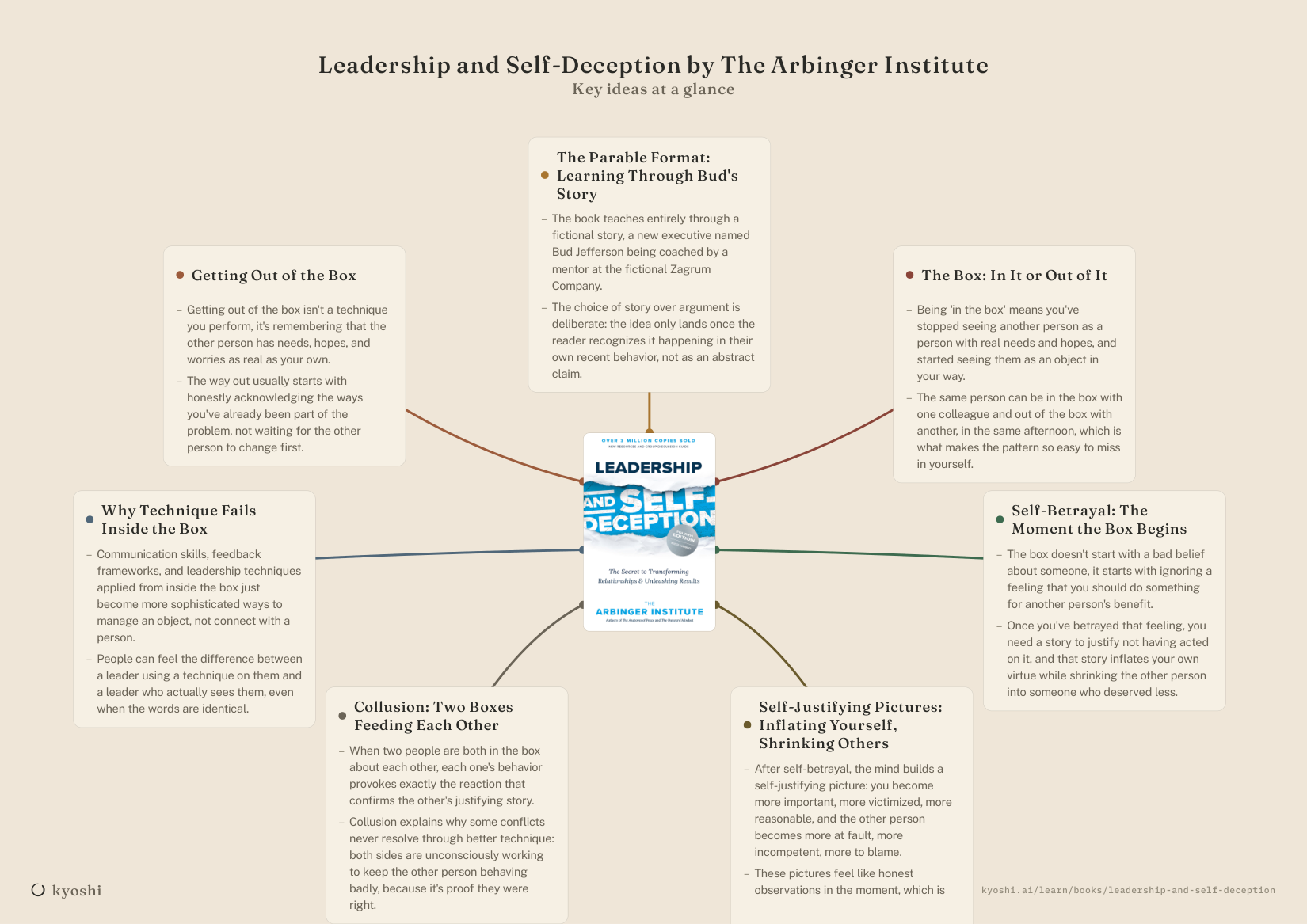
Leadership and Self-Deception doesn't open with a model or a framework, it opens with a story. The Arbinger Institute built the entire book as a business parable: a new executive named Bud Jefferson arrives at the fictional Zagrum Company and spends his first weeks being walked, by a senior mentor, through a pattern he didn't know he had. That choice of form is the point. The book's authors clearly decided that the central idea, something they call "the box," only becomes real once a reader recognizes it happening in their own life, not when it's handed to them as an abstract principle to agree with.
The argument underneath the story is simple to state and uncomfortable to apply: most leadership failure isn't a skills problem, it's a self-deception problem. A leader can learn every communication technique in the book and still fail completely, because the techniques get filtered through whether that leader is actually seeing the people around them as people, or as obstacles, vehicles, and irrelevancies to be managed. The book calls the second state "being in the box," and its whole structure is built to help a reader catch themselves in it.
The Parable Format: Learning Through Bud's Story
Bud is a capable new executive who, in the course of the book, discovers that his struggles with a direct report aren't really about that employee's performance at all. His mentor at Zagrum leads him, through patient questioning rather than lecture, to see a pattern in his own past, going back to an incident with his newborn son, that he'd never connected to how he manages people at work now.
The parable structure matters because it lets the authors show self-deception instead of just asserting it. A reader can watch Bud insist, convincingly, that a colleague really is lazy or incompetent, and then watch the mentor gently take that certainty apart by asking what happened right before Bud started seeing him that way. That's a move an essay can't really make. You have to watch someone build the justifying story in real time to recognize how ordinary and convincing it feels from the inside, which is exactly how it feels when you're building one yourself.
The story form also means the book never really presents "the box" as something other people have. Every example is Bud catching himself, which is the uncomfortable mirror the whole book is built to hold up.
The Box: In It or Out of It
"The box" is the book's central metaphor for a state of mind rather than a personality trait. When you're in the box with someone, you've stopped seeing them as a person with real needs, hopes, and worries, and started seeing them as an object: a vehicle to get what you want, an obstacle in your way, or an irrelevancy you don't need to consider at all. When you're out of the box, you see that same person as a person, regardless of whether you like them or agree with them.
The unsettling detail is how specific and situational the box is. A manager can be fully out of the box with a client she's trying to impress and fully in the box, twenty minutes later, with the assistant who books her travel, treating one as a person worth real consideration and the other as a logistics problem that keeps interrupting her day. Nothing about her values changed in between. What changed is a much smaller, more invisible shift the book spends most of its pages explaining.
A leader who thinks of "the box" as a trait that applies to difficult people, not to themselves, has already missed the book's actual claim: everyone is in the box with somebody, often several times a day, and the people who think they aren't are usually the ones in it the most.
Self-Betrayal: The Moment the Box Begins
The book's most important move is locating where the box actually starts, and it isn't where most people assume. It starts with self-betrayal: a moment when you sense you should do something for someone else's sake, and you don't do it. Bud's own example, told early in the book, involves his infant son crying in the night. He feels, in the moment, that he should get up so his exhausted wife can keep sleeping. He doesn't get up.
That single act of ignoring his own sense of what he should do is the self-betrayal, and it's what triggers everything after. Once he's betrayed that feeling, Bud needs a story that makes not getting up acceptable, so his mind builds one without him noticing: he's exhausted too, he has a big day tomorrow, she's not even trying to let him sleep, she's overreacting. None of that was true five minutes earlier. It becomes true, to him, the instant he needs it to be, in order to live with what he didn't do.
This is why the book insists the box isn't primarily a belief about other people, it's a response to betraying yourself first. You can't fully understand why someone looks incompetent or difficult to you without asking what you failed to do for them right before you started seeing them that way.
Self-Justifying Pictures: Inflating Yourself, Shrinking Others
Once self-betrayal happens, the mind doesn't just tolerate it, it actively builds a picture of reality that makes it look reasonable. Most workplace disagreements get treated as a dispute over facts, but Arbinger's claim is that two people in conflict are often working from pictures that were custom-built, in real time, to justify something each of them already did.
In Bud's self-justifying picture, he becomes the overworked, reasonable one, and his wife becomes unreasonable and inconsiderate. The facts available to an outside observer haven't changed. What changed is which facts got noticed, which got inflated, and which got ignored entirely, all in service of making Bud's choice not to get up look sensible. This is what makes the box so hard to escape from inside: the justifying picture doesn't feel like a distortion, it feels like an honest, even generous, read of what's going on.
A manager convinced that a direct report is "just not motivated" rarely entertains the thought that the picture might exist to justify something the manager already decided, like withholding a conversation that felt uncomfortable to have. The certainty itself is often the tell.
Collusion: Two Boxes Feeding Each Other
The book's most practically important concept for workplace conflict is collusion: what happens when two people are both in the box about each other at the same time. Once that's true, each person's in-the-box behavior tends to provoke exactly the behavior that confirms the other person's justifying story, and neither side experiences this as something they're doing. It just looks like further proof they were right about the other person all along.
A manager who's privately decided an employee is disengaged starts giving them less interesting work and less of her attention. The employee, sensing the shift, pulls back further and stops offering ideas. The manager sees the pulled-back employee as confirmation of what she already believed. Neither one consciously chose to create this. Both are simply reacting inside a box, and the reaction is sustaining the exact problem each of them would say the other one caused.
This is why collusion can run for months or years without either party doing anything either would call wrong in isolation. Breaking it rarely starts with asking the other person to change, it starts with one person noticing their own contribution to a cycle they'd been describing entirely as the other person's fault.
Why Technique Fails Inside the Box
A recurring warning in the book is that communication skills, feedback models, and leadership frameworks don't fix anything if they're deployed from inside the box. A manager can learn to phrase feedback perfectly, open with a question, use a collaborative tone, and still be using every one of those moves to manage an object more effectively, not to actually connect with a person.
The book's claim is that people can feel this difference even when they can't name it. The identical sentence, "I think there's a gap between what we agreed and what happened," lands completely differently depending on whether the person saying it sees the listener as a person worth real consideration or as a problem to be handled. Arbinger's point isn't that technique is useless, it's that technique amplifies whatever's already true about how you see the other person, for better or worse.
This is uncomfortable for anyone who's invested time in leadership training, because it means the training can make a boxed-in leader more effective at being boxed in, polishing the delivery of a message that was never going to land regardless of the words used.
Getting Out of the Box
Because the box isn't primarily a set of beliefs, the way out isn't primarily a set of new beliefs either. The book is careful to say that getting out of the box isn't a technique you perform on command, it's remembering, in the moment, that the person in front of you has needs, hopes, and worries exactly as real as your own, something you already know and have simply stopped treating as true.
In practice, the book suggests the way out usually starts with honesty about your own part in a collusive cycle, not with waiting for the other person to apologize or change first. Bud's turning point isn't a confrontation, it's a private, specific accounting of what he did and didn't do, and an honest look at the story he built afterward to make it feel acceptable. That's a quieter act than most leadership advice calls for, and it's also, the book argues, the only move that actually works.
Putting It Together
The chain the book draws runs: self-betrayal creates the need for a justifying story, the justifying story turns a real person into an object, two people doing this to each other creates collusion that reinforces itself without either side noticing, and no leadership technique survives contact with any of it, because the technique inherits whatever's underneath it. Getting out of the box isn't a skill added on top of who you already are, it's returning to something you already knew before you needed a reason to ignore it.
Why It Matters for Leaders
The practical shift this book demands is uncomfortable precisely because it can't be delegated to a framework. Most leadership development assumes the problem is a missing skill: better feedback technique, better delegation, better conflict resolution. This book's claim is that a leader can have every one of those skills and still fail with a specific person, because the skill is being deployed from inside a box, and the other person can feel it.
That means the real diagnostic question in a difficult working relationship isn't "what communication approach should I try next," it's "when did I last ignore something I felt I should do for this person, and what story have I been telling myself since then to make that okay." That question is harder to ask than it sounds, because the justifying story usually feels like an accurate read of someone's character, not like a story at all.
It also reframes how a leader should read a conflict that won't resolve despite genuine effort on both sides. If a manager has tried every technique with a particular employee and nothing lands, the book suggests looking for collusion: a cycle where both people are behaving, without realizing it, in ways that confirm what the other already believes. Breaking that cycle starts with the manager's own honest accounting, not with waiting for the employee to show good faith first.
Picture a director, Felix, who's convinced one of his senior engineers, a man named Dev, has become difficult and uncooperative in planning meetings. Felix has tried clearer agendas, more direct praise, even a private conversation about "communication style," and nothing has changed Dev's guardedness. One evening, reviewing what actually happened before Dev pulled back, Felix remembers a specific moment three months earlier: Dev raised a concern about a deadline, and Felix, rushed and distracted, waved it off without really listening, then moved on to the next agenda item without circling back. Felix never apologized, because by the next week he'd already built a story that Dev was being overly cautious anyway. Sitting with that memory honestly, Felix doesn't walk in with a new communication technique. He walks in and tells Dev, plainly, that he dismissed a real concern three months ago and never followed up on it. Dev's guardedness doesn't vanish that day, but it's the first conversation in months where Felix is actually talking to Dev instead of managing him.
What to do next
Reinforce your understanding of Leadership and Self-Deception
Books related to Leadership and Self-Deception

Emotional Intelligence
Daniel Goleman's case that how you handle emotion, your own and everyone else's, predicts success better than raw intellect. The book that put "EQ" into every manager's vocabulary, for good reason.

Emotional Intelligence 2.0
The practical, test-and-strategies follow-up to the emotional intelligence conversation: less theory, more "here's exactly what to do on Tuesday," built around four skills you can actually practice and measure.

Inclusify
Stefanie Johnson's argument that most leaders miss inclusion by over-indexing on one of two basic human needs, belonging or uniqueness, and her six named archetypes for exactly how that imbalance shows up, from the "Meritocracy Manager" to the "White Knight."

Leaders Eat Last
Simon Sinek's case that leadership is a biological deal, not a rank. The people at the top give up safety and comfort first, so everyone below them doesn't have to spend their energy watching their back instead of doing the work.

Lean In
Sheryl Sandberg's argument that the barriers keeping women out of leadership are real on both sides: structural bias in how organizations operate, and self-imposed caution in how women are taught to see their own ambition. Fixing only one side leaves the other fully intact.

No Rules Rules
Netflix co-founder Reed Hastings, with culture researcher Erin Meyer, on why Netflix removed vacation policies, expense approvals, and most of the rulebook most companies treat as non-negotiable, and the two things that have to be true first, or the whole thing backfires.

Primal Leadership
The case that a leader's mood isn't a private matter. It's contagious through the whole team, which makes emotional intelligence the real infrastructure underneath every other leadership skill.

Rebel Ideas
Matthew Syed's case that the smartest team in the room is rarely the one stacked with the highest individual IQs, it's the one with the widest range of genuinely different ways of seeing the same problem. A pointed argument against hiring people who think like you, no matter how impressive they are.

Stillness Is the Key
Ryan Holiday's case that the people who handle pressure, power, and chaos best aren't the busiest or the most driven, they're the ones who've built real stillness into their mind, body, and sense of purpose, usually against the current of everything around them.

The Culture Code
Daniel Coyle's reverse-engineering of highly successful groups: not through their strategy or talent, but through small, repeated signals that most leaders never notice they're sending, or failing to send.

The Culture Map
Erin Meyer's field guide to why a management style that works perfectly in one country reads as either rude or weak in another, and why "just be yourself" is actually terrible advice for anyone leading across cultures.

The Daily Stoic
A year of short, daily meditations drawn from Marcus Aurelius, Seneca, and Epictetus, organized into one practical claim: the ancient Stoics weren't writing philosophy for philosophers. They were writing a manual for getting through hard days without losing yourself.

The Fearless Organization
Amy Edmondson's case that psychological safety isn't a soft perk for making people feel nice. It's a hard performance requirement, because teams without it make worse decisions, catch fewer errors, and learn slower than teams that have it.

The Person You Mean to Be
Dolly Chugh's case for giving up on being a "good person" (a fixed, defensive identity) in favor of becoming a "good-ish person": someone actively building toward better, who treats their own blind spots as something to work on instead of something to deny.

Think Again
Adam Grant's case that rethinking, actually changing your mind when the facts say you should, is a skill most smart people are terrible at, and a direct challenge to any manager who treats changing position as a sign of weakness.

Tribal Leadership
A model for diagnosing a team's culture by literally listening to how people talk: five stages of "tribal" language, from "life sucks" to "life is great," and a surprisingly specific playbook for moving a team up one stage at a time.
Skills related to Leadership and Self-Deception

Culture Building
Culture isn't the perks or the values on the wall, but what you tolerate, reward, and let slide.

Self-Awareness
Knowing your own strengths, blind spots, and emotional patterns — and knowing how they actually land on the people around you.
Frameworks related to Leadership and Self-Deception

Circle of Competence
Buffett and Munger's model for knowing exactly where your understanding ends — size doesn't matter, honesty about the edge does.

EQ Framework
A 2x2 of emotional intelligence — self or social, noticing or acting — giving four skills: self-awareness, self-management, social awareness, relationship management.

IKEA Effect
You value things more when you helped build them — which is why a strategy handed to a team lands flat.
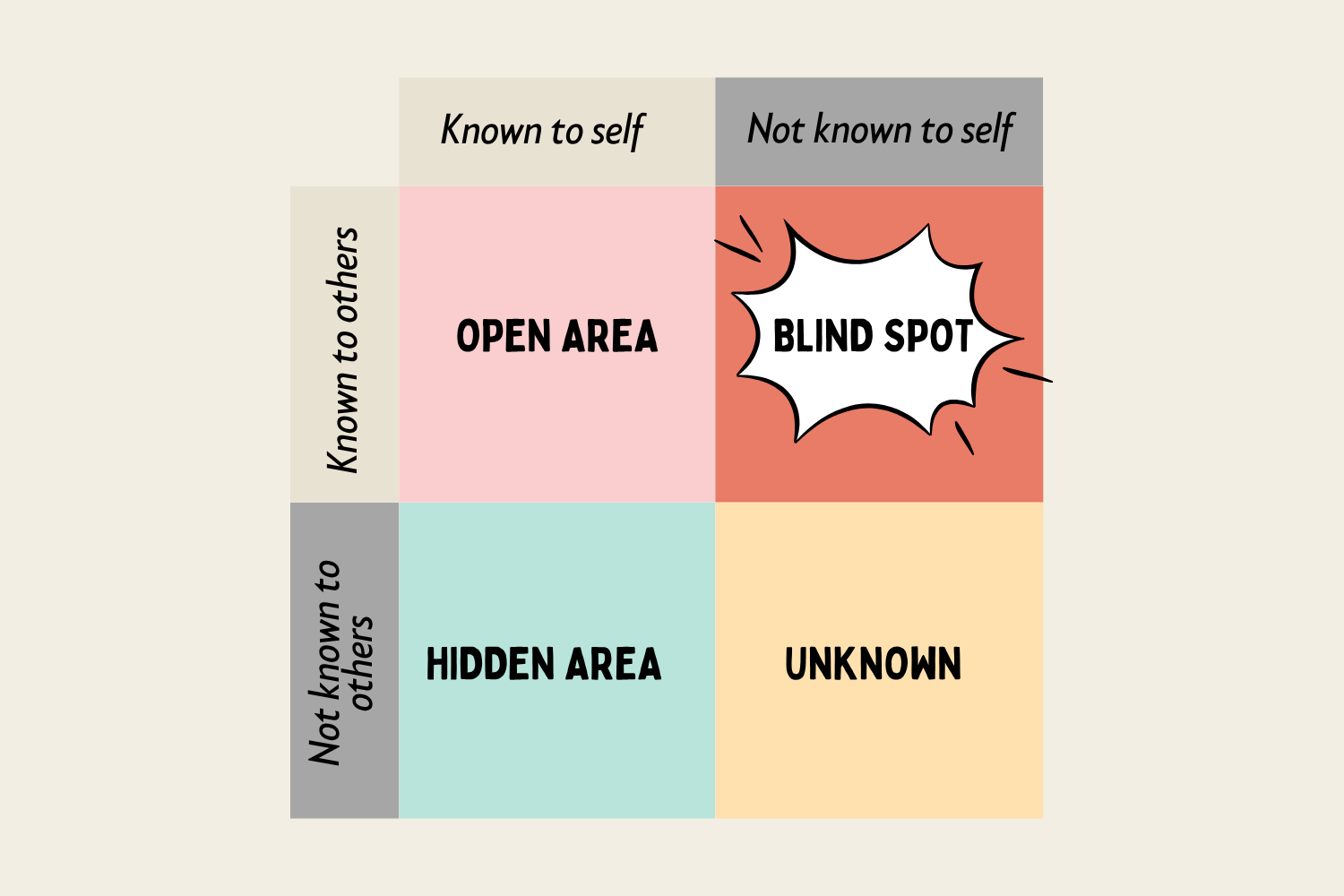
Johari Window
A 2x2 mapping what you know about yourself against what others know — exposing blind spots, building trust through disclosure.

Ladder of Inference
Your mind turns a fact into belief through selection and assumption — you end up arguing with a story, not reality.
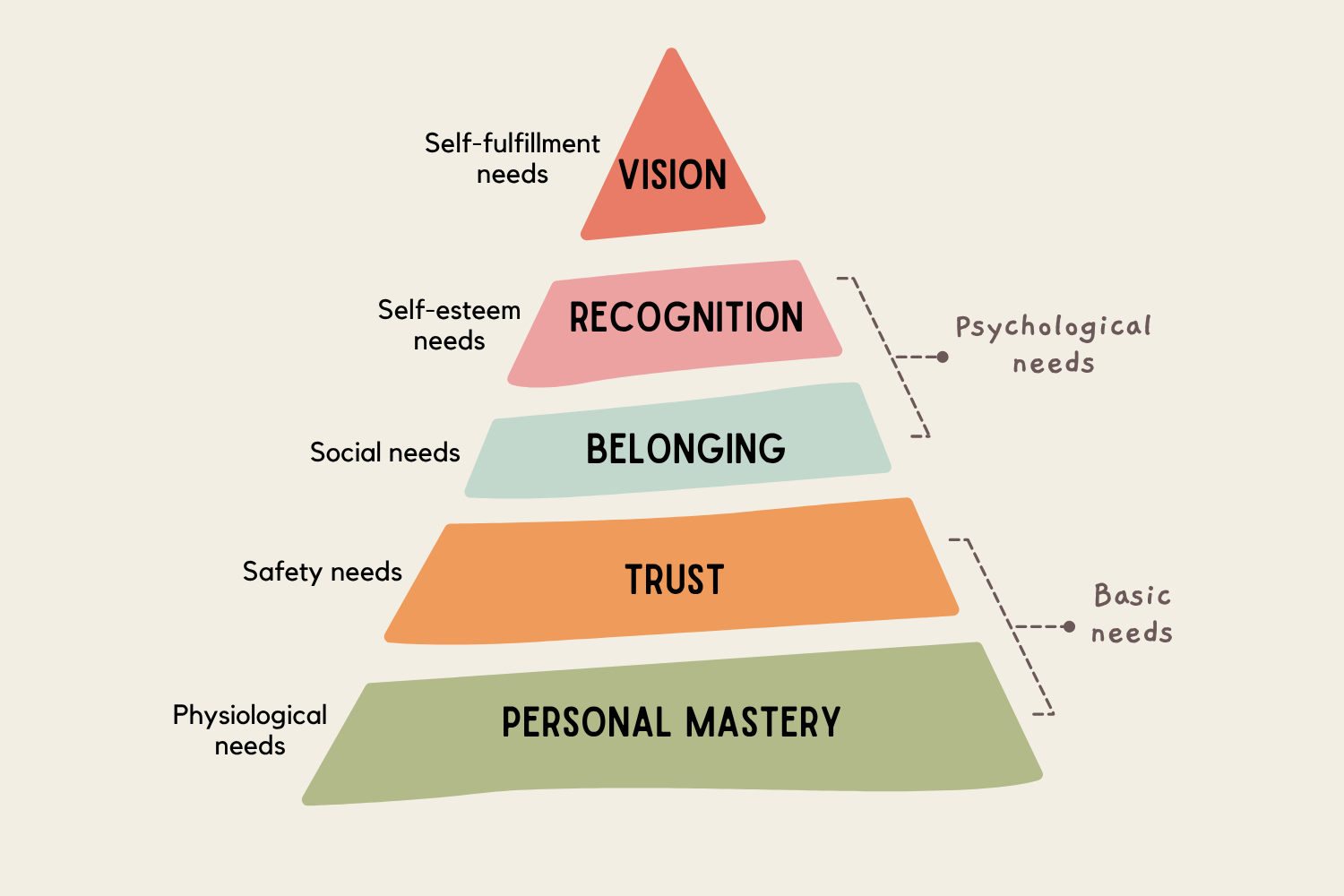
Maslow's Hierarchy of Needs
Abraham Maslow's five-level model of motivation, applied to leadership as a stack — mastery, trust, belonging, up through recognition and vision.
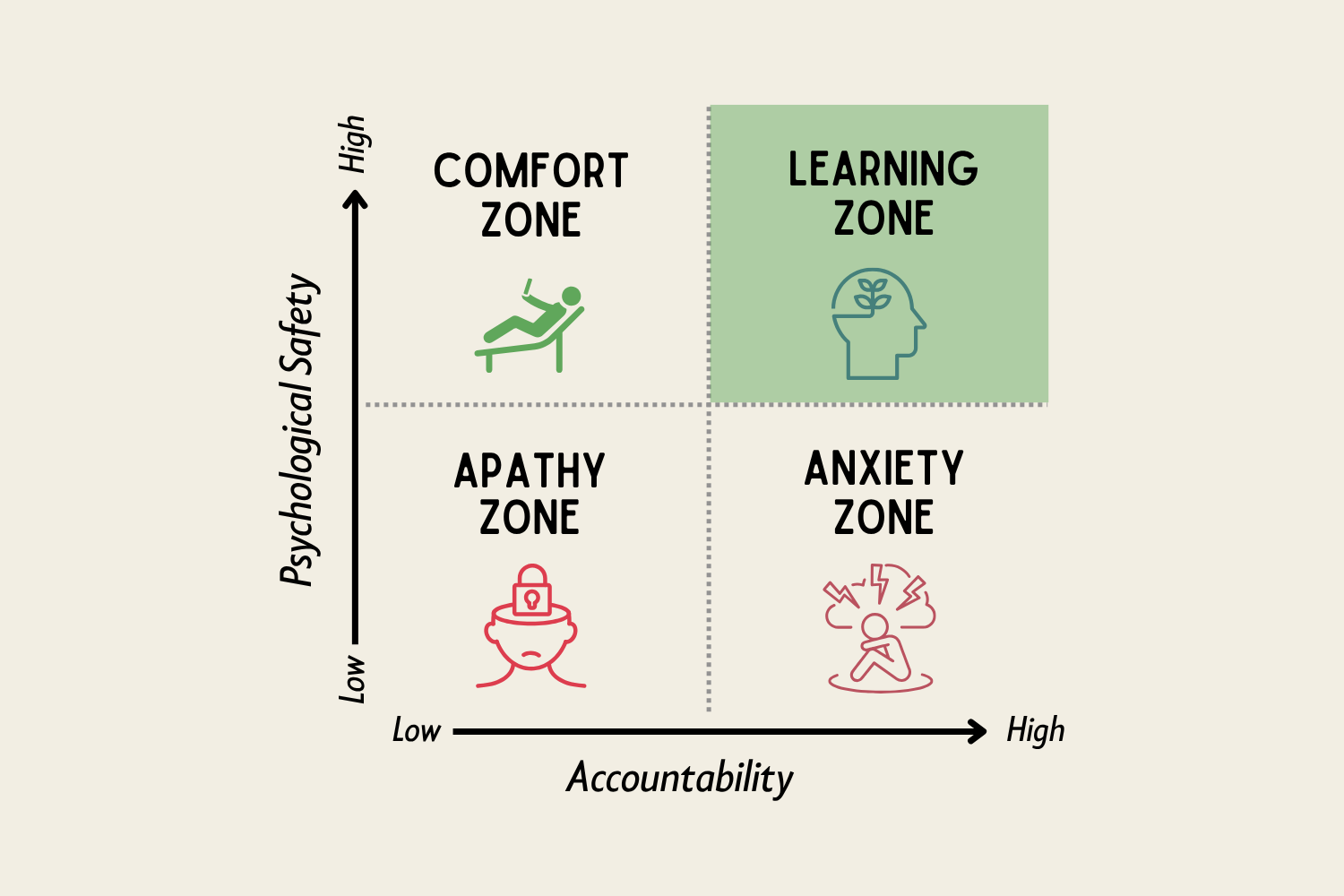
Psychological Safety
Amy Edmondson's finding that people must feel safe taking risks — a dumb question, a mistake — before a team can perform.

Spiral Dynamics
Eight color-coded value systems shaping what people care about at work — success, purpose, relationships — matched to stop guessing motivation.

The AI Culture Stack
Same AI tools and budget, wildly different results — the gap isn't the technology, it's three layers underneath: permission, fluency, judgment.

The Bannister Effect
One person breaking a barrier makes it stop being fixed for everyone else — break the unspoken belief in public first.

The Four Leadership Support Roles
A 2x2 separating four modes for helping someone — coaching, mentoring, counseling, consulting — plus a test for picking the right one.
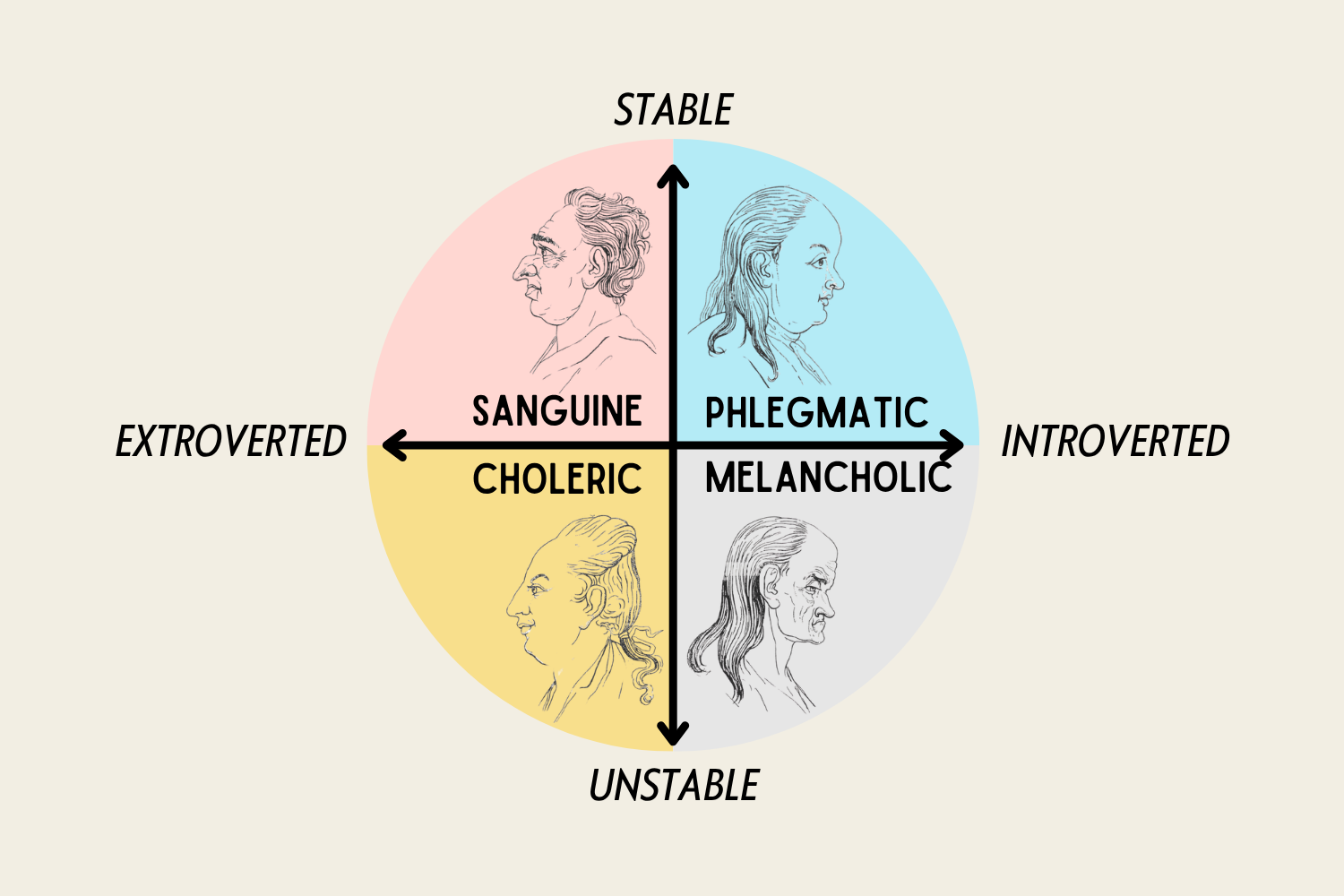
The Four Temperaments
An ancient personality model — Sanguine, Choleric, Melancholic, Phlegmatic — a fast vocabulary for reading your style, your team, and your boss.

The Inner Drive
A leadership take on Daniel Pink's *Drive* that turns three conditions for motivation — autonomy, mastery, purpose — into habits for 1:1s.

The State of Flow
The zone between anxiety and boredom, where challenge meets skill — your job is moving each person, with a different push.